


The government will introduce a new approach to learning assessment in primary and secondary schools through the implementation of the Malaysia Learning Matrix, said Prime Minister Anwar Ibrahim.
Anwar said this will start with the Year Four Learning Measurement in 2026 and the Form Three Learning Measurement in 2027.
He said that at the primary school level, the Year Four Learning Measurement will cover four core subjects: Bahasa Melayu, English, Mathematics, and Science.
The Form Three Learning Measurement will be introduced from 2027, covering five main subjects: Bahasa Melayu, English, Mathematics, Science, and History.
According to Anwar, both assessments will be centrally administered by the Examination Board as part of efforts to build a more comprehensive national education assessment system focused on students’ mastery of learning.

“This approach aims to identify students’ mastery levels earlier, allowing more targeted interventions to improve the quality of education,” he said at the launch of the National Education Blueprint 2026-2035 today.
Year One open to six-year-olds
Anwar also announced a restructuring of the age of entry into the country’s formal education system, with preschool set to begin at age five and Year One at age six, effective from 2027, subject to parents’ readiness.
He said the move is in line with efforts to strengthen children’s learning readiness from an early stage, while supporting more balanced development of students’ potential.
“In the past, children were eligible to enter school at the age of seven. But now, even at the age of five, our children are showing different levels of maturity, in line with changing times and demands.
“That is why, starting in 2027, we are introducing the option of earlier entry, without making it compulsory, as there may still be parents who feel their children are not yet ready,” he said.
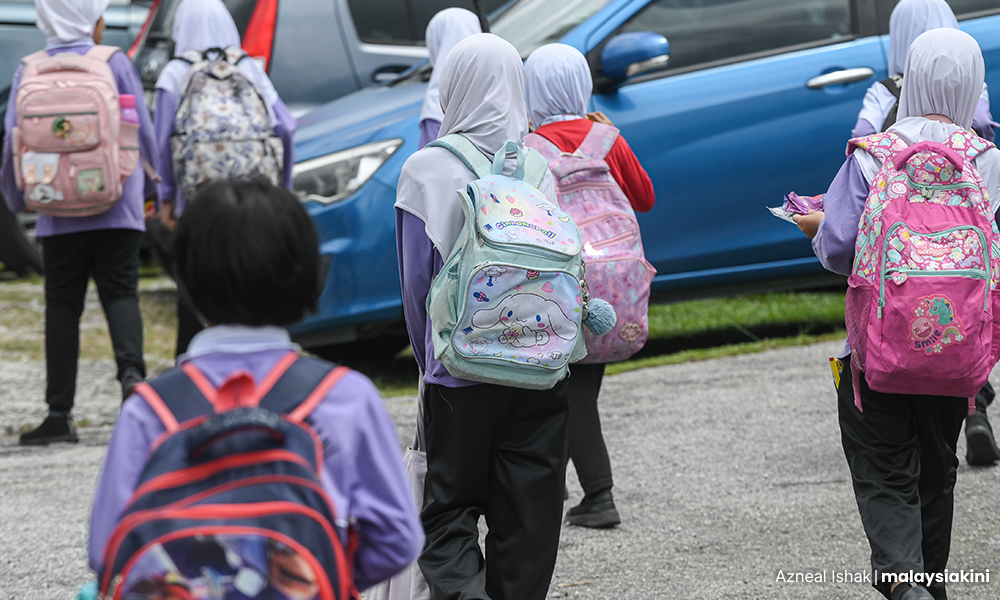
He added that the government will retain eligibility for entry into Year One at the age of seven, but encourages parents who are ready to send their children to preschool as early as five.
Improving teachers’ welfare, environment
At the same time, he said the government has allocated RM100 million to upgrade staff rooms nationwide after noting that more than 30 percent of them are in uncomfortable and unsafe conditions.
Anwar said attention is also being given to teachers’ working environments, as these have a direct impact on the well-being and motivation of educators in carrying out their duties.
He also reaffirmed the Madani government’s commitment to continue strengthening the national education ecosystem comprehensively, covering curriculum, assessment, infrastructure and teachers’ welfare, to produce a knowledgeable and competitive generation.
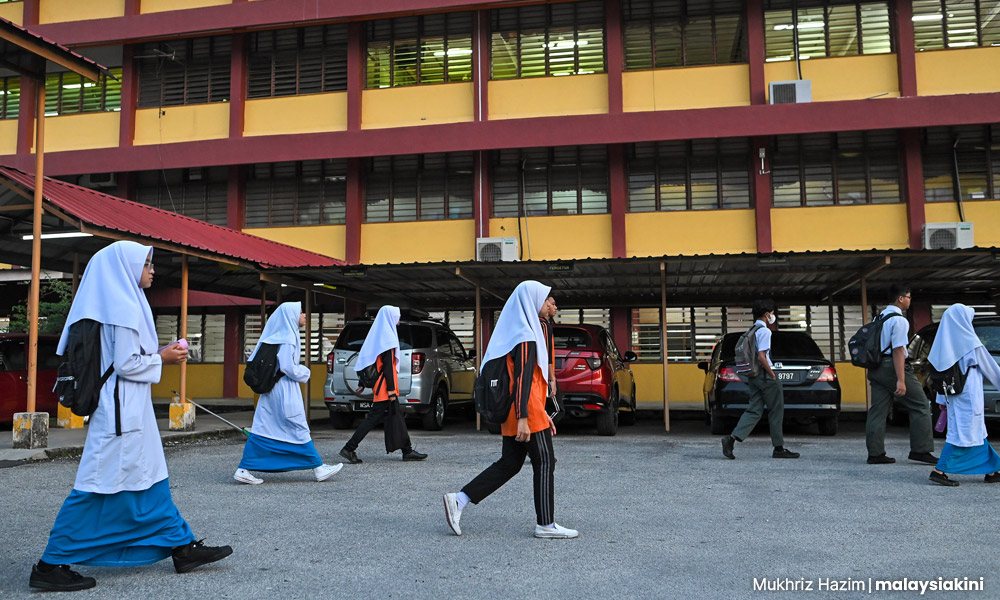
The new education blueprint launched by the prime minister today involves two ministries, namely the Education Ministry and the Higher Education Ministry.
Earlier, in a Facebook post, Anwar said the blueprint is an education reform aimed at building a fairer, more competitive future for children, grounded in values, so that they have the opportunity to build meaningful and dignified lives.
The National Education Blueprint is jointly led by the Higher Education Ministry through the Malaysian Higher Education Blueprint 2026-2035 and the Education Ministry through the Malaysian Education Blueprint 2026-2035.
The integrated implementation of the Higher Education Blueprint 2026-2035 and Education Blueprint 2026-2035 under the National Education Blueprint 2026-2035 reflects a comprehensive and phased alignment of national education policy, ensuring continuity in human capital development from the school level to higher education.
The government allocated RM66.2 billion to the Education Ministry under Budget 2026.
The allocation was an increase from the previous year, aimed at strengthening education with a focus on school infrastructure, assistance for poor students (including RM150 in early schooling assistance for all 5.2 million students), supplementary food programmes, early childhood education, as well as teacher development and technical and vocational education and training, with an emphasis on education system reform.
- Bernama

No comments:
Post a Comment
Note: Only a member of this blog may post a comment.