


Pre-school is encouraged from the age of five.
Starting next year, parents have the option of enrolling six-year-old children into Year 1 primary school if they believe their children are ready.
Anwar said the level of intelligence of children now is higher than in the past.
Instead of UPSR, Anwar announced that starting this year, primary school students will be evaluated at Year 4 on Bahasa Malaysia, English, Mathematics, and Science.
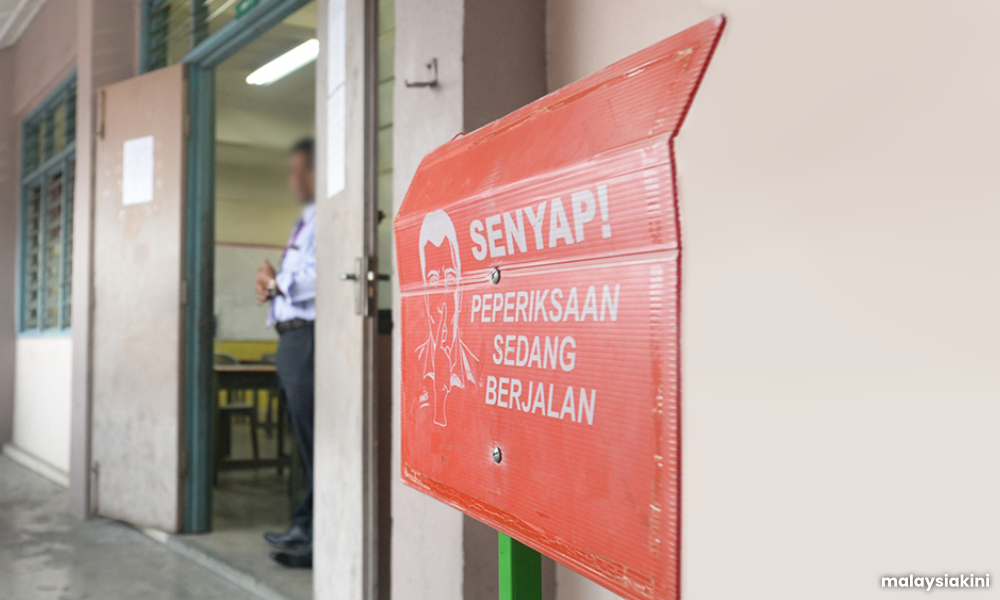
The plan, according to Anwar, is to use Years 5 and 6 to improve on their Year 4 assessment scores, in preparation for secondary school.
Instead of PT3, Form 3 students will be evaluated on Bahasa Malaysia, English, Mathematics, Science, and History, starting in 2027.
It will be mandatory to learn SPM-level Bahasa Malaysia and Malaysian history using the national curriculum for all schools, including independent, Islamic, and international schools.
Anwar said he hoped this would put an end to controversies over Chinese independent school students who take the Unified Examination Certificate (UEC) in addition to SPM.
Children must master English as a second language, and the quality of English education must be improved.
The Education Ministry must provide enough teachers so that students can also learn Mandarin, Tamil, and Arabic.
ADSTechnical and vocational education (TVET) will be introduced from Year 1, with an expanded curriculum for Forms 1, 2, and 3 focusing on technology and digital skills.
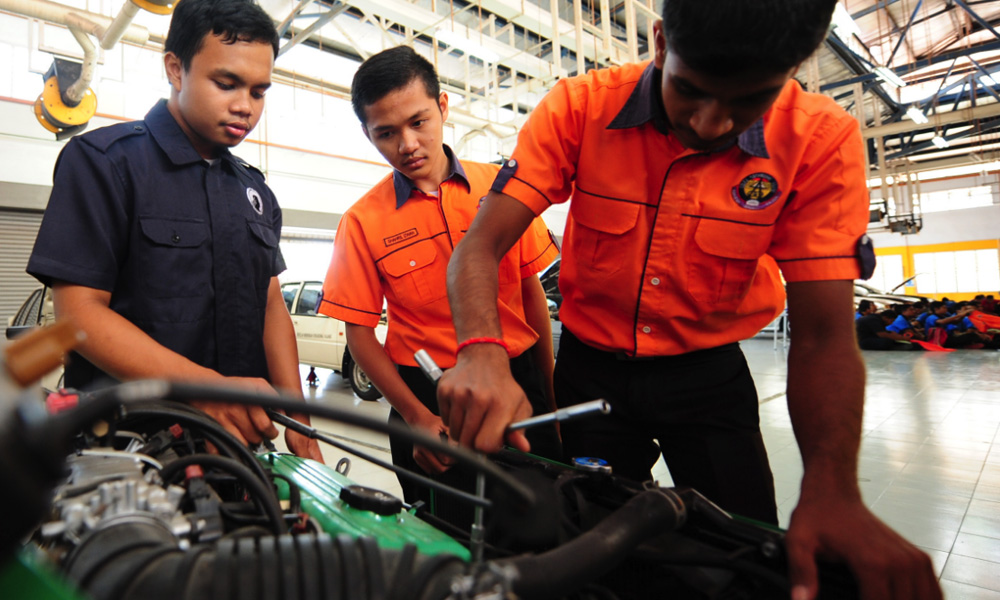
Technical and vocational education Anwar said this would allow children who are interested in vocational education to pick a field earlier.
Form 6 and matriculation will now be considered tertiary education and parked under the Higher Education Ministry’s purview.
The aim is to ensure continuity in higher education and a smoother transition from pre-university to degree programmes.
Slots for public university intakes this year will be increased from 1,500 to 3,000 for STPM graduates and high-achieving students.
STPM graduates with a 4.0 CGPA will have guaranteed placement in public varsities. However, courses offered and placement will depend on both merit and a university’s capacity.
The expanded intake covers the following courses: law, accounting, finance and banking, Islamic finance, artificial intelligence (AI), economics, languages, communications, media studies, data science, data analytics, and computer science.

Anwar said this in part as a response to non-Malay dissatisfaction that their children can’t get placement despite being high achievers during exams.
Free higher education paid for by the National Higher Education Fund is expanded to now cover 10,000 poor students. Previously, in Budget 2026, Anwar said 5,800 students from hardcore poor families would get free tertiary education.
All disabled tertiary students will also be given free education.
General studies in public and private universities will be reformed to be taught in Bahasa Malaysia and will include studies on the Federal Constitution and Malaysian history. This applies only to Malaysian students.
Polytechnics and community colleges will focus on digitalisation and AI.
Five primary schools and secondary schools will be picked from each district for the Education Ministry to focus on upgrading, both in terms of school facilities as well as the quality of education, in line with the Year 4 and Form 3 assessments.
RM100 million allocated to improve conditions in teachers’ rooms
GLICs will partner with public universities to increase the number of university hostels, with an aim to create 5,000 additional lodging units.
10 premier polytechnics will be picked for upgrades. - Mkini

No comments:
Post a Comment
Note: Only a member of this blog may post a comment.