


Imagine a marathon runner sprinting off the starting line without any training or even proper shoes. Chances are they’ll collapse well before they finish.
Malaysia’s approach to artificial intelligence (AI) and digital policy today looks a lot like that overly eager runner, racing ahead with flashy new systems before doing the basic training and prep work.
We are pushing out policies and high-tech platforms, yet we have not had the foundational debates or built the sturdy infrastructure needed to support them.
At a recent China-Asean AI conference organised by Universiti Tunku Abdul Rahman, participants saw how other countries are pacing themselves for the long run.
Policymakers and industry players from around the region were deep in discussions about AI assurance, safety standards, and responsible industrial implementation. It was the right conversation, focusing on safeguards, coordination, and readiness.
Meanwhile, looking at the Malaysian experience, we are still catching our breath on basic digital and governance readiness. We are trying to leap to advanced AI applications before our institutions and systems are ready to support them.
Policy by rollout
In recent years, we have seen a flurry of new tech rollouts by the government as part of its national digitalisation agenda.
Take MyDigital ID as an example, which is a single sign-on digital identity now being mandated for everything from immigration to telecommunication services.
Officials assure us the system does not store our biometrics and processes data safely, yet we have no independent oversight to verify that.
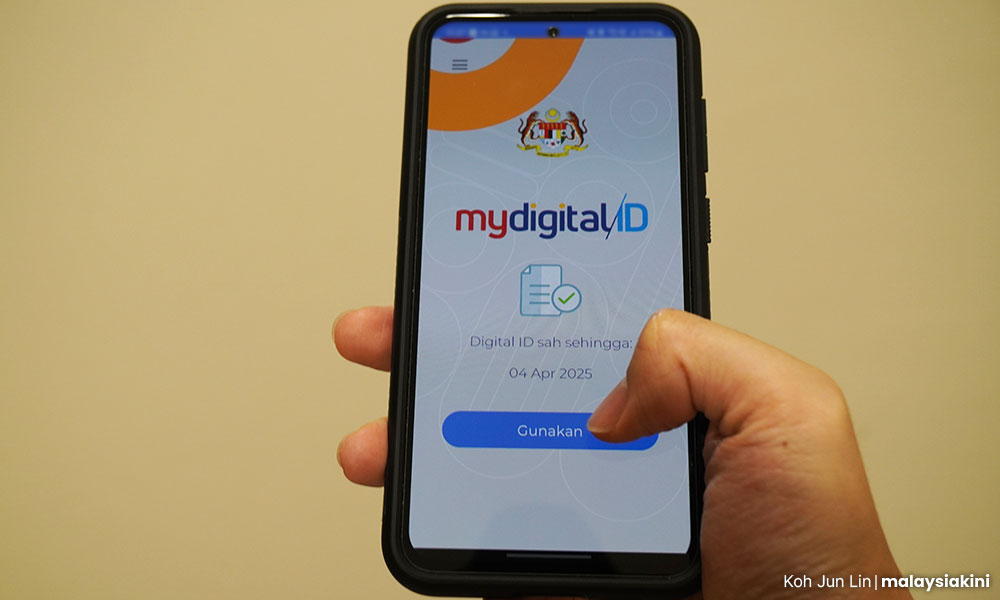
It is a leap of faith expected of citizens without earning their trust first, and it is being pushed fast. The government is already embedding MyDigital ID into high-traffic services and apps for the Road Transport Department and police, and soon the new National Integrated Immigration System (MyNIISe) app for border crossing, effectively making it a requirement for essential public services.
Consider the experiences of many with the MyJPJ app. When RTD decided to scrap physical road tax stickers and told everyone to use the app for digital road tax and driving licences, Malaysians rushed to download it and the app promptly crashed under the sudden load.
It was an embarrassing example of rolling something out before ensuring it could handle real-world demand.
The same approach is also seen in the realm of social media. The Communications Ministry is pushing for all social media platforms to implement eKYC (electronic Know-Your-Customer) verification by the middle of this year.

In plain language, users will soon need to show an official ID to register a social media account, supposedly to keep under-16 kids off and to curb online scams.
Protecting children and clamping down on fraud are noble goals, but rolling out an ID requirement for social media is a huge step with massive implications for privacy, freedom of expression and feasibility.
How data will be shared or safeguarded between tech companies and the government, and how misuse of this rule to silence anonymous whistleblowers or dissenting voices can be prevented, has yet to be answered.
Instead, it is another announcement with a tight deadline, effectively policy by press conference and sudden rollout. Launch the thing now, figure out oversight later.
Structural gaps need solution
Our AI gap is not about tools or talent. It is that we lack the structural and institutional backbone to harness AI responsibly.
We are trying to bolt jet engines onto a paper plane. Without sturdy architecture or environment, such as clear laws, strong oversight bodies, and reliable data governance, these high-tech tools can do more harm than good.
An AI-driven system is only as good as the system that governs it. It needs safeguards to catch mistakes or abuses, rollouts that happen only after systems are proven to work, and enforcement that sticks to rules without cutting corners.
AI will not suddenly fix our bureaucracy or governance. On the contrary, if you feed AI into a broken bureaucracy, it will amplify the breakage. Automating a bad process just lets it spew errors at scale.
If our databases are full of errors, an AI system will propagate those errors nationwide in seconds. If there is no accountability for bad decisions now, an AI tool will only make the decisions more opaque and harder to challenge. We will just get algorithmic chaos on top of administrative chaos.
Pause and rethink
What Malaysia needs now is the discipline to pause and lay the groundwork by doing the unsexy stuff before proclaiming we are an “AI-driven nation”.
Planning must precede proclamation. That means fixing the invisible systems that make technology work by updating our data protection laws, especially since government agencies are currently exempt from the Personal Data Protection Act 2010 (PDPA), and establishing independent oversight for big digital projects.
It also means having honest public conversations about identity, privacy and accountability before rolling out nationwide digital ID or surveillance-driven policies.
These are the foundational debates and decisions that cannot be skipped. They are our equivalent of marathon training.

There is a saying, often attributed to author Ernest Hemingway: never mistake motion for action. Malaysia has been very busy with lots of motion but are we truly progressing?
Launching an app or an AI policy is not progress if the society and systems around it are not prepared.
In this AI era, the cost of getting it wrong is extraordinarily high. When things break at scale, it erodes public trust and legitimacy. People lose faith that the government knows what it is doing.
Instead, the government should slow down where it needs to and only speed up again once the fundamentals are in place.
In other words, tie our shoelaces, train hard, and then start the sprint. Move fast after we have made sure we would not break things.
Because if we barrel ahead unprepared and break the public’s trust, we would just be limping through the AI race, we will be out of it entirely. - Mkini
WOON KING CHAI is the director of the Institute of Strategic Analysis and Policy Research (Insap). He previously served in senior roles in the federal government and the private sector.
The views expressed here are those of the author/contributor and do not necessarily represent the views of MMKtT.

No comments:
Post a Comment
Note: Only a member of this blog may post a comment.