


“Rights. Justice. Action. For all women and girls.” - UN Women
“Give to Gain” - International Women’s Day
As we celebrate the progress of women’s rights on International Women’s Day today, let us also take a moment to be thankful for the millions of domestic workers, both Malaysian and migrant women, who work tirelessly in an often-invisible area of employment, namely care work in homes all across the country.
Their work has enabled millions of Malaysians to pursue their dreams and take on jobs outside their homes.
There are several reports highlighting the correlation between increased participation of women in the labour force when working women have access to or the ability to hire a domestic worker to take care of their families and home.
‘Business’ of employing domestic worker
According to Socso, a domestic worker is “a person employed exclusively in the work or in connection with work of a private dwelling house.”
This broad definition includes house helpers, caregivers, nannies, personal drivers, gardeners, cooks, and security guards working within private homes.

As we know, domestic workers are employed by individual households and their labour is often perceived as informal or personal.
But when we examine the system more closely, it is clear that domestic work operates within structured commercial networks run by recruitment agencies.
Recruitment agencies source, process, train, and place domestic workers.
Contracts are signed, and placement fees are charged. Cross-border transactions occur, and salaries are negotiated. Administrative systems and intermediaries operate to manage documentation, permits, and compliance.
Entire supply chains operate around the placement of domestic workers. This is organised economic activity, and where there is organised economic activity, there are business actors. And where there are business actors, there must be business responsibility.
Labour rights and actions by businesses
Under the UN Guiding Principles on Business and Human Rights (UNGP), which Malaysia endorsed in 2011 at the UN General Assembly, businesses have a responsibility to respect human rights.
For recruitment agencies involved in domestic worker placement, this means conducting human rights due diligence. This involves identifying risks of exploitation, preventing excessive recruitment fees, ensuring transparency in contracts, mitigating harm, and providing access to remedies where abuses occur.

When recruitment is ethical and transparent, exploitation decreases. When workers are not burdened by debt before they even begin employment, their vulnerability is reduced.
When contracts are clearly explained and grievance mechanisms are accessible, justice becomes possible. But business responsibility alone is not enough.
Once we are clear that domestic work operates within a business ecosystem, we also need to understand that it cannot be treated solely as a private arrangement between an employer and worker.
International human rights standards are clear where states (governments) have a duty to protect individuals from abuse by third parties, including businesses. And usually, in the case of domestic workers, we focus on the recruitment agencies.
This means reviewing outdated legal exclusions, including provisions under the First Schedule of the Employment Act 1955 that deny domestic workers certain protections.
It also means ensuring that enforcement mechanisms are accessible and effective. When full legal protection exists and the recruitment supply chain is properly monitored, we can at least ensure that the structural aspects of the system protect domestic workers.
NAPBHR and rights of domestic workers
Another obligation that Malaysia has is to adhere to its first National Action Plan on Business and Human Rights (NAPBHR 2025–2030).
Launched in August 2025, it is an example of Malaysia’s commitment to integrating the UNGPs into policy, regulatory expectations and business conduct.
Many claim that NAPBHR signals a “systemic shift in how Malaysian businesses are expected to operate”, both at home and abroad.
This action plan is meant to align Malaysia with global due diligence trends and establish the foundation for future legislative reforms, including a possible move towards mandatory human rights and environmental due diligence implementation and even a Corporate Manslaughter Act in high-risk industries/sectors of work.
We include domestic workers in the high-risk sector of employment based on two reasons: first, the numerous reported cases of abuse and deaths of domestic workers in Malaysia and secondly, the fact that abuses and violence taking place in the private spheres (homes) remain largely invisible to society and often seen as “family” issues, as with the case of domestic violence.
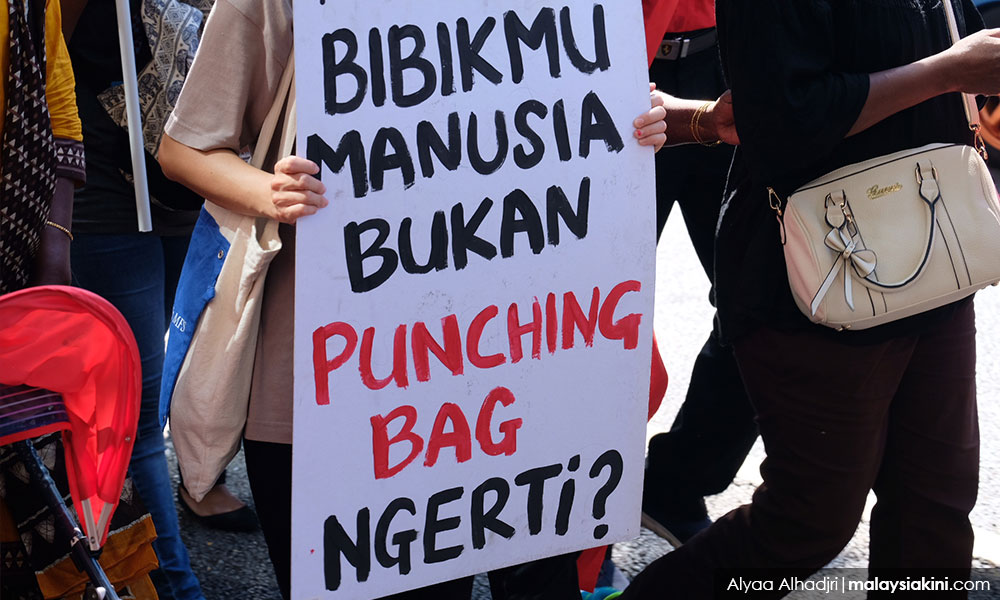
Human rights groups have shown that domestic workers in Malaysia do face a certain level of discrimination and violations of their rights.
The continued exclusion from rights and benefits contained in the Employment Act that denies them written contracts, including specific work hours, paid days off, and other benefits, places the health and well-being of many women domestic workers at risk.
Recruitment agencies should ensure that the recruitment processes are ethical, but also that the work conditions of the domestic workers are conducive and safe.
Recruitment agencies should also undertake human rights due diligence after placing a domestic worker in a specific home.

While we recognise that most Malaysian employers treat their domestic workers with fairness and respect and that many households depend deeply on the trust built within these working relationships, a stronger regulatory framework remains crucial for the rights of women workers. Clear standards also help protect good employers.
Therefore, as we celebrate this important date for women, we call on the government to take immediate steps to adhere to its international human rights obligations and its commitments made in the NAPBHR to respect the rights of all workers in Malaysia, including those of domestic workers, which is largely feminised area of employment. - Mkini
PERSATUAN SAHABAT WANITA SELANGOR is an NGO established in 1984 with the mission to advance the rights of all women workers in Malaysia.
The views expressed here are those of the author/contributor and do not necessarily represent the views of MMKtT.

No comments:
Post a Comment
Note: Only a member of this blog may post a comment.