


Azlina Abdul Aziz has lived several lifetimes in one. At 52, she is now a criminal lawyer, a feat she achieved in her late 40s, not out of ambition but necessity - to help save her son from the gallows.
Her story begins in hardship, where a difficult childhood forced her into the role of caregiver early on, tending to an ex-army father with schizophrenia while assisting to raise seven siblings.
With no financial stability and mounting responsibilities at home, school became a luxury she could not afford. A RM25 fee stood between her and a school education she would never complete.
Amid a poor understanding of mental health in the 1970s, the legal system dealt Azlina’s father a harsh blow as his condition worsened.
In 1978, Abdul Aziz Hussein was convicted of injuring an officer and jailed for two years, a sentence that cost him his army benefits and pension, plunging the family deeper into poverty.
“I was the one looking after my parents and my siblings. To have a schizophrenic father is very difficult… financially, there was no support," she recalled in a recent interview with Malaysiakini.
When she was a teenager, her family also suffered the loss of two siblings to HIV from drug abuse.
Azlina left school without sitting for her Sijil Pelajaran Malaysia, stepping into a cycle of odd jobs and waitressing to keep her family afloat.
At 18, she married, but the relationship did not last. After three years, she walked away, spending another eight years as a single mother.
Those years raising her child alone were defined by struggle and vulnerability.
“I didn’t know where to eat or how to go back home. I was desperate,” she said.
She recalled how some men tried to exploit her situation.
“When you are a single mother, they think you are desperate for sex.”
At her lowest point, she considered giving up her son for RM2,000 to someone who could offer him a better life, but something held her back.

“When a woman gives birth, she changes. That instinct… it keeps you grounded.”
That child, a boy she named Said, would later become the centre of the greatest battle of her life.
Saving Said: The legal mission
In 2016, Azlina’s world was upended when police arrived at her door, and what began as confusion quickly turned into disbelief - her son had become a murder suspect.
Said, whom she described as kind, trusting, and intellectually bright despite being diagnosed with mild intellectual disabilities and ADHD, became mired in a murder case after befriending a Pakistani national.
This Pakistani man invited Said to follow him to his country to work at his father’s company for a summer. The trip never happened, and it was later discovered that the company did not even exist.
The man later came under police scrutiny for murder, and an unsuspecting Said - buoyed by the prospect of friendship and a chance at independence - found himself dragged into the turmoil resulting in a capital punishment charge.
Trust exploited
Azlina said her son had always been different, and she sensed it even before a formal diagnosis.
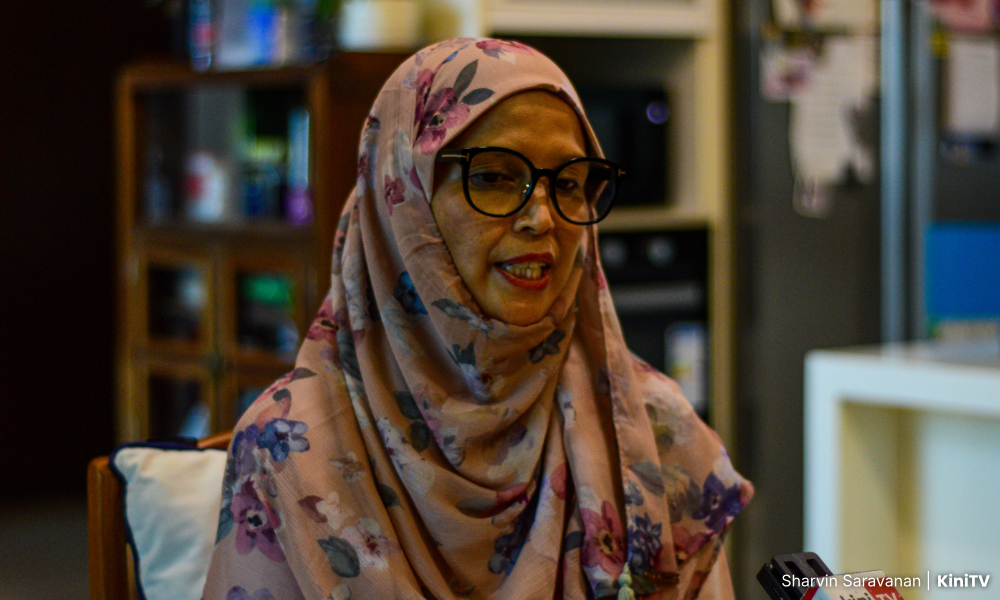
Though intellectually capable in some ways, he struggled with everyday tasks and understanding consequences. Despite this, Azlina had faith that he could live independently.
Looking back, she questions that decision, given the trouble her son later unsuspectingly fell into.
"(At age 20) we rented him a place with some university students, to get him to acclimatise, socialise and mix with the people, so that Said can go find jobs, learn his way around by taking public transport.
“I wanted him to make friends… but I should’ve been specific about what kind of friends," Azlina said.
She believes his trusting nature was exploited.
“His kindness became the weapon that was used against him,” she said.
Said, unaware of what was unfolding with his Pakistani friend, found himself implicated and charged with murder in 2016 under Section 302 of the Penal Code, read with Section 34 for common intention.
He was subsequently remanded in custody pending trial, as the case moved from the Magistrates’ Court to the High Court.
Proceedings were further delayed by the Covid-19 pandemic, with repeated postponements compounding the difficulties.

When he was taken into custody, Azlina said her son insisted that he had no connection to the crime and he did not know the people involved, including the Pakistani man’s wife who was initially treated as a suspect but later reclassified as a witness.
“How on earth? That was beyond imagination,” Azlina said.
In desperation, Azlina and her husband, Michael Cawley, turned to a lawyer whose reputation far outweighed his results.
She soon sought new counsel, but the experience left a mark, fuelling a resolve born of conviction that her son had been caught in the wrong place, with the wrong people, at the worst possible time.
Azlina refused to collapse under the weight of fear. She began reading judgments, legal principles, and anything she could find to understand the system her son was trapped in.
That fear became the catalyst for her transformation - compelling her to seek control over a reality she could not afford to be powerless in, and to build the knowledge needed to defend her son more directly if needed.
“(In the beginning) I didn’t even understand words like mens rea and actus reus… so I went to Google.”
She sat in courtrooms daily, observing, listening, learning.
At the time, she was not a lawyer, just a mother trying to make sense of a system that held her son’s life in its balance.
“If you cannot control your feelings, how are you going to fight for your son?” she said.
At this point, even in the depths of her own crisis, she helped other families in similar situations she met along the way in trying to understand their loved one’s legal case.
“When I help other people, it helps me get through my day.”
Going to law school
Azlina’s journey eventually led her somewhere she had never imagined.
Without an SPM or formal academic pathway, she applied to study law at the International Islamic University Malaysia through its Accreditation of Prior Experiential Learning for Access pathway.

In 1998, Azlina initially went to Australia to study business management, but had to return to Malaysia to complete her business diploma in 2000 due to the economic crisis.
She spent the following years taking on various roles before marrying Cawley in 2003. The couple lived in Australia until 2009, when they moved to Malaysia due to Cawley's professional commitments.
Her years of work in human resources consultancy and a clothing business in Australia, along with her lived experience, became her qualifications for law school.
“I felt very nervous,” she said of walking into university for the first time at 44.
“Such a big campus… but I asked, how can I study law?”
With her husband taking on the burden at home, she studied full-time.
Law became a lifeline that kept her focused on saving Said - “This was what kept me sane.”
After four years, she graduated in December 2022 and completed her pupillage.
She added that the journey was necessary in case she ever needed to step in as Said’s counsel.
From prisoner to free man
Said’s time in prison was difficult as he struggled to understand his surroundings, was bullied, and at times lashed out in confusion.
Yet, in her eyes, he endured it with a resilience she still finds difficult to comprehend.
“I have to be strong like him. He didn’t even realise he was in prison. For him, it was just a phase,” Azlina said, adding that he even spoke of travel plans to Korea upon release, which he thought would be soon.
“He didn’t know that he was incarcerated and was looking forward to his life again," she shared.
When he was acquitted in 2022, relief came, but not closure.
Said, now 30, struggled to adjust to life outside prison bars, and his parents once again stepped in to help him transition back to a stable and fulfilling life.
Azlina speaks of regret, wishing she had paid closer attention to Said's condition earlier.
However, she also reflects with perspective, acknowledging how her own trauma as a child caregiver shaped her life.
"We understand better. He's grateful and told me, ‘If I went to Pakistan, I might already be dead, but now I still have you’.
"We talk to each other in a better way, too. I said to him, you can share anything with us," the mother of four said.
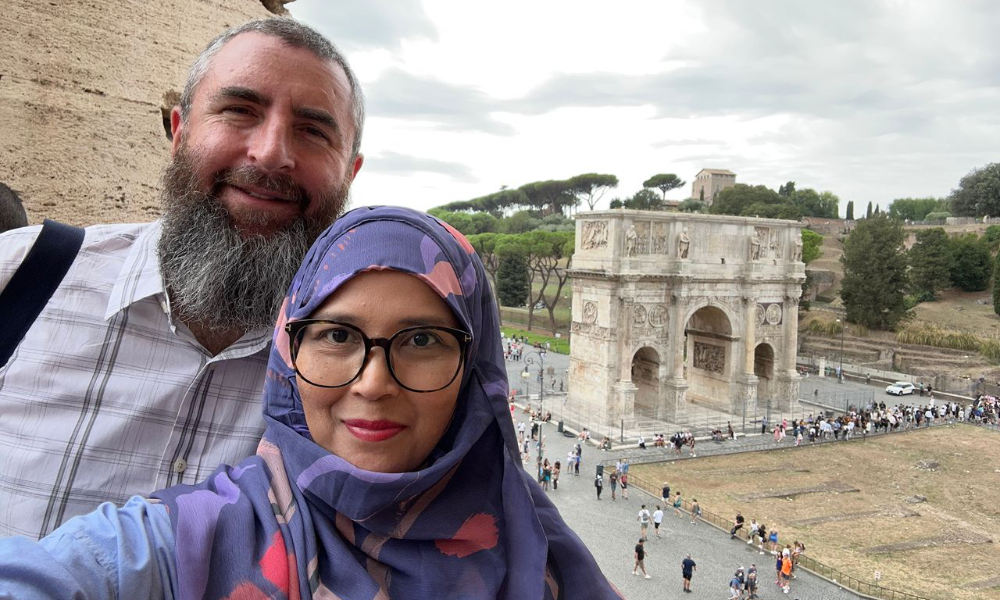
Helping other mothers in court
Now a criminal lawyer, Azlina chooses her cases carefully, often taking on matters involving children or families who cannot afford legal representation.
Her work is not driven by prestige, but purpose.
“I’m not here to compete. I’m here to share my experience, especially with other mothers.”
In fighting for her son, she rebuilt herself – piece by piece – into the advocate he needed.
“I’m grateful that I have the chance to be together with my family.
“The most important thing is my husband and my children, nothing else,” she added. - Mkini

No comments:
Post a Comment
Note: Only a member of this blog may post a comment.