

Shahril Shamsuddin says stronger coordination is needed to secure both core systems and the wider supply chain.
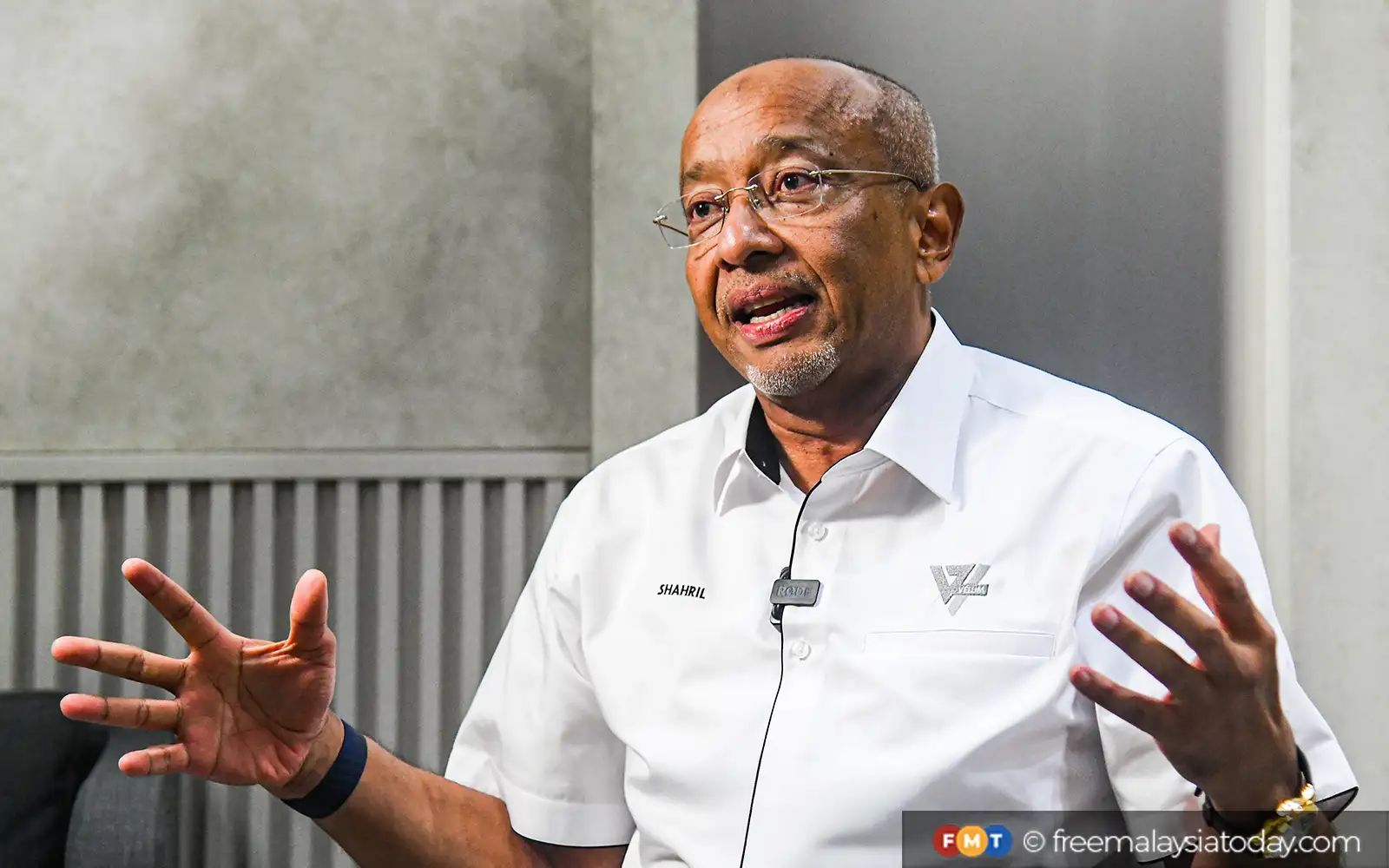
He said a comprehensive approach was needed, led by a central organisation tasked with coordinating core operations and supported by a wider network of vendors, contractors and partners.
“The most important thing is the policy, not only at the national level, but at every level.
“To have a safe cyber environment, both the lead organisation and its supply chain need to be cyber safe and secure, because we are all connected in one way or another,” he told FMT on the sidelines of the Defence Services Asia (DSA) and National Security Asia (Natsec) 2026 exhibition.
Shahril said focusing on individual systems without addressing broader coordination issues could leave vulnerabilities across interconnected networks.
“If we do not have a coherent strategy going forward, we will not be able to get to the stage where we are cyber safe.
“It is not enough just to scale one portion of it. You need an overview of the whole national infrastructure, including the supply chain,” he said.
He said the challenge was not something that could be solved overnight, as cyber resilience involved systems, behaviour and policy working together.
His remarks come as Putrajaya continues to tighten its cyber framework through the Cyber Security Act 2024, which came into force on Aug 26, 2024.
More recently, digital minister Gobind Singh Deo said Malaysia must urgently address gaps in policy, tools, talent and cross-border enforcement to strengthen cyber resilience.
Critics have argued that the Cyber Security Act 2024, though a positive step, does not go far enough in addressing the broader legal and strategic dimensions of cyber warfare.
Shahril also said local capability-building should go beyond creating a single provider to encompass the growth of a wider domestic ecosystem of companies in the field, including offshoots and partner firms that could strengthen competition and drive innovation.
He said Sapura wanted to help anchor that ecosystem by acting as a lead platform builder, with other local vendors and specialist firms developing products and services around it.
“If we were the mothership, other vendors could operate around us under the same strategy and using similar technologies, helping to generate wider economic spinoffs,” he said.
“By (developing and building the technology locally), we also reduce foreign outflows,” he said.
Shahril said this would make the industry more robust by spreading innovation across different specialised players while strengthening the local supply chain.
“We create the platform and then extend it through partners, who become part of the supply chain. That, in turn, makes the whole system more robust,” he said. - FMT

No comments:
Post a Comment
Note: Only a member of this blog may post a comment.