

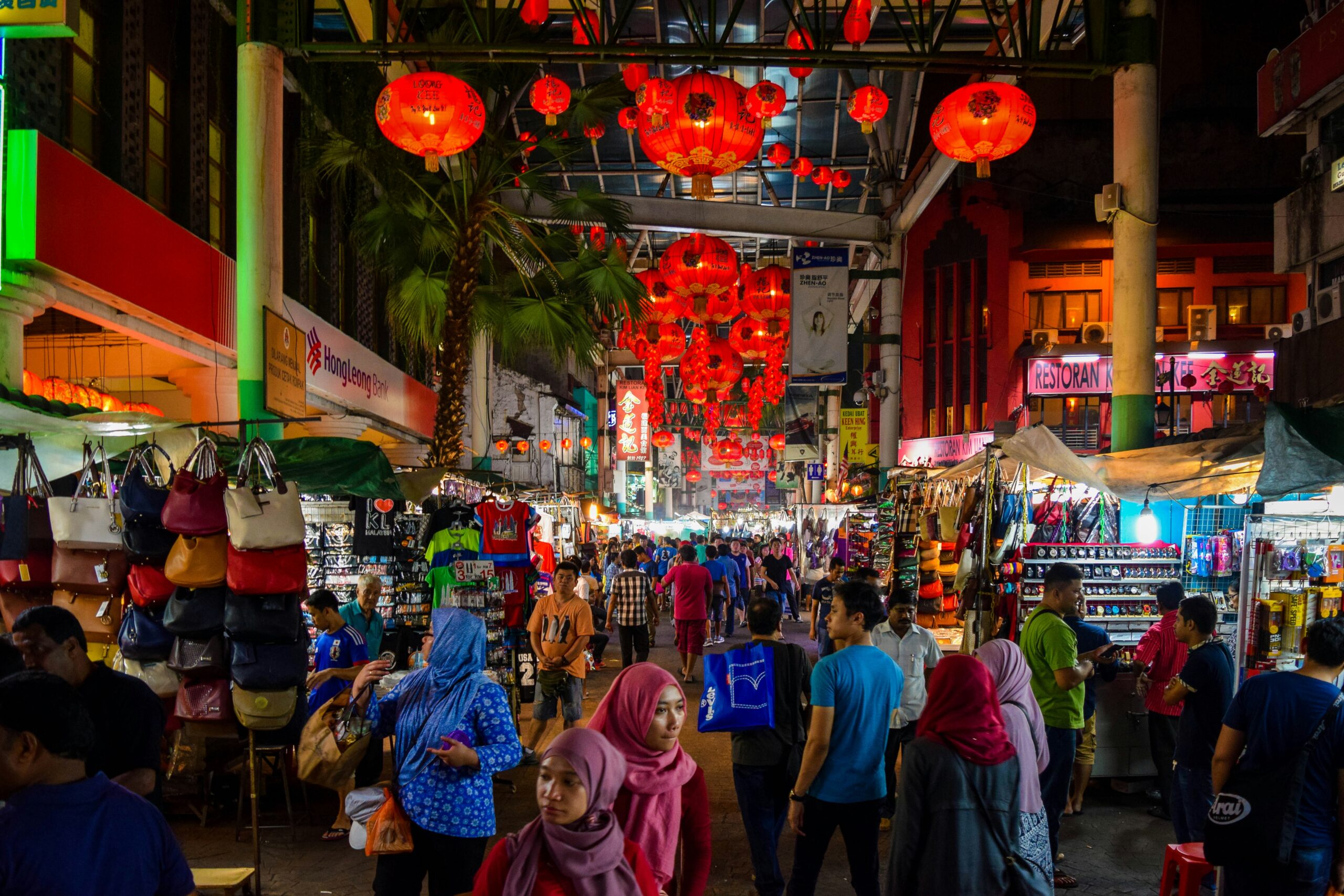
THERE are many videos about Malaysia online, and I often enjoy watching them, even when they feature places I frequent or food I am already familiar with.
Content produced by foreign influencers can be particularly interesting, as it offers an outsider’s perspective. However, viewers should approach such narratives with a degree of caution, as interpretations are often shaped by personal assumptions and limited understanding.
One recurring issue is the inability to distinguish between nationality, race and ethnicity. This is a significant mistake, especially for international travellers and content creators seeking to explain Malaysian society.
Race generally refers to shared physical characteristics such as skin colour, facial features and hair texture. It is widely regarded as a social construct used to categorise people.
Ethnicity, on the other hand, relates to shared cultural traits, including language, religion, ancestry and traditions. Unlike race, ethnicity is often self-identified or socially defined through cultural affiliation.
A useful example is the term “Malay”. Under Article 160 of the Federal Constitution of Malaysia, a Malay is defined as a Malaysian citizen who professes Islam, habitually speaks the Malay language, and conforms to Malay customs.
As a result, Malays can display a wide range of physical appearances despite sharing a common cultural identity.
Recently, I watched a video titled “Malaysian Cuisine: Making Sense of Southeast Asia’s Most Complicated Food Culture(s)”. Within the first minute, I was struck by references to “Chinese-Malays” and “Malay-Indians”.
In Malaysia, it is more accurate to refer to individuals as Malaysian Chinese or Malaysian Indian. It is also acceptable to use Chinese Malaysian or Indian Malaysian, similar to terms like Chinese American or Indian American, where nationality is paired with ethnic identity.
Terms such as “Chinese-Malay” or “Malay-Indian” would typically refer to individuals of mixed parentage. Using them interchangeably with established community identities reflects a misunderstanding of how Malaysians describe themselves.
Another common misconception arises in discussions of food. Many visitors assume that everything available in Malaysia is “Malaysian food”.
In reality, the country’s food landscape reflects a wide range of culinary traditions, including Malay, Chinese, Indian and various international cuisines.
Even within what is broadly described as “Chinese food” in Malaysia, there are distinct sub-traditions such as Cantonese, Hokkien and Hakka cuisine. These differences are often overlooked by outsiders, leading to oversimplified descriptions.
It is also worth noting that people encountered in major cities are not always locals. Many may be tourists, expatriates or foreign workers, further complicating assumptions about identity and culture.
As a Malaysian Chinese, I have never been to China. I communicate with my siblings primarily in English, although we are all fluent in English, Mandarin and Malay, and can converse in dialects such as Cantonese, Hokkien and Hakka. This reflects the layered and lived reality of identity in Malaysia.
Ultimately, misunderstandings arise when people attempt to group complex identities under simplified labels. Race, ethnicity, nationality, language, religion and culture are not interchangeable concepts.
Even within the same family, individuals differ in personality and perspective. A society as diverse as Malaysia cannot be reduced to broad generalisations without losing its nuance.
Recognising these distinctions is not about being pedantic. It is about understanding people more accurately—and representing them more responsibly.
YS Chan is a tourism, transport and training consultant.
The views expressed are solely of the author and do not necessarily reflect those of MMKtT.
- Focus Malaysia.

No comments:
Post a Comment
Note: Only a member of this blog may post a comment.