


IF Tamil Nadu represents the emergence of a new political model, Malaysia represents the risks of democratic repetition.
The conditions that enabled C. Joseph Vijay’s rise to become a dominant political force in Tamil Nadu—voter fatigue, distrust in elites, digital mobilisation and dissatisfaction with governance—are increasingly visible in Malaysia.
However, Malaysia has already experienced regime change. The current challenge is more complex: democratic disappointment rather than democratic breakthrough.
The Pakatan Harapan-Barisan Nasional (PH-BN) coalition governs under a paradox. It is a government born from reformist aspirations, yet it is increasingly perceived as resembling the system it once sought to change. This is not merely a communication issue but a structural political risk.
Governments are judged not only by policy outcomes, but also by symbolic differentiation. When Pakatan Harapan (PH) first rose to power in 2018, it represented rupture and reform. It promised institutional renewal, anti-corruption measures and political change.
Over time, however, that distinction has weakened. Policy approaches have become more incremental, fiscal constraints more visible, and structural reforms more cautious.
While these decisions may be pragmatic, public perception increasingly reflects continuity rather than transformation.
This perception gap creates political space for opposition forces, particularly Perikatan Nasional (PN).
Their advantage lies not necessarily in governance superiority, but in narrative simplicity. They need only argue that little has changed. In contemporary politics, perception often outweighs policy detail.
This situation is further complicated by the continued centrality of identity politics in Malaysia.
Race and religion remain powerful tools of political mobilisation. While effective electorally, they can weaken democratic accountability by shifting focus away from governance performance towards communal protection narratives.
In such an environment, voters may tolerate weak governance if they believe their identity is being defended. This weakens institutional pressure for reform.
Comparative regional experiences reinforce this concern. Across South Asia, excessive reliance on identity-driven or populist politics has contributed to instability, economic strain and weakened institutional trust.
While contexts differ, the broader lesson is consistent: when symbolic politics dominates governance, institutional resilience weakens.
The question then arises: could Malaysia experience its own version of a “Vijay moment”?
Structurally, several conditions are present: voter dissatisfaction, digital mobilisation, weakening party loyalty and growing impatience among younger voters. However, Malaysia differs in one crucial respect—its multi-ethnic political structure.
Any outsider political movement must navigate complex communal dynamics, making purely personality-driven politics more difficult to sustain.
This complexity may delay disruption, but it does not eliminate it. In fact, it may produce more unpredictable forms of political realignment.
Ultimately, the responsibility lies with the current governing coalition. If it can deliver visible improvements—particularly in cost of living, governance credibility and institutional reform—it can rebuild trust. If not, demand for disruption will intensify.
The lesson from Tamil Nadu is not simply about celebrity politics. It is about political tempo. Modern democracies operate on accelerated timelines. Public patience is shorter, expectations are higher, and political narratives form rapidly.
Governments that fail to demonstrate progress risk losing narrative control long before electoral cycles conclude.
Malaysia’s challenge is therefore not only policy-driven but psychological. It must restore belief that democratic participation produces meaningful change. Without that, political disruption becomes increasingly attractive.
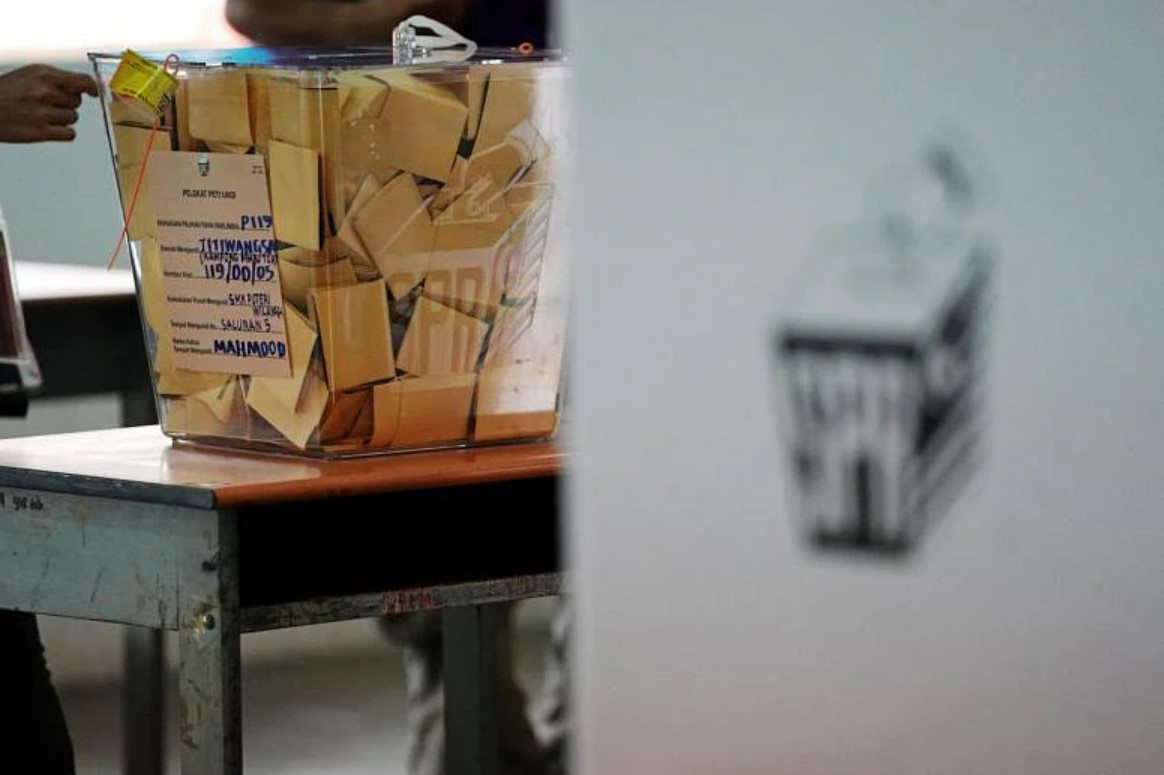
GE16 is therefore more than an election. It is a test of whether Malaysia’s democratic system can renew itself without crisis.
The warning is clear: democracy weakens not when people stop voting, but when they stop believing that voting matters.
R. Paneir Selvam is Principal Consultant at Arunachala Research & Consultancy Sdn Bhd (ARRESCON), a think tank specialising in strategic and geopolitical analysis.
The views expressed are solely of the author and do not necessarily reflect those of MMKtT.
- Focus Malaysia.

No comments:
Post a Comment
Note: Only a member of this blog may post a comment.