

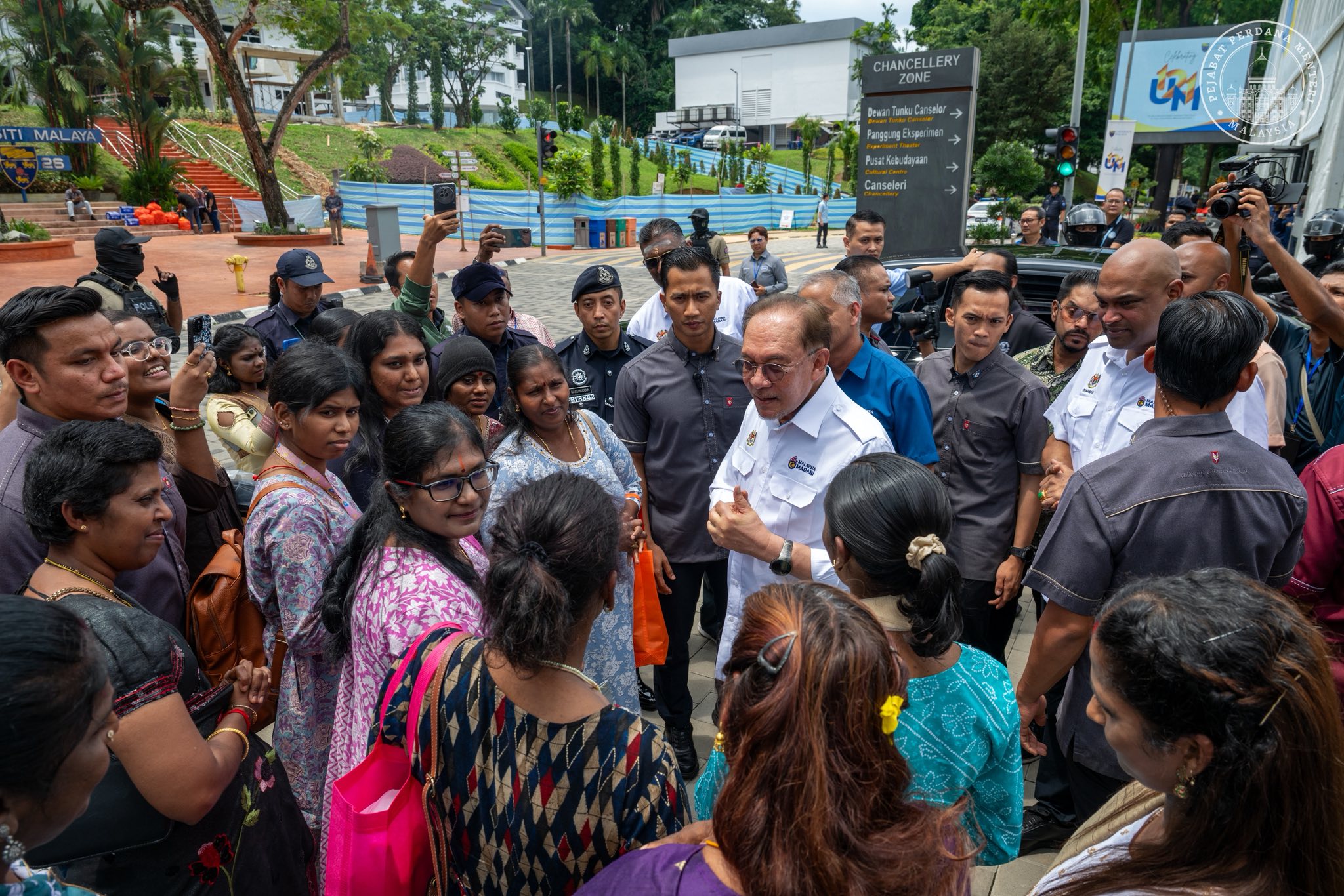
PRIME Minister Datuk Seri Anwar Ibrahim is desperate to stay on in power. He wants to continue as the second-term Malaysian PM.
Unlike the period before he assumed the premiership in late 2022, Anwar has almost lost his political relevance.
He knows that DAP cannot longer deliver the same level of support that it did in the November 2022 national polls and the state elections in August 2023.
It would be a political miracle if the DAP can make a comeback with 40 parliamentary seats. The party was wiped out in the recent Sabah state elections.
By toeing the line of the Madani government, the party has basically given up on the rights of the non-Malays.
It miserably failed to take up controversial matters such as pig farming in Selangor, the recognition of UEC, the overt discretionary nature of the matriculation system, the entry of non-Malays into the civil service and most importantly, the much-needed institutional reforms in the country as promised by the Pakatan Harapan (PH) coalition before the two elections.
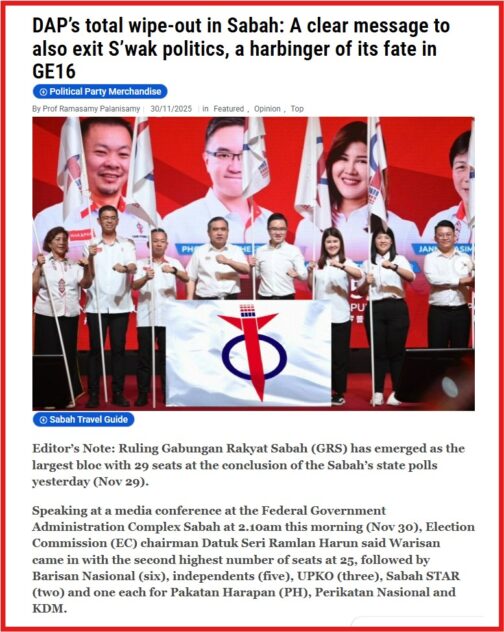
Is it any wonder that DAP was wiped out in Sabah? Yes, Peninsular Malaysia is not Sabah but the issues on which DAP capitulated were not very different.
Downhill slide
The question is whether DAP is going to become the downside of the PH-led coalition.
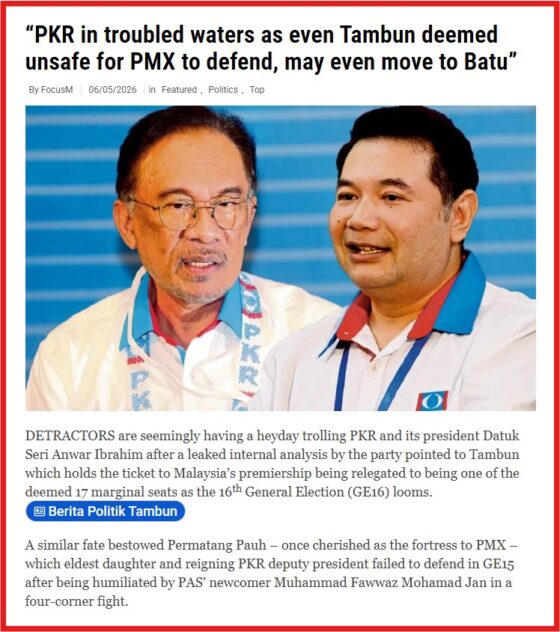
Within the PH coalition, PKR is the most politically divided party. Anwar’s elevation of his daughter Nurul Izzah Anwar as deputy president by sidelining former deputy president Datuk Seri Rafizi Ramli has created serious divisions in the party and the coalition.
How Anwar is going to unify the party remains obscure? With both DAP and PKR on a downhill road, I wonder how Anwar is going to resurrect the coalition to compete in the coming elections.
If UMNO or Barisan Nasional (BN) goes solo in the coming elections, PH can forget about a possible tie-up with BN.
The Negeri Sembilan political crisis is sufficient to indicate that things are not well between PH and BN.
While the Chinese can still count on limited representation in DAP, the Indian community has been virtually abandoned by the PH-led government.
In the aftermath of the 2023 state elections, Indian support went down to about 45 percent.
It would be a miracle for Indians to give the same level of support again to the PH-led coalition.
Anwar has a bad record with the Indian community. Gone are the days when he pretended to be the saviour of the community by mimicking the acts of the former actor-turned-chief minister of Tamil Nadu, M. G. Ramachandran.
Disillusioned Indians
Anwar has stopped pretending that he is the “father” of all Malaysians. On the contrary, his forced re-location of the 130-year-old Dewi Sri Pathrakaliamman Temple in Jalan Masjid India, Kuala Lumpur has enraged the Hindu community.
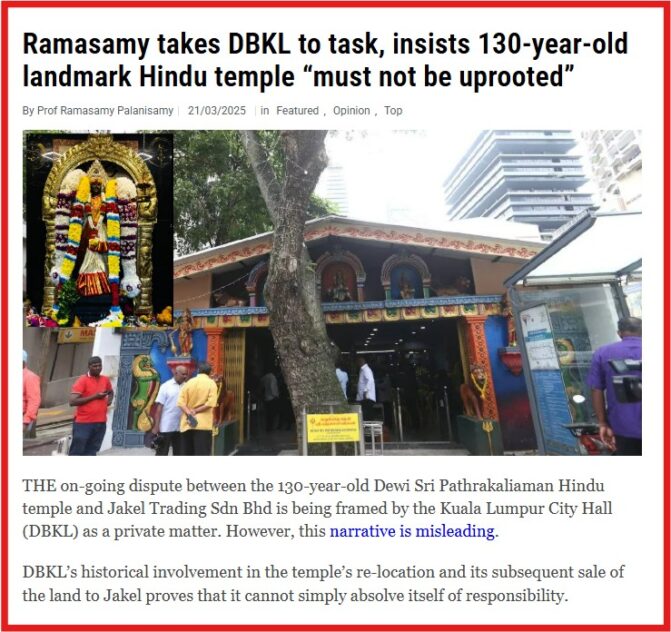
Subsequently, to please the majoritarian community, he ordered local councils to remove “illegal” Hindu temples in the country.
Temples that had existed for more than 100 years suddenly became “illegal” to Anwar. The worst part of Anwar’s move against the Hindu temples was the tacit support given by sycophantic Indian leaders in the DAP, PKR and MIC.
The shameless Indian leaders from DAP even graced the religious ceremony at the site to which the temple was to be relocated.
It was over the temple relocation issue and the order to remove “illegal” temples that Anwar came to be disliked and despised by Hindus who form the majority of Malaysian Indians.
Knowing that he is not liked by the Indian community was the reason why Anwar allocated an additional RM50 mil to the Malaysian Indian Transformation Unit (MITRA).
It is public knowledge that funds allocated to MITRA have not been properly channelled to the target groups, especially those in the lower socioeconomic categories.
Appeasement politics backfiring
RM150 mil for MITRA is nothing but peanuts, hardly sufficient to make an impact in improving the socio-economic status of the community.
In the past, I suggested that the government should allocate RM2 bil to uplift the social and economic status of the community. An additional RM50 mil is merely a drop in the ocean.
Instead of financial allocations, Anwar should have accorded more places for qualified Indian students in the matriculation programme rather than mechanically sticking to the present ethnic admission ratio.
Anwar should have improved the recruitment of the non-Malays in the country’s civil service. Rather than allocating funds that seldom reach the affected members of the community, he should have provided more business and commercial opportunities for the members of the Indian community.
At least former premier Datuk Seri Najib Razak thought out of the box to increase non-Malay admissions into the matriculation programme.
Anwar’s appeasement politics in favour of the majoritarian community seems to be the biggest stumbling block preventing him from becoming a PM for all communities in the country.
I seriously doubt that Indians given their discrimination and political ostracism are ready to support Anwar’s coalition.
Through his reckless acts of appeasement politics, Anwar has hurt and ridiculed the community beyond imagination.
Many Malays have also given up on Anwar by aligning with Perikatan Nasional (PN) which reportedly commands about 70% of Malay support.
With the decline in Chinese and Indian support, I wonder on what basis Anwar expects to make a political comeback for a second term in office.
Former DAP stalwart and Penang deputy chief minister II Prof Ramasamy Palanisamy is chairman of the United Rights of Malaysian Party (Urimai) interim council.
The views expressed are solely of the author and do not necessarily reflect those of MMKtT.
- Focus Malaysia.

No comments:
Post a Comment
Note: Only a member of this blog may post a comment.