

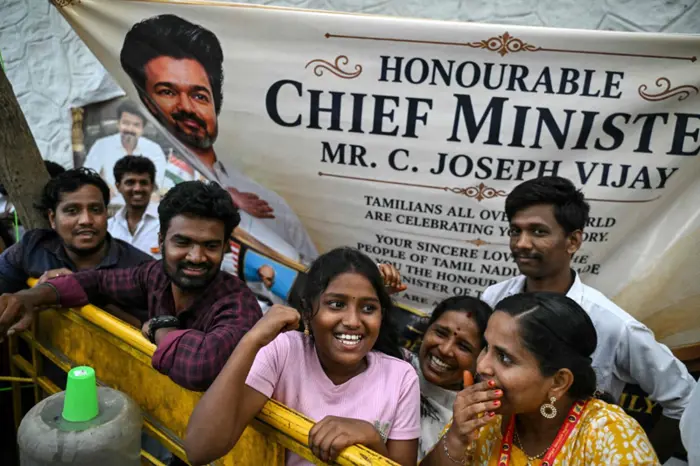
THE rise of C. Joseph Vijay from Tamil cinema’s most bankable star to a dominant political force in Tamil Nadu is not merely an electoral story; it is a political phenomenon that demands structural interpretation.
In this analytical scenario, Vijay’s leadership of Tamilaga Vettri Kazhagam (TVK) and its rapid rise within a short period illustrates a wider transformation in democratic politics.
His early symbolic policy actions, including household electricity relief measures, an anti-drug task force and a women’s safety initiative, were not only administrative decisions but also carefully calibrated political signals.
They demonstrated urgency, responsiveness and an awareness that in the digital age, legitimacy is increasingly performed in real time.
The deeper significance of Vijay’s rise lies not in these initial measures, but in what his success suggests about the changing architecture of democratic competition.
To understand this, one must first consider the exhaustion of Tamil Nadu’s long-established political order. For decades, the state was defined by a stable rivalry between the Dravida Munnetra Kazhagam (DMK) and the All India Anna Dravida Munnetra Kazhagam (AIADMK).
Both parties were deeply embedded in patronage networks, organisational hierarchies and ideological traditions rooted in Dravidian politics.
While this system delivered stability, over time it also produced stagnation. Governance became repetitive, political rhetoric increasingly ritualised, and leadership structures appeared more dynastic than democratic.
The system did not collapse due to failure, but because it gradually lost its capacity to inspire. Many voters were not merely dissatisfied; they were politically fatigued.
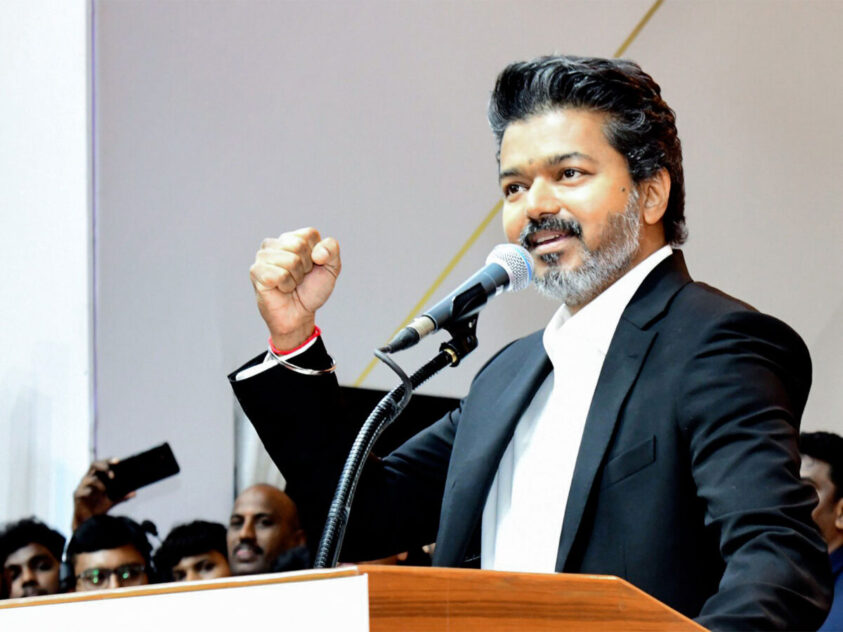
Vijay’s intervention succeeded because it disrupted this fatigue. He entered politics not as a conventional politician seeking incremental trust, but as a public figure who already possessed it.
His long cinematic career had constructed a moral persona in the public imagination: an incorruptible figure who challenged injustice and protected ordinary people.
In political science terms, this created symbolic legitimacy, where cultural recognition is transferred into political credibility. In an era of information overload, many voters do not evaluate policy detail in depth.
Instead, they rely on intuitive judgement and emotional recognition. Vijay’s screen persona functioned as a cognitive shortcut.
Many supporters did not need persuasion regarding his character; they already believed they knew him.
However, celebrity alone cannot explain electoral success at this scale. What converted symbolic capital into political power was technology.
Unlike traditional parties reliant on hierarchical structures and mainstream media, TVK’s rise was digitally native. Social media platforms became the central arena of mobilisation rather than a supplementary tool.
Platforms such as YouTube, Instagram and X allowed direct communication between leader and electorate, bypassing traditional gatekeepers.
More importantly, political messaging became highly personalised. Different audiences encountered different versions of Vijay: youth saw aspiration, women saw protection, workers saw dignity, and the middle class saw renewal.
This was not mass communication in the traditional sense, but algorithmically shaped political persuasion.
This shift reflects a broader transformation in democratic politics. Traditional campaigning relied on broadcasting—one message delivered to all voters simultaneously.
Contemporary politics increasingly relies on micro-targeting, where messaging is tailored to specific groups.
TVK also benefited from a decentralised digital ecosystem. Fan clubs, online influencers and volunteer networks acted as co-producers of political messaging. Memes, short videos and viral clips were not peripheral but central to mobilisation.
This participatory communication model gave TVK a structural advantage over legacy parties still reliant on top-down organisation.
While youth support has been widely emphasised, it requires careful interpretation. Youth engagement today is often less ideological and more emotional.
Many younger voters are politically fluid, responding to novelty, dissatisfaction and immediacy rather than long-standing party loyalty.
At the same time, a significant feature of TVK’s success was its ability to attract older voters previously aligned with established parties. This reflects a broader process of partisan dealignment, where traditional political identities are weakening and voters are increasingly willing to shift allegiance based on perceived performance or emotional resonance.
Vijay’s strategy was effective because it avoided extremes. He did not present himself as a radical disruptor, nor as a continuation of the existing system. Instead, he positioned himself as a corrective force.
This ambiguity reduced the perceived risk of political change, allowing voters to support him without feeling they were abandoning political continuity entirely.
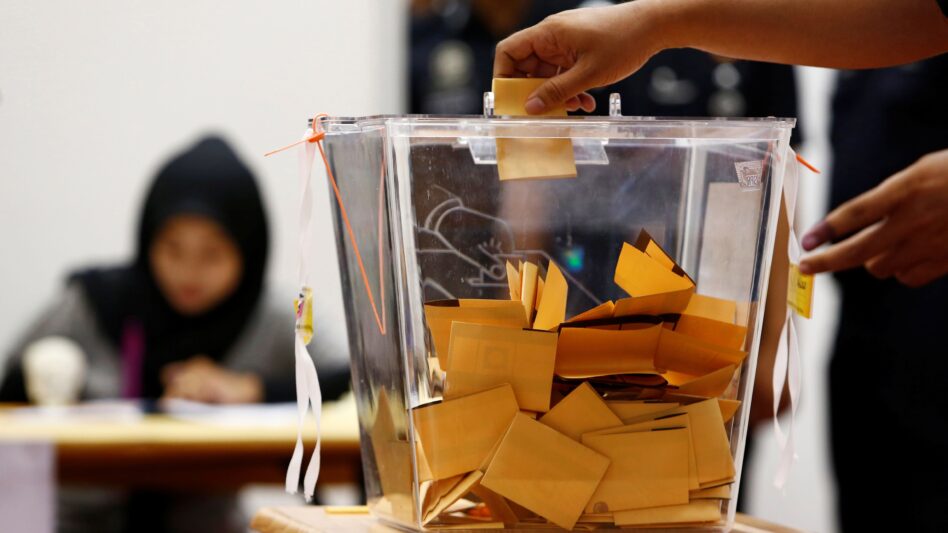
The parallels with Malaysia’s 2018 General Election are notable but not identical. Both contexts reflect voter fatigue, distrust in institutions and the growing influence of digital communication.
However, Malaysia’s transition was coalition-driven and institutionally anchored, while Vijay’s scenario reflects personalised populism, where leadership itself becomes the primary vehicle of change.
This distinction is important because personalised movements face a structural challenge: institutions can outlast coalitions, but rarely outlast individuals.
The key question is therefore not whether such movements can win power, but whether they can institutionalise beyond personality. Governing through emotional legitimacy is fundamentally different from governing through administrative competence.
Tamil Nadu’s voters, in this scenario, have not merely elected a government; they have invested emotional expectations in a figure who represents renewal. Delivering infrastructure and welfare is one challenge. Sustaining emotional legitimacy over time is another.
Ultimately, the test of Vijay’s leadership will not be electoral success, but whether democratic accountability and institutional strength are strengthened or weakened by his rise.
R. Paneir Selvam is Principal Consultant at Arunachala Research & Consultancy Sdn Bhd (ARRESCON), a think tank specialising in strategic and geopolitical analysis.
The views expressed are solely of the author and do not necessarily reflect those of MMKtT.
- Focus Malaysia.

No comments:
Post a Comment
Note: Only a member of this blog may post a comment.