


A probe against activist Shakila Zen shows that Malaysia’s freedom of speech protections remain lacking, with laws still being used against activists despite previous court observations, lawyer Zaid Malek said.
Representing Shakila at the Pekan district police headquarters today, Zaid (above, second from left) said the investigation had brought to mind activist Heidy Quah’s legal challenge against Section 233 of the Communications and Multimedia Act 1998 (CMA).
He said the Federal Court had previously affirmed in February that Section 233 remains constitutional, but stressed that the provision should not be used against activists or individuals who criticise public authorities.
However, Zaid said enforcement practices on the ground had not reflected the court’s decision, with activists still being called in for investigations under the provision.
“The government had amended Section 233 to improve it to prevent such cases from happening. But it did not happen, and activists are still being called in under Section 233.
“I believe many more such cases will continue to happen. Activists, opposition parties and members of the public will still be called in under Section 233,” he said.
Shakila was summoned to provide her statement to the Pekan police today in relation to her social media post on May 10, where she is suspected of defaming the Pahang royal institution by linking it to sand mining activities.

Investigation details clarified today, said Shakila is currently being probed under Section 233 of the CMA and Section 504 of the Penal Code, rather than Section 500 of the Penal Code.
Section 233 of the CMA, also known as the “Akta Sakit Hati” (Hurt Feelings Act) by its critics, criminalises the “improper use” of network facilities with the intent of annoying, abusing or threatening another person.
Section 504 of the Penal Code, on the other hand, deals with intentional insult with the intent to provoke a breach of the peace, while Section 500 of the Penal Code specifies the punishment for criminal defamation.
Form of intimidation
Although she had offered full cooperation, Shakila said she still faced intimidation by police officers while going through the statement-taking process.
Shakila alleged that she was initially prevented from having her lawyers accompany her during questioning, with the investigating officer also failing to explain the procedure involved.

She claimed police had told her that barring lawyers from entering was a standard procedure, and alleged that her lawyer was even threatened with having his statement recorded as a witness.
“To me, these were small forms of intimidation that were carried out, even though I had given my full cooperation by coming to the Pekan district police headquarters.
“Whatever happened inside there earlier was, in my view, a form of intimidation meant to make activists and members of the public afraid to speak out, especially.
“Even I, who was accompanied by a lawyer, could still face such action. What more ordinary members of the public or activists who cannot afford to have a lawyer or legal counsel accompany them?” she said.
Freedom of expression
Shakila also reiterated her concerns over the handling of the investigation, after previously accusing police of employing “intimidation tactics” in relation to the process.
She had initially been summoned to provide her statement at the Pekan police headquarters, before the venue was later changed to Petaling Jaya following discussions with her lawyer.
However, she ultimately had to appear in Pekan today, where she was questioned for about half an hour and had her phone seized as part of the investigation.
Shakila emphasised that police resources should not be spent on such matters, adding that there were other issues that required their attention and investigation.
Zaid maintained that freedom of expression was a constitutional right enshrined under the Federal Constitution and that members of the public had the right to criticise public institutions.
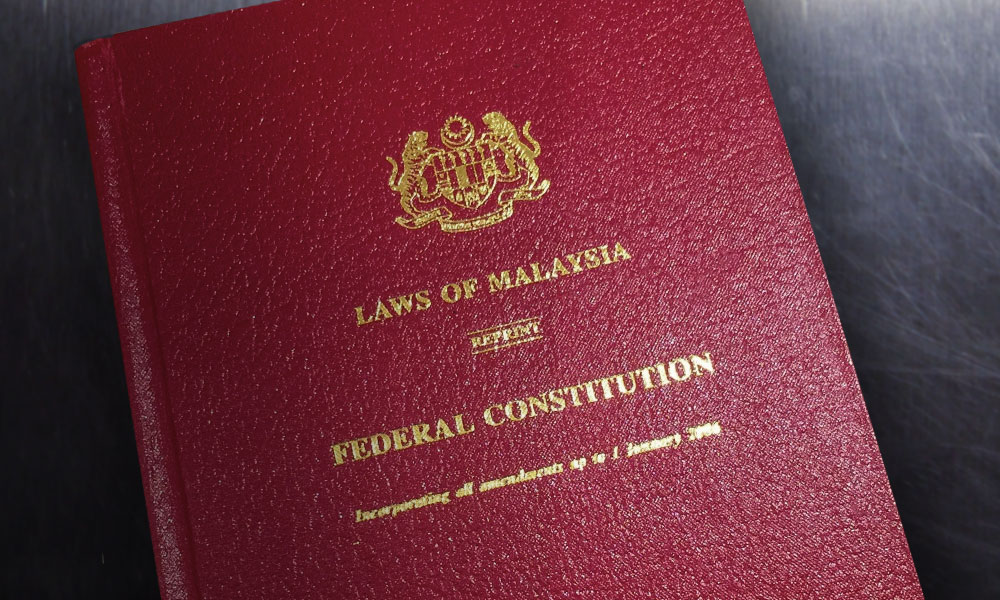
"Any criticism, whatever it may be against any public institution, is the right of the people under the Federal Constitution.
“I do not think it is fair for ordinary members of the public, activists or regular people, who are not royalty or VIPs, to face such action," he said. - Mkini

No comments:
Post a Comment
Note: Only a member of this blog may post a comment.