


KINIGUIDE | Of the many shortcomings in Malaysia’s electoral system, one of the easiest to quantify is malapportionment: some constituencies have far fewer voters than others, so a vote in one can count for much more than a vote in another.
A redelineation exercise under way in Sarawak appears to tackle the problem, but critics say the Election Commission (EC) has not gone far enough.
Here is what is happening in the land of the hornbills, and how the numbers are shifting.
What is happening?
From Sept 1 to Sept 30, the EC has put its proposal on display for public feedback. For the first time, voters can view it on a website instead of travelling to designated locations.
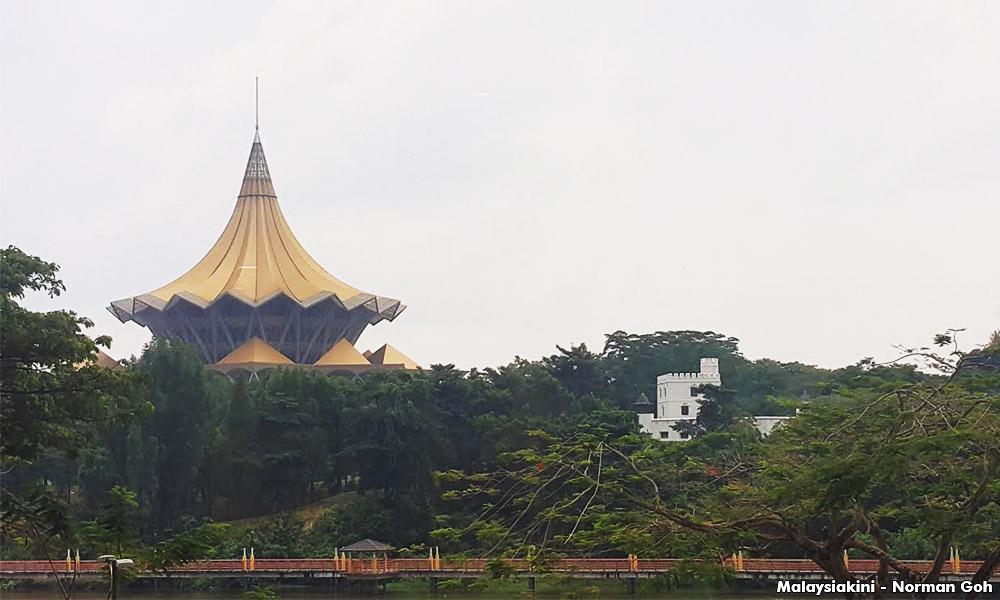
Parliamentary constituencies remain unchanged, but the proposal redraws the boundaries of many Sarawak state constituencies.
State seats would rise from 82 to 99, and 10 existing constituencies would be renamed.
What are malapportionment and rural weightage?
A core principle of redelineation is "one person, one vote": every ballot should carry equal weight in putting a representative in office.
That means each constituency should have roughly the same number of voters. Exact equality is hard to achieve, so some variation is allowed.
Limits on that variation differ between jurisdictions. Inequality beyond the limit, or beyond what is administratively necessary, may be considered malapportionment.
The principle is enshrined in Clause 2(c) of the 13th Schedule of the Federal Constitution, which says the number of electors in each constituency in a state should be approximately equal.
However, the clause carries an important and controversial caveat: the "rural weightage".
The Constitution says: "having regard to the greater difficulty of reaching electors in the country districts and other disadvantages facing rural constituencies, a measure of weightage for area ought to be given for such constituencies".
/file/1186/3cc1d0667f4de2c53b6c379319518169.jpeg)
The exception is meant to keep sparsely populated rural constituencies small and manageable despite poor infrastructure and difficult access. But it also allows rural constituencies to have fewer voters than urban ones, making rural votes more powerful and diluting the value of urban votes.
How much disparity is allowed has shifted over time.
When Malaya became independent, the Constitution allowed up to 15 percent variation from the average. Later amendments removed that provision, leaving only vague wording about a "measure of weightage" and no hard limit.
This paved the way for rural constituencies several times smaller than urban ones in the same state.
A 2012 parliamentary select committee report on electoral reform highlighted this shortcoming. It called on the EC to implement "one person, one vote" and to bring back the rural weightage formula.
However, the committee proposed no figure for an appropriate weightage.
Malaysiakini has asked the EC whether it has moved to implement the recommendation or adopt a rural weightage formula. It has yet to respond.
How does the proposal affect malapportionment in Sarawak?
There is no agreed figure on rural weightage. Groups typically propose allowing a deviation from the average of 15 to 25 percent.
Getting the figure right matters especially in Sarawak, where reaching some rural communities can mean days of travel across rivers and jungle, and ballot boxes have had to be flown by helicopter.
Take the most generous end of that range, a 25 percent deviation, as a yardstick.
In 2016, the first election held on the current boundaries, 34 constituencies were undersized, 20 were oversized and 28 were within the limit.
The smallest, Sadong Jaya, had 6,749 voters. The largest, Pelawan, was about 4.78 times larger at 32,233 voters.
The 2026 proposal gives a mixed picture.
It would cut undersized constituencies to 26, but oversized ones would rise to 27, amid the creation of 17 new seats. Seats within the 25 percent limit would rise to 46, from 28.
The gap between the smallest and largest seats also narrows, according to Malaysiakini's analysis of ElectionData.my's compilation of official data.
The smallest proposed seat, Pelagus, would have 10,372 voters. The largest, Piasau, with 34,546, is "only" 3.3 times bigger.
What’s wrong with the proposal?
Despite the improvements, malapportionment persists at levels beyond any rural weightage previously proposed by electoral reform groups such as Bersih and Tindak Malaysia.
In a joint statement shortly after the proposal was unveiled, Tindak Malaysia and Persatuan Pemangkin Daya Masyarakat (Rose) welcomed the improvements but flagged persistent malapportionment among their complaints.
“The modern EC, particularly after the democratic reforms and institutional expectations that emerged after 2018, should have aimed considerably higher,” they said.
The groups also raised other problems, including an apparent disregard for local ties, and said some constituencies, such as Demak Laut, would see malapportionment worsen.
What happens next?
The viewing period closes at 5pm today. The EC will then hold local inquiries to hear objections.
The Federal Constitution allows objections from three parties: the state government, the local authority, and groups of at least 100 voters from the affected constituencies.
The EC will then issue a revised proposal for a final round of public feedback, before submitting the final proposal to the prime minister to table in the Dewan Rakyat.
EC chairperson Ramlan Harun said the EC had received 18 objections as of Sept 24.
“The objections we have received so far were mostly specific to changes in polling districts from one state constituency to another.
“There are also several objections related to the proposed names of the state constituencies and so on. We will look into and evaluate them in detail later,” Borneo Post quoted Ramlan (below) as saying.
/file/publisher-c1a3f893382d2b2f8a9aa22a654d9c97/2025/11/36276d98cfbe90bdd17ecb412d407341.jpg)
The EC is accepting objections on its website until 5pm today. For help, call the Sarawak constituency boundary review hotline at 082-549420 or email ksp@spr.gov.my.
Rose is also recruiting Sarawak voters to act as objectors.
Ramlan said the process will take longer than February 2027 to complete, meaning the new boundaries won't be ready in time for the next Sarawak state election.

No comments:
Post a Comment
Note: Only a member of this blog may post a comment.