


The mass shooting at Bondi Beach, Australia, and the attack at Brown University in the United States are no longer just tragedies to be mourned; they are warnings that demand serious, even uncomfortable, reflection.
These incidents did not occur on battlefields or at hardened government targets.
They unfolded in places defined by openness: a beachside celebration and a university exam hall - spaces meant to symbolise safety, normalcy, and shared civic life.
Their significance lies not only in the number of casualties, but in what they reveal about how modern violence exploits routine, predictability, and complacency.
At Bondi Beach, the attack took place during a Hanukkah gathering, turning a communal religious celebration into a scene of terror. Multiple people were killed, dozens were injured, and even police officers were wounded in the chaos.

One attacker was killed, another apprehended, and the incident was quickly framed by authorities as terrorism. This framing matters. It signals that the violence was not merely spontaneous or criminal, but ideologically charged, symbolic, and intended to intimidate far beyond the immediate victims.
The beach, a global icon of leisure and openness, became the stage for an act meant to shock both Australia and the wider world.
At Brown University, violence struck a very different environment but followed a disturbingly familiar logic. An academic building during examination season is a place of routine and predictability. Students gather at known times, in enclosed spaces, focused on ordinary academic stress rather than survival.
The attack shattered the idea that universities remain insulated from wider societal violence. Compounding the trauma was the attacker’s escape, which transformed the incident from a contained tragedy into a prolonged security crisis. Lockdowns, fear, and uncertainty spread far beyond the campus, paralysing an entire community.
These two cases reflect well-established patterns. Attacks on open public spaces are not new. Beaches, markets, concert venues, parades, and religious gatherings have been targeted repeatedly across continents. The appeal for attackers is obvious: dense crowds, minimal security, and maximum visibility. Educational institutions are similarly vulnerable.
Campuses are designed to be accessible, not fortified. Their openness is essential to learning, yet it also creates exposure. What Bondi and Brown demonstrate is not a new threat, but the persistence of an old one that societies repeatedly underestimate.
Modern violence
The critical issue is predictability. Modern violence thrives on routine. Festivals are scheduled months in advance. Exam timetables are published and followed with precision. Prayer times, commuting hours, and tourist seasons all create patterns that attackers can exploit.

Bondi’s attackers relied on the predictability of a public religious gathering in an open space. The Brown shooter relied on the certainty that students would be seated in an exam hall at a specific time. Normal life itself became vulnerable.
Equally troubling is the persistent confusion around motive. In the immediate aftermath of such attacks, public discourse often rushes toward simplistic explanations like terrorism, mental illness, hate crime, or personal grievance. Reality is rarely so neat.
History shows that many attackers sit at the intersection of ideology, grievance, and psychological distress. Premature conclusions risk either stigmatising entire communities or overlooking deeper warning signs.
The Bondi case, now treated as terrorism, highlights how identity-linked violence can inflame social tensions if handled carelessly. The Brown incident, with its unclear motive, illustrates how “randomness” itself can destabilise public confidence.
Law enforcement responses also deserve scrutiny. At Bondi, the rapid neutralisation of the attackers likely prevented even greater loss of life. This reflects lessons learned globally: speed saves lives.
However, the fact that such an attack could occur at all during a public celebration raises hard questions about preventive intelligence, event risk assessments, and the protection of soft targets.
At Brown, the failure to immediately apprehend the attacker created a secondary crisis. Extended lockdowns and uncertainty inflicted psychological harm that will outlast the physical recovery of the wounded. Security is not only about stopping violence, but about preventing fear from metastasising.
Lessons for Malaysia
For Malaysia, these incidents carry direct and urgent lessons. Malaysia prides itself on social harmony, vibrant public life, and relative safety.
Yet it shares many characteristics with the environments targeted at Bondi and Brown. Night markets, religious festivals, university campuses, tourist areas, and cultural celebrations are central to Malaysian society.
They are also, by definition, soft targets. The absence of mass shootings does not equate to immunity. Past incidents involving terrorism plots, lone-actor violence, and attacks on places of worship demonstrate that the underlying logic of such violence is not foreign.
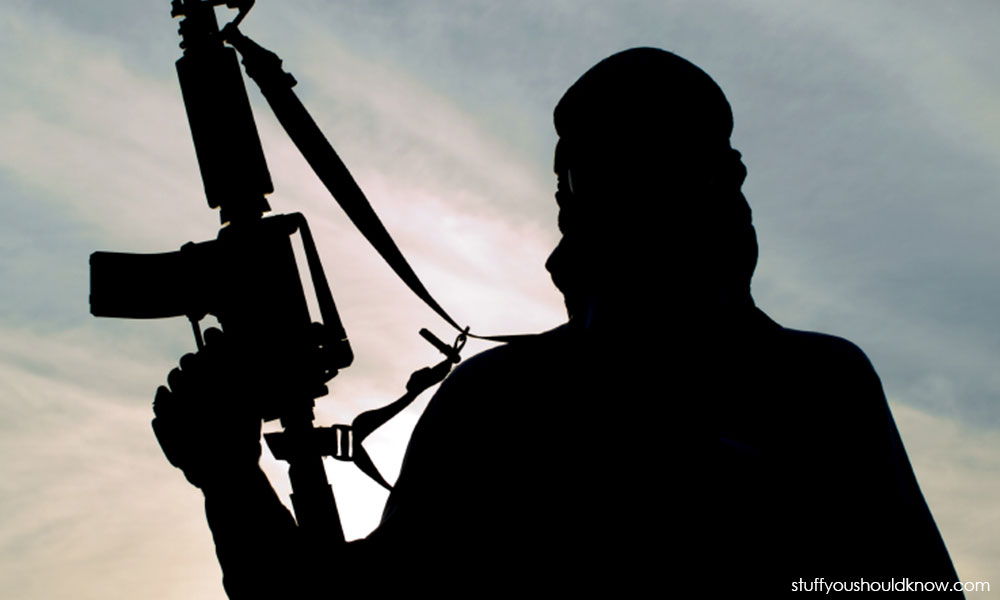
The first lesson is that threat perception must broaden. Security planning that focuses primarily on hardened targets misses where modern violence increasingly strikes. This does not mean turning beaches or campuses into militarised zones.
That would erode public life and play directly into the objectives of attackers. Instead, Malaysia needs adaptive, intelligence-led approaches that identify high-risk events and locations without permanently securitising everyday life.
Second, early warning systems require serious investment. Across many past attacks worldwide, warning signs existed but were fragmented - troubling online behaviour, escalating grievances, social withdrawal, or ideological fixation.
Universities, religious institutions, and community organisations are often the first to observe these signals. Malaysia’s challenge is to integrate these observations into coherent prevention frameworks without criminalising dissent or violating civil liberties.
Third, universities deserve special attention. The Brown incident underscores that campuses are not insulated from wider social tensions. Malaysian universities should resist the temptation to copy heavily armed security models, which risk undermining academic freedom.
Instead, emphasis should be placed on mental health services, confidential reporting channels, staff training, and student engagement. Violence prevention in educational settings is fundamentally social, not just physical.
Fourth, effective crisis communication is itself a critical component of security. Confusion and misinformation amplify fear faster than violence itself. Clear, authoritative, and timely communication can stabilise communities even when information is incomplete.
Malaysia’s experience managing public messaging during past crises shows that trust is built through transparency, not silence.
Finally, social cohesion must be treated as a core security asset. Attacks like Bondi’s are designed to provoke fear, suspicion, and communal withdrawal. In plural societies, this risk is especially acute.
Malaysia’s long-standing interfaith mechanisms and community engagement platforms are strengths, but they must be actively reinforced. Violence should never be allowed to redefine communal relationships or public confidence.
Bondi Beach and Brown University expose deep fault lines in how societies protect openness. The lesson is not to retreat from public life, but to defend it intelligently. Absolute safety is an illusion. Resilience is not.
How a society prepares, responds, and recovers determines whether violence succeeds in its broader aim. For Malaysia, the challenge is clear: protect openness without surrendering to fear and strengthen security without hollowing out the very public life it exists to defend. - Mkini
R PANEIR SELVAM is the principal consultant of Arunachala Research & Consultancy Sdn Bhd (ARRESCON), a think tank specialising in strategic national and geopolitical matters.
The views expressed here are those of the author/contributor and do not necessarily represent the views of MMKtT.

No comments:
Post a Comment
Note: Only a member of this blog may post a comment.