


A single mother’s recent claims alleging the police’s mishandling of her sexual assault case have bolstered calls for the proposed Independent Police Complaints and Misconduct Commission (IPCMC).
Noting that such complaints could be addressed more effectively under the IPCMC as opposed to the existing Independent Police Conduct Commission (IPCC), several parties contacted by Malaysiakini highlighted that either commission should be empowered to probe allegations of the police mismanaging incidents of sexual violence.
Malaysiakini previously reported that Bandar Utama resident Loh Wai Mun is seeking clarity from authorities due to alleged serious lapses in how her case was handled by the police after she lodged a report on a traumatic attack she suffered at the hands of a former neighbour.
Among other complaints, the 49-year-old asserted there were delays in relaying to her crucial information regarding her case, particularly how the rape charge against her attacker was downgraded to a lesser offence without her knowledge.
She also alleged that an officer who received her initial report had expressed doubt over the legitimacy of her complaint before instructing her to return home and shower first, prior to meeting an investigation officer.

Commenting on Loh’s tribulations, PSM Youth chairperson Amanda Shweeta Louis theorised that if the IPCMC were in place, such complaints would have a “clear and credible” avenue for accountability.
“Accountability must go hand-in-hand with structural reform - that is the only way to rebuild trust and ensure survivors get the justice they deserve. Yet, we are stuck with an IPCC that has proven itself toothless (by) lacking independence, enforcement power, and public trust.
“If survivors cannot even trust that their complaints will be handled professionally, then there is no justice to speak of,” she said.
Slamming delays to the IPCMC as “unjustifiable,” Amanda said a strong, independent, and empowered commission would allow for proper scrutiny of alleged police misconduct, including negligence, mishandling, and re-traumatisation of victims.
‘Toothless’ IPCC
Critics of the IPCC, which came into force in June 2023, have often labelled the commission as a “toothless” piece of legislation, particularly in comparison with the IPCMC, a measure first proposed by a 2004 royal commission of inquiry (RCI).
A key difference between the IPCMC and the IPCC is that the latter cannot take any action against errant police officers. Instead, action must be referred to the Police Force Commission or other relevant authorities.

The IPCC is also unable to review complaints of police officers who do not comply with rules or standard operating procedures, who do not justify their actions when justification should be provided, and who commit criminal offences.
Calls for the IPCMC’s establishment have repeatedly been issued in light of cases involving police brutality, with recent discussions surrounding the police’s fatal shooting of three suspects in Durian Tunggal, Malacca.
Amanda, however, cautioned that Loh’s case should similarly be seen as the “direct outcome” of a policing system that remains unaccountable and unsensitised, with such a structural pattern allowing for a system that continuously harms survivors of gender-based violence.
“The police must be equipped and trained before harm happens. Yet, case after case, we see officers lacking basic gender sensitivity, trauma-informed practice, and even a fundamental understanding of survivors’ rights.
“Why do we still hear of officers telling rape survivors to ‘go home’ or worse, to wash themselves? Sending a survivor away instead of directing them to the nearest One Stop Crisis Centre for their rape kit is not just unacceptable, it is a violation of duty,” she added.
Amanda said this in referencing how the Home Ministry, in responding to queries on Loh’s case, had assured that the police conduct investigations in cases of sexual violence in accordance with established standard operating procedures (SOPs).
Disturbing complaints
Deputy Transport Minister Hasbi Habibollah, who conveyed the Home Ministry’s response in the Dewan Rakyat’s Special Chambers on Dec 4, also said investigating officers undergo relevant training and courses to improve the quality of investigations.
Despite the Home Ministry’s assurances, former Association of Women for Action and Research (Awam) president Maria Chin Abdullah said Loh’s complaints are “disturbing” as they allege that there are frontliners who are “ignorant of procedures”.
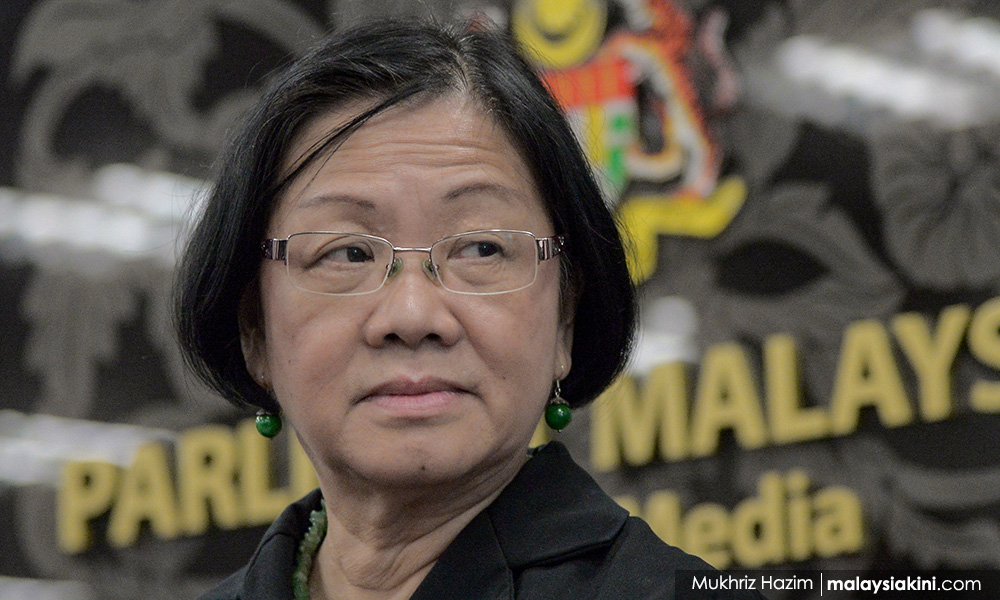
Reiterating her backing of the IPCMC, she noted that while the commission can tackle supposed mishandlings of sexual violence cases, agencies such as the Health Ministry, the Social Welfare Department, and the MCMC should also play their respective roles.
“It is not the sole responsibility of the IPCMC or the IPCC (to tackle mismanagement of sexual violence cases) - it is about eliminating the normalisation of discriminatory social norms where society judges survivors by how they dress, behave, or their social status,” the former Petaling Jaya MP said.
Women’s rights advocate Ivy Josiah also said that while the Home Ministry had detailed four standard notification categories dubbed “PEM” for investigating officers to communicate updates on cases, Loh’s complaints point to an alleged failure to abide by such SOPs.
“Sexual assault investigations must be victim-centred, ensuring that survivors’ rights, needs, voices, experiences, and decisions are respected and prioritised throughout the process.
“Already, reporting rates for sexual assault remain low. Many women fear they will not be believed, will be blamed, or will face retaliation, especially since most perpetrators are known to the victim,” she lamented.
Expressing similar sentiments, activist Tehmina Kaoosji emphasised that the IPCC ought to be “activated” to probe whether established SOPs had been fulfilled in Loh’s case.
The partner and communications director for The Big Picture Communications, which specialises in advocacy and policy-based outcomes for gender and social development issues, said survivors require support to ensure justice and fair outcomes.
Such assistance for survivors would be aided by clear guidelines on when the IPCC’s oversight is triggered and the relevant procedures victims would have to undertake for the commission to initiate a probe.
“It’s essential for the public to know that they can be protected when reporting sexual crimes and (prevented from) being retraumatised by the justice system via mechanisms already present.
“More support and funding also need to be allocated towards specialised departments like D11 (Bukit Aman's Sexual, Women and Child Investigation Division), as they are the backbone of support for our sexual violence victims and survivors,” Tehmina said.
‘Amend relevant laws’
Weighing in on Loh’s case, lawyer Kuthubul Zaman Bukhari urged the government to consider amending the relevant laws to provide for a victim’s testimony in rape cases, especially during determinations on sentencing.
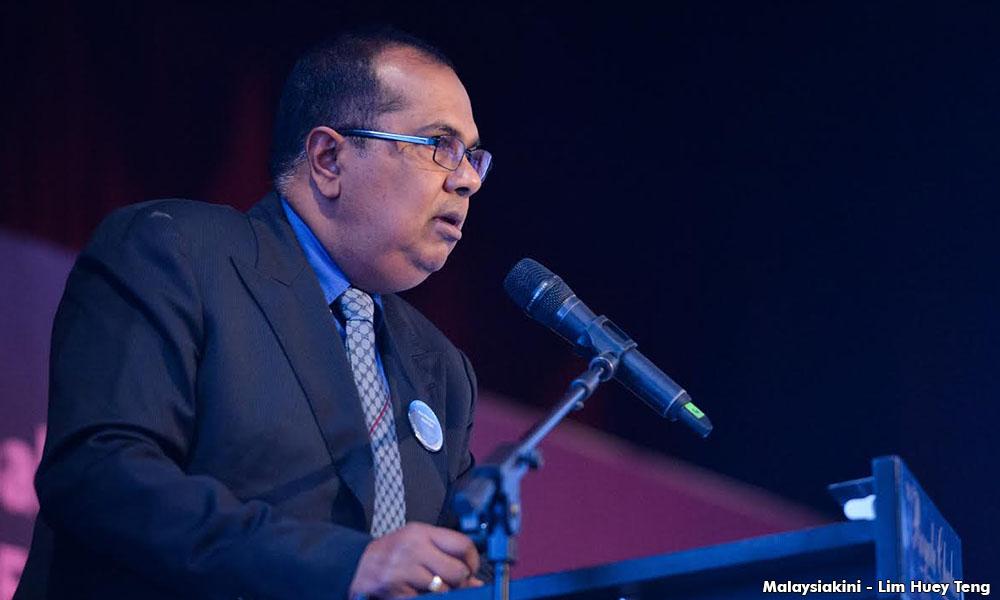
Such testimony, he said, is crucial for conveying to a judge the lasting physical and emotional impact sustained by the victim, whose statement could influence the punishment imposed on those charged for an offence.
Kuthubul, who sat in the RCI which proposed the IPCMC, however, noted that in Loh’s case, the reduction in the charge against her assailant was determined by the deputy public prosecutor - not the police.
As such, he said Loh’s complaint over the downgraded charge does not come under the ambit of the IPCC or IPCMC.
Loh told Malaysiakini earlier that the police had assured her of sufficient evidence to prosecute her assailant for rape.
“The police said two witnesses are sufficient (for the case) and told me to ‘jangan bagi banyak kerja’ (don’t increase their workload).
“Previously, when the IO (investigating officer) said (the assailant) has already been charged, I was told that the pressing of charges meant that the police had enough evidence, (but) if that was the case, why was the charge reduced?” she questioned. - Mkini

No comments:
Post a Comment
Note: Only a member of this blog may post a comment.