


Many people notice the pattern but rarely pause to question it. Household appliances often trace back to one city. Festive decorations seem to come from another. Toys, yet again, from a different place.
To outsiders, it looks accidental. In truth, it is anything but. China does not allow industries to grow randomly. It builds them deliberately, city by city, product by product.
What looks like manufacturing success is actually the result of long-term coordination. Entire towns are shaped around a single line of production until that product becomes part of the city’s identity.
In many Western economies, factories appear wherever land is cheap or incentives are offered. Supply chains are stretched. Workers are generalists. When costs rise, factories move.
China chose a different path. It concentrated industries into tight geographic clusters, allowing everything connected to that product to grow together.
Once a cluster matures, it becomes extremely powerful. Workers are trained for one specific skill set. Machines are designed for one type of output. Spare parts, technicians, logistics firms, packaging suppliers, and even training schools all exist within the same area.
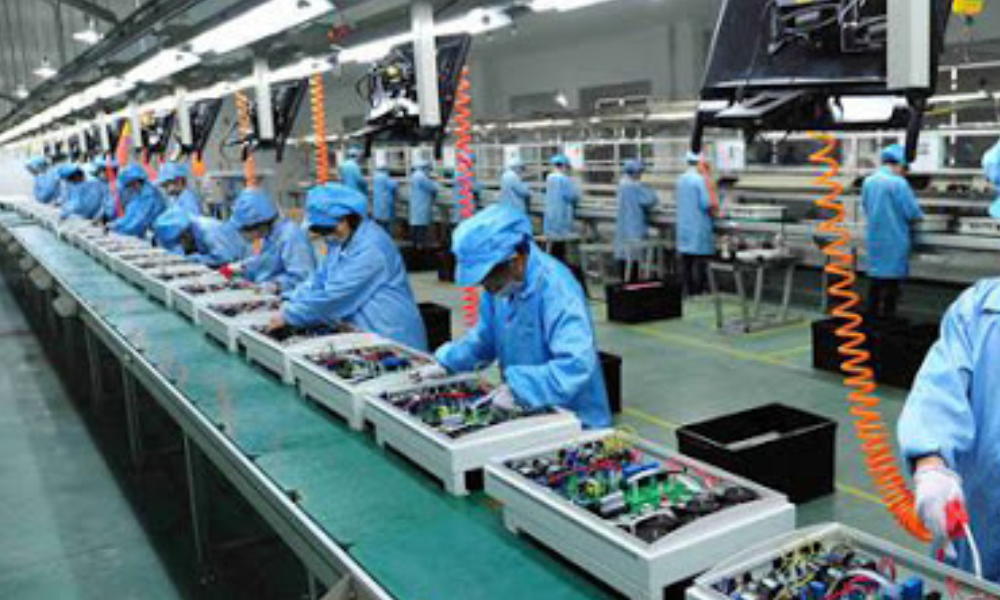
When something breaks, it is fixed locally. When demand spikes, capacity responds quickly. Efficiency is not forced. It becomes natural.
This is why a single Chinese city can dominate a global market. It is not because wages are low. It is because friction is low. Time, cost, and uncertainty are reduced at every step. Outside the cluster, companies struggle. Inside it, production flows.
This reality is often misunderstood by those who deal with China from the outside. Many think success comes from negotiating harder on price or switching factories. In practice, the real decision happens much earlier.
Location determines outcome. Choose the wrong city, and costs rise immediately, sometimes by a quarter or more, before a single unit is produced. The right city, on the other hand, brings advantages that no contract can replicate.
Where our planning falls short
What is striking is how rarely this lesson is discussed back home. Trade visits are frequent. Agreements are signed. Yet discussions often stop at exports, investments, or individual projects.
There is little serious attention paid to how industries are structured, mapped, and grown as systems. Delegations return with announcements, but not with a clear framework for building industrial ecosystems.
This exposes a deeper weakness. Economic planning is still treated as a collection of projects rather than a connected strategy.
Factories are approved without supplier networks. Training is offered without matching industry demand. Small producers are encouraged, but left isolated. Without coordination, growth remains shallow and fragile.
Malaysia has the capacity to think this way, yet we rarely do. Industries here are scattered. Small producers operate alone. Skills are fragmented. Support services are thin.
Instead of building strength through concentration, we spread limited resources across too many locations, hoping scale will somehow emerge on its own.
A better way to grow
A different approach is possible. Industrial planning should begin with clusters, not factories. Skills training should follow industry focus. Small businesses should be grouped, not isolated.
When workers, suppliers, and producers grow together, productivity rises, and incomes follow. Growth then moves with the rakyat, not ahead of them.
China’s experience shows that scale does not have to leave people behind. When industries are organised properly, employment expands, skills deepen, and communities stabilise.
This is how one country can serve global demand far larger than its own population - not through domination, but through coordination.
The real lesson is not about copying China. It is about understanding how structure shapes outcomes. Price matters, but geography matters more. Deals matter, but ecosystems matter most.
Until this way of thinking becomes part of our economic planning, we will keep asking how others move so far ahead, while the answer has been in front of us all along. - Mkini
MAHATHIR MOHD RAIS is a former Federal Territories Bersatu and Perikatan Nasional secretary. He is now a PKR member.
The views expressed here are those of the author/contributor and do not necessarily represent the views of MMKtT.

No comments:
Post a Comment
Note: Only a member of this blog may post a comment.