


Malaysia does not lack information. We have news portals, social media, videos, podcasts, and endless WhatsApp messages.
Yet public debates over issues feel more emotional, more confused, and more divided than before. The problem is not ignorance. It is the weakening role of truth in public life.
It is a sad reality that modern societies do not run on facts alone. They run on stories and narratives. Stories about identity, fear, pride, and blame can mobilise large groups of people better than facts or truth.
Facts or truth are often slow, complex, uncomfortable, and, honestly, boring. On the other hand, stories are fast, simple, powerful, and newsworthy. When stories spread faster than facts, truth begins to lose its influence.
Many public debates are framed around race, religion, and loyalty instead of evidence or outcomes. Economic hardship is explained through ethnic stories. Policy failure is turned into a political threat.
Calls for reform are painted as naivety or worse, attacks on tradition. These stories work because they stir emotion and unite groups. But they also shut down honest discussion.
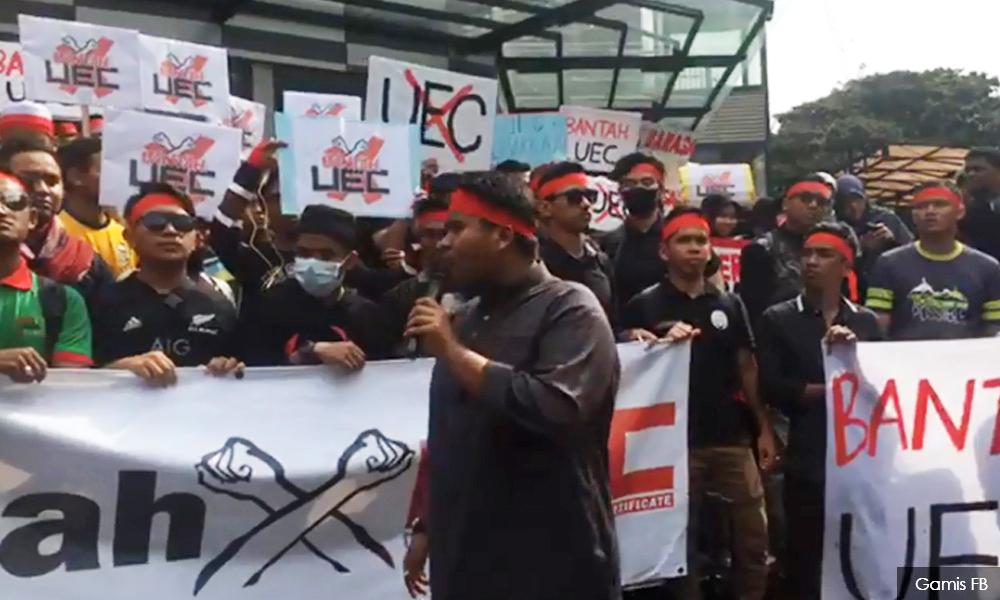
The long-running debate over the recognition of the Unified Examination Certificate (UEC) is a good example. Instead of a calm discussion based on facts - student outcomes, workforce needs, national unity, and education standards - the issue is often framed as a zero-sum fight over identity.
Supporters are accused of undermining the national language and identity. Opponents are accused of being anti-education, anti-merit, and ignorant. In the noise, basic questions are lost: What does the evidence say? What safeguards are needed? What serves the country in the long term?
Politics rewards emotion over policy
Policy debates suffer from the same reason. Issues like education quality, cost of living, corruption, and productivity require patience and trade-offs. They demand that citizens accept complex solutions, requiring sacrifices and patience.
Stories do not. They offer simple answers and clear enemies. In today’s media environment, simple messages almost always win.
Elections reflect this imbalance. Malaysia’s elections are competitive, but public debate during campaigns is weak. Voters hear many claims, but little clear comparison of policies or long-term impact.
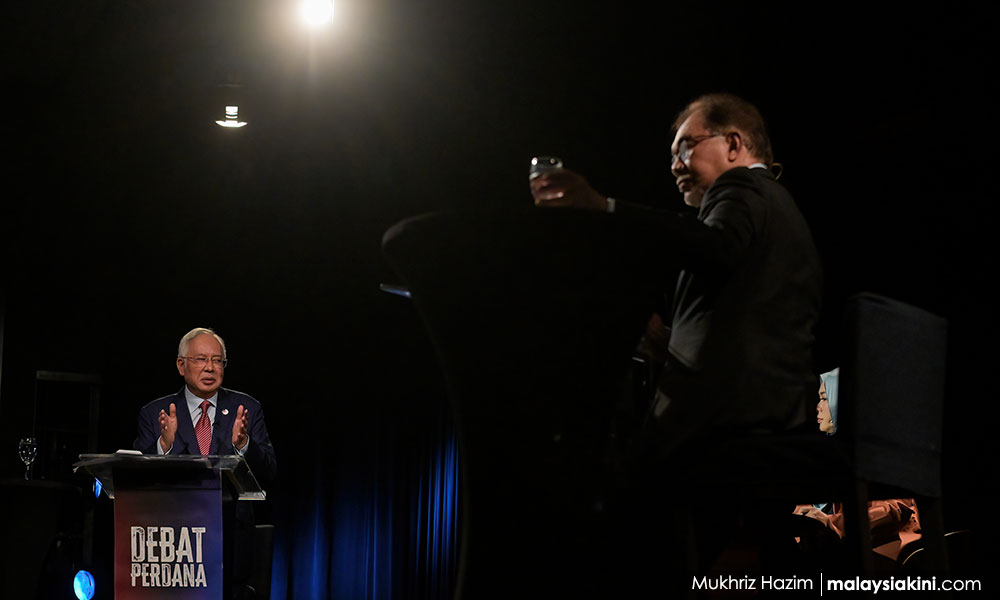
Short clips matter more than election manifestos. Emotional messages spread faster than responsible factual statements.
Social media has made this problem worse. New tools allow messages to be generated quickly and shared widely. Outrage can be created on demand. False authority can look real. None of this requires truth. It only needs attention.
In such a system, truth is not banned. It is simply ignored. With the advent of AI, truth faces an existential threat.
Trust in institutions has also weakened. Courts, Parliament, universities, the civil service, and the media are meant to act as neutral referees.
But when people see them as biased or partisan, their words lose weight. Evidence becomes opinion. Accountability becomes persecution. Once referees are no longer trusted, public debate turns into a shouting match.
Restoring trust and reason
The deeper problem lies in education. For many years, our system has focused on exams and correct answers. We do not train students enough to question sources, test claims, or live with uncertainty.
Many grow up knowledgeable but not wise, emotional but not reflective. This makes society easy to divide and easy to mislead.

What strengthens truth in a democracy? Not censorship. Not fear. Not louder slogans.
Truth grows when institutions are fair, transparent, and consistent. When data is shared openly, even when it is uncomfortable. When schools teach how knowledge is tested, not just what to memorise.
When disagreement is allowed without turning into hatred. And when leaders resist the urge to score political points and start thinking of national interest and unity.
Malaysia is not collapsing. But we are at a crossroad.
If we choose stories alone, we will remain divided. If we rebuild respect for evidence, institutions, and honest debate, we can disagree without tearing the country apart.
Truth may be slow and quiet, but it is still our best guide. And with patience and courage, it can regain its place at the centre of our public life. - Mkini
THOMAS FANN is a former Bersih chairperson and writes as a private citizen who still believes in ordinary Malaysians - whom he believes are decent, fair-minded, and share a common desire to live in peace and harmony.
The views expressed here are those of the author/contributor and do not necessarily represent the views of MMKtT.

No comments:
Post a Comment
Note: Only a member of this blog may post a comment.