


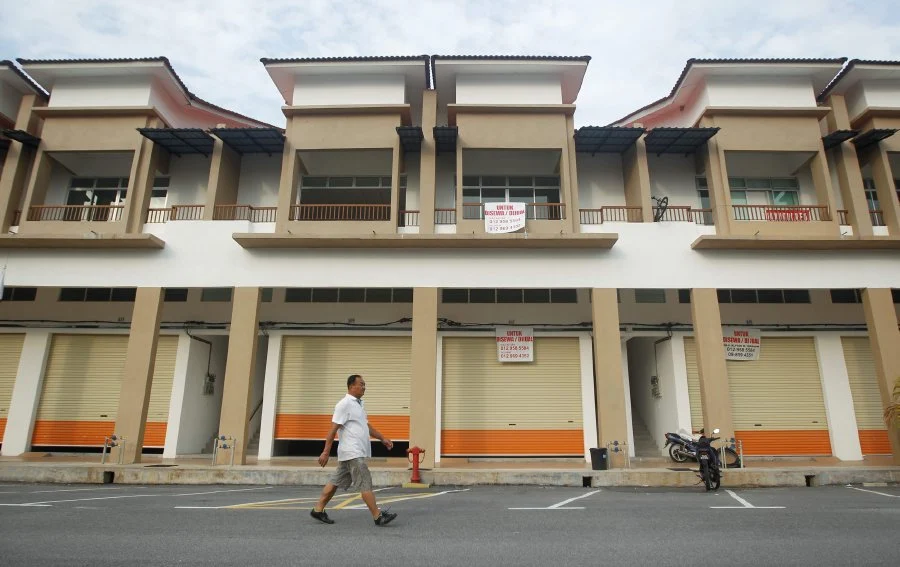
HAVE you ever driven past a row of shoplots in a housing area and noticed that most of them are empty, dark, or simply never opened?
This is no longer an occasional sight. In many parts of Malaysia, especially in growing suburbs, we are seeing more commercial spaces being built even as existing units struggle to attract tenants and customers.
While commercial development is often associated with progress and economic growth, an important question deserves renewed attention: do we really need more commercial buildings when existing stock remains significant and new supply continues to be planned?
Recent data from the National Property Information Centre (NAPIC) in its Q3 2025 report shows that Malaysia continues to carry a substantial stock of shoplot type commercial units in major states.
In the Klang Valley, Selangor recorded 716 shop units and 7,971 shop office units as existing stock, while Kuala Lumpur recorded 1,197 shop units and 989 shop office units.
Johor recorded 2,821 shop units and 11,823 shop office units, while Perak recorded 5,507 shop units and 5,166 shop office units. Meanwhile, Penang recorded 4,553 shop units and 1,082 shop office units.
These figures suggest that many states already carry a large base of shop and shop office units, raising important questions about whether commercial approvals and future supply planning are sufficiently aligned with real demand and actual absorption.
Supply growth is not the same as sustainable growth
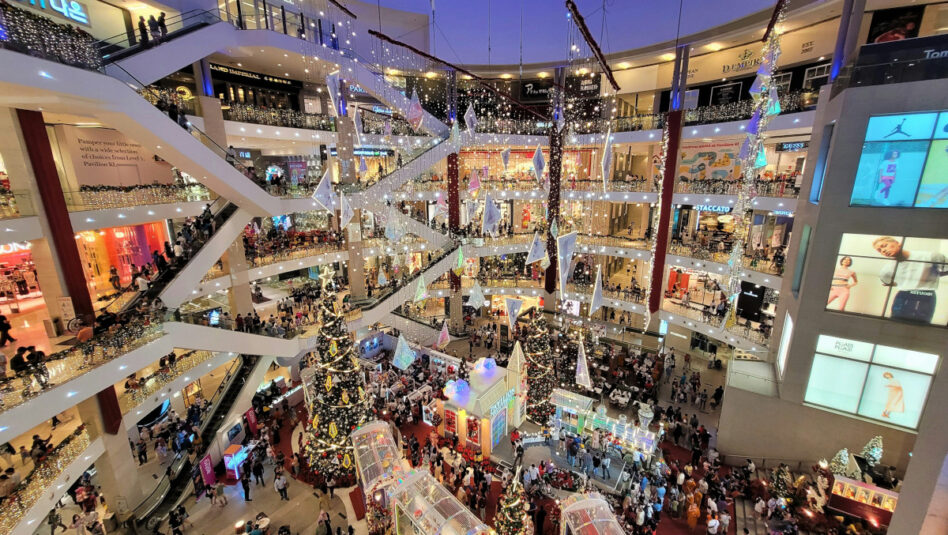
From an economic perspective, the development of commercial buildings can stimulate activity. Construction creates employment, supports contractors and suppliers, and contributes to GDP through investment spending.
Retail and commercial spaces may also create long term benefits if they support thriving business ecosystems. However, these positive effects depend heavily on real demand.
When commercial buildings are completed without sufficient demand, the economic benefits become short-lived.
Construction activity may generate temporary growth, but once completed, the market may be left with a long-term burden such as vacant premises, weaker rental performance, and underutilised assets.
In other words, building more commercial stock does not automatically translate into stronger economic vibrancy, particularly when new supply struggles to attract tenants, shoppers, and business operators.
Oversupply creates inefficiency and wastage
Commercial oversupply does not only affect developers and investors. It also carries wider economic and social consequences. Empty commercial strips weaken town vibrancy.
Rows of unoccupied shops reduce street activity, discourage footfall and may gradually contribute to a decline in commercial attractiveness. What was intended to serve local communities can become underused and inactive.
Oversupply can also depress rents and destabilise business sustainability. When too many units compete for the same tenant pool, rental rates weaken and turnover becomes high, resulting in short lived tenancies and a less stable local commercial ecosystem.
At the same time, capital becomes trapped in non-productive assets. A vacant shoplot is still a physical structure, but it does not generate meaningful economic output.
This represents inefficient use of land and capital, resources that could have been directed into more productive needs such as better public amenities, community facilities, or stronger infrastructure.
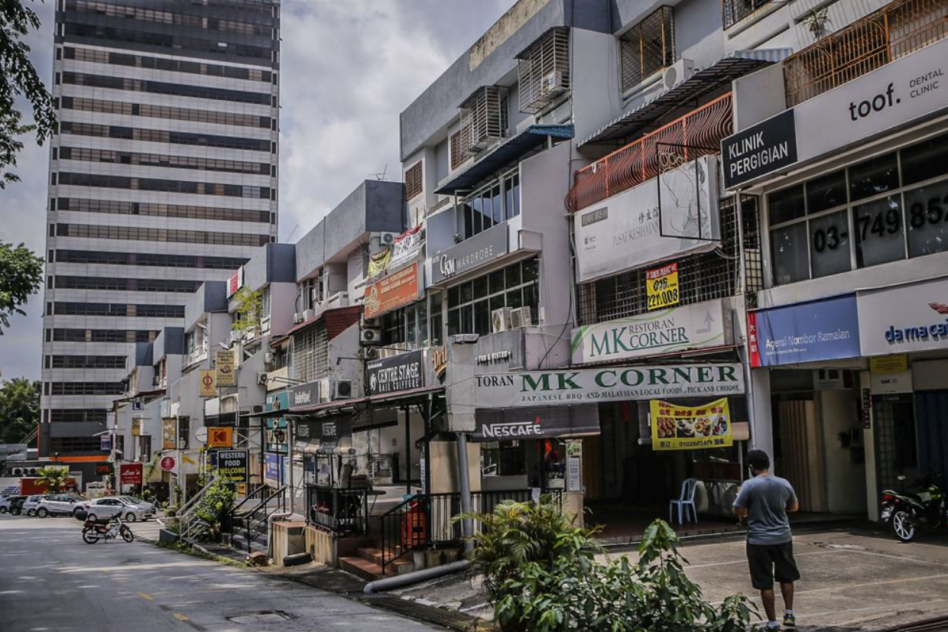
Municipal servicing burdens also continue even when units are empty. Roads, lighting, drainage and waste management must still be provided regardless of occupancy, and where commercial areas remain largely vacant, long term servicing costs can become disproportionate to the economic return.
If demand does not support supply, the result is not genuine development. It is wastage and inefficiency.
Planning for demand, not for output
Malaysia must continue to develop, but the goal should not simply be more buildings. The focus should be better outcomes, higher occupancy, stronger local business ecosystems, and more efficient use of land and capital.
Commercial property can support economic development when it meets real demand. But when sizeable existing stock remains in the market while planned supply continues to expand, it may be time to reassess the approach.
A stronger emphasis on demand-based planning, feasibility evaluation and phased implementation can help ensure that commercial development remains a genuine driver of economic vibrancy, not a source of long-term oversupply.
Commercial growth can be healthy and necessary, but only when it is demand led and sustainably absorbed.
The priority should be to keep shoplots active, tenanted, and useful to communities, so commercial space becomes a driver of vibrancy rather than a landscape of vacancy.
Dr Goh Lim Thye is a Senior Lecturer at the Department of Economics, Faculty of Business and Economics, Universiti Malaya.
The views expressed are solely of the author and do not necessarily reflect those of MMKtT.
- Focus Malaysia.

No comments:
Post a Comment
Note: Only a member of this blog may post a comment.