


The Center to Combat Corruption and Cronyism (C4 Center) has released a report exposing serious weaknesses in the MACC oversight mechanisms.
The watchdog also cited the Sabah mining scandal and the treatment of businessperson Albert Tei.
“The recent Sabah corruption scandal and MACC’s handling of Tei have further exposed deep-rooted accountability issues that continue to erode public confidence in the commission.
“It is clear that aside from pursuing a lawsuit against MACC, Tei has no recourse, even if the commission is proven to have mistreated him,” it said in a statement.
Tei, who blew the whistle on the scandal, sued MACC after being forced to wear an orange prison uniform despite not being convicted. He named MACC chief commissioner Azam Baki and the government as defendants.
His dramatic arrest last November, during which he alleged guns were pointed at him - a claim denied by the commission - sparked widespread criticism.
Although more than a dozen politicians were implicated in the scandal, only two faced charges, fueling allegations that the government and MACC are shielding others from prosecution.
Growing public criticism
In its executive summary, the C4 Center noted that MACC has faced growing public criticism and declining trust due to its perceived failure to tackle grand corruption effectively.
The watchdog said concerns over selective prosecution have further undermined confidence, particularly given that the prime minister appoints the MACC chief commissioner through the former’s binding advice to the Yang di-Pertuan Agong.
“This institutional arrangement creates an inherent conflict of interest when investigations involve the prime minister or their close political and personal associates,” it added.
C4 Center said that despite the severity of this problem, since its inception in 2009, no government has instituted any major reform of MACC.
“On the contrary, statements by MACC itself point to deep-seated institutional resistance to reform. In recent years, separate calls to place MACC under independent oversight have been met with vehement rejection by the MACC and its chief commissioner.
“Instead, the commission has consistently insisted that it is fully independent and already subject to robust ‘check-and-balance mechanisms’ that ensure accountability,” it pointed out.
Do frameworks work?
In particular, those who defend the MACC have pointed to the existence of bodies tasked with the MACC’s operations, as follows: The Anti-Corruption Advisory Body (Acab), the Special Committee on Corruption (SCC), the Complaints Committee (CC), the Operations Review Panel (ORP) and the Consultation and Corruption Prevention Panel (CCPP).
“But do these accountability frameworks actually work?” asked C4 Center, adding that its latest report highlighted the major structural weaknesses that reveal severe limitations of accountability and oversight for MACC.
“Examination of the functions and the composition of each body together with a review of international best practice reveals a number of key findings, namely:
“The existence of multiple oversight bodies does not equate to meaningful accountability. Oversight activity relating to MACC is largely opaque and occurs behind closed doors.
“MACC is not meaningfully required to respond to or justify its position on oversight findings; none of the five oversight bodies possess powers to investigate misconduct, compel evidence, or impose consequences.
“The prime minister exercises decisive control over appointments to MACC, its oversight bodies, and the Attorney-General’s Chambers; appointment criteria for oversight bodies are vague and subjective, enabling discretionary selection; and oversight responsibility is fragmented across multiple weakly empowered bodies, allowing institutional buck-passing,” it pointed out.
According to the C4 Center, describing these five organisations as “oversight bodies” is misleading since each body only holds advisory functions, with the implementation of this advice being at the sole discretion of MACC.
Failures and limitations
The watchdog said that throughout the course of this research, several major cases have stood out in further highlighting significant failures and limitations in the MACC oversight bodies. These were:
1) Former DAP political aide Teoh Beng Hock’s death in MACC custody in 2009: Despite separate findings by Suhakam, a royal commission of inquiry and a Court of Appeal judgment highlighting numerous instances of misconduct and even abuse perpetrated by MACC officers, not a single individual has been successfully charged for their role in his death;
2) The 1MDB scandal: Less than a year after the alleged misappropriation of RM2.6 billion by former prime minister Najib Abdul Razak was exposed, the then-newly appointed attorney-general Apandi Ali would clear him of all wrongdoing.
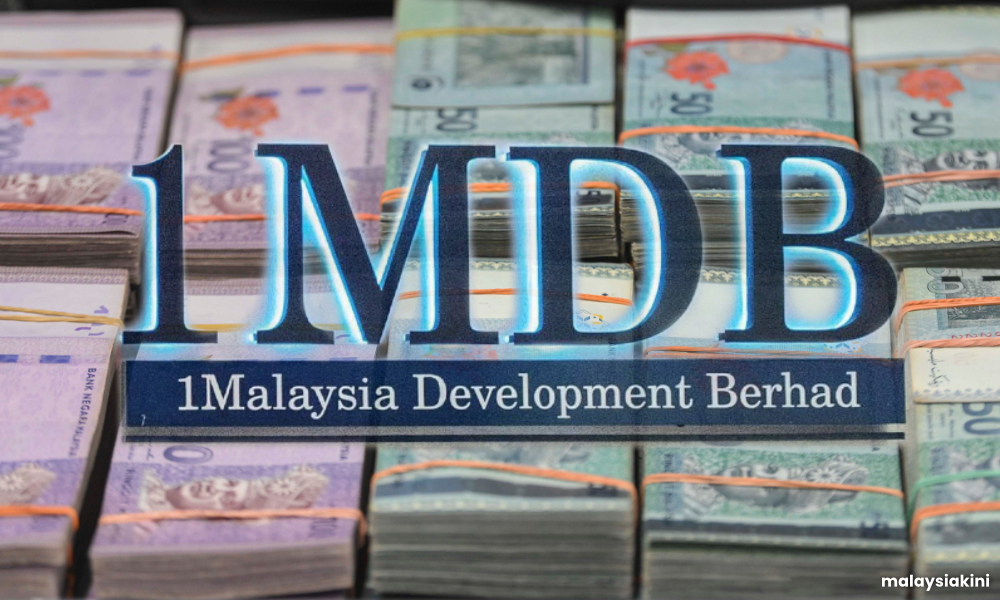
Shortly after, the MACC would refer this case to the ORP. Apandi would respond by saying that, “any bodies formed to question any decision of the AG would be against Article 145(3) of the Federal Constitution”;
3) Azam’s shareholding scandal (2021): Exposés by an investigative journalist alleged his involvement in the purchase of millions of shares in a company, directly contravening various public service regulations.
Even with serious allegations tainting his reputation, his term as chief commissioner has been renewed three consecutive times;
4) The ignoring of the SCC’s 2020 annual report (2022): Despite obligations under Section 14 of the MACC Act 2009 requiring the prime minister to present the SCC’s report to Parliament, the 2020 version – which was only published in 2022 – along with its numerous recommendations have not been laid before Parliament; and
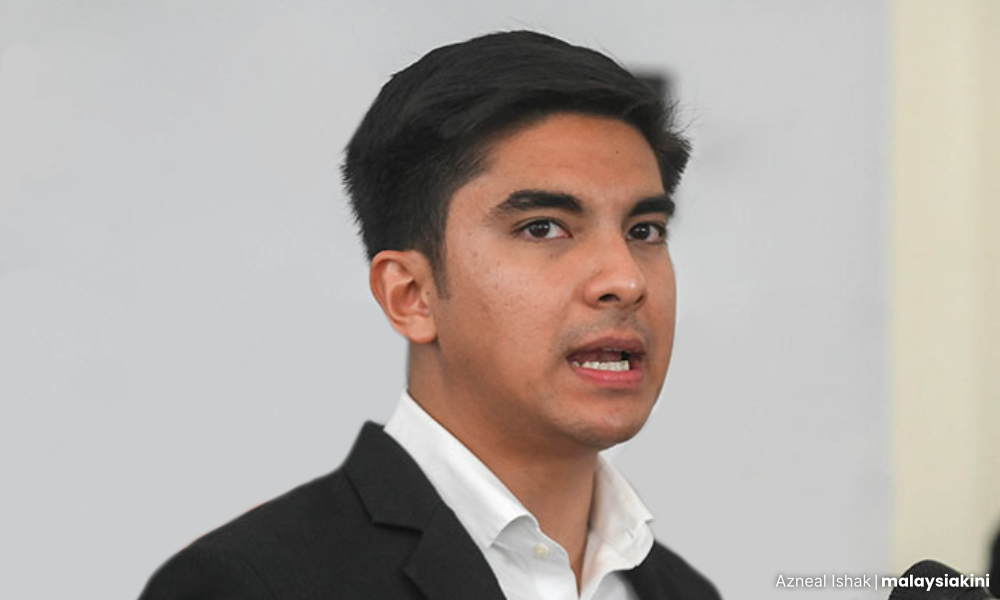
5) Former Muda president Syed Saddiq Syed Abdul Rahman’s corruption trial (2025): The Court of Appeal judgment that eventually acquitted Syed Saddiq of his corruption charges also called attention to three instances of abuse and intimidation of witnesses by MACC officers.
Addressing weaknesses
In its report, C4 Center made the following recommendations to address the aforementioned weaknesses. These are:
Expanding Ombudsman Malaysia’s jurisdiction to include MACC, enabling an independent body with investigatory powers to handle complaints of maladministration and misconduct within the commission
Establishing a parliamentary special select committee dedicated to overseeing MACC, with powers to summon witnesses, request documents, and oversee the appointment and removal of the chief commissioner;
Reframing the Acab, ORP, and CCPP as advisory or support bodies with strengthened transparency obligations, while relocating true oversight functions to Parliament and the Ombudsman; and
Separating the offices of the attorney-general and public prosecutor, with an independent public prosecutor appointed through a non-executive-dominated process and governed by clear prosecutorial guidelines.
The C4 Center’s full report can be accessed here. - Mkini

No comments:
Post a Comment
Note: Only a member of this blog may post a comment.