


Malaysia stands at a critical inflection point. With medical inflation projected to hit above 16 percent this year - the highest in a decade and far outpacing both the Asia-Pacific average and our regional peers - the trajectory is clear and alarming.
This is not merely a statistical concern; it is a lived reality for millions. Since 2024, over 340,000 Malaysians have surrendered or terminated their health insurance policies, priced out of coverage they once relied upon.
The public healthcare system, our enduring safety net, faces the very real risk of being overwhelmed by patients transmigrating from the private sector.
The storm has arrived. The question is no longer whether we act, but how effectively we navigate through the storm.
Tackling medical inflation requires more than isolated interventions; it demands a whole-of-nation, ecosystem-wide reset.
The Reset strategy, spearheaded by the Joint Ministerial Committee on Private Healthcare Costs and co-chaired by the Health and Finance Ministries, represents Malaysia’s most ambitious and coherent response to date.

However, a strategy is only as good as its implementation. Based on the comprehensive reforms now underway, this article outlines a summary of the five components to not merely curb, but systematically manage medical inflation over the long term.
But more importantly, producing white papers and implementing reforms alone is merely whispering into the wind if the very people these initiatives are designed to help remain confused, sceptical, or completely unaware.
The fog of misunderstanding surrounding the Reset strategy and Base Medical and Health Insurance/Takaful (MHIT) Plan is palpable. It is time for the authorities to take the bull by the horns and launch a comprehensive, multi-channel public communication awareness.
Transparency to rebalance info asymmetry
For decades, healthcare costs in Malaysia’s private sector have operated within an opaque fog.
Patients, often unwell and vulnerable, make decisions without any visibility of what procedures should reasonably cost.
This information asymmetry has been a primary enabler of unchecked price variation and inflationary pressure.
On Jan 22, the insurance and takaful industry, through Life Insurance Association of Malaysia, Malaysian Takaful Association, and General Insurance Association of Malaysia, published the Reference Guide on Price Ranges for Common Private Healthcare Services.
This publicly accessible document provides indicative price ranges for 26 common medical procedures, disaggregated by location and age group, based on actual 2024 claims data.
It does not prescribe fixed prices - a crucial distinction - but it arms consumers with a benchmark.
But transparency must extend beyond price guides. The mandatory display of medicine prices at all pharmacies and hospitals, implemented in May 2025, is a foundational step.

The forthcoming revamp of hospital billing structures to ensure "cost-reflective, fair, and transparent bills" will further cement this culture of openness.
When patients know what questions to ask and what figures to expect, the market begins to self-correct. Sunlight, as they say, is the best disinfectant.
Moving from volume to value
The prevailing Fee-for-Service (FFS) model in private healthcare is structurally inflationary.
It rewards volume, incentivises unnecessary admissions and tests, and fuels the "buffet syndrome" - the well-documented tendency for insured patients to demand, and providers to deliver, more care than clinically necessary.
The phased implementation of the Diagnosis-Related Group (DRG) payment model, scheduled for full rollout alongside the Base MHIT plan in early 2027, fundamentally rewires incentives.
Instead of paying per service, DRG pays a fixed, pre-determined amount per episode of care, rewarding efficiency and quality outcomes rather than procedural volume.
If it was a FFS, it has now got to be fee-for-health outcomes. There is a need for a pilot programme before the DRG is launched nationwide to ensure the system is effective, accurately costed, and tailored to local conditions before a full rollout.
However, DRG is not without risks. Previous international experience reveals dangers of "outcoding" - upcoding patients into higher-paying DRG categories than clinically justified.
Malaysia must therefore implement DRG with robust clinical governance, independent auditing, and transparent coding protocols. We must not solve one problem only to create another.
Targeted, sustainable insurance baseline
A fundamental misunderstanding pervades public discourse: that the Base MHIT Plan is intended as universal health insurance for all Malaysians. This is categorically incorrect.

As the white paper and every subsequent official statement have stressed, the Base MHIT is a voluntary, standardised, foundational product designed for two specific segments: the uninsured who can afford private coverage, and policyholders facing unsustainable premium hikes on existing plans.
Its objectives are precise and pragmatic:
1. Provide base-level financial protection for essential, high-impact healthcare in the private sector.
2. Complement the public system by offering Malaysians a genuine choice in where they seek care.
3. Drive value-based outcomes through features like tiered co-payments, in-network incentives, and DRG alignment.
After intense negotiation, the government has secured coverage for pre-existing medical conditions under the Base MHIT plan - a feature conspicuously absent from many products and a primary source of consumer anxiety.
Furthermore, policyholders facing repricing can switch seamlessly to the Base MHIT with their insurer without new medical underwriting.
Critics point to the RM100,000-RM150,000 annual limits as inadequate. The data, however, tells a different story.
In 2024, 99 percent of claims paid out were RM55,225 and below. The limits are calibrated to cover the vast majority of cases while keeping premiums accessible. Only 1 percent of claims exceed this RM55,225 threshold.
For the 1 percent of catastrophic, complex cases, the public healthcare system - with its RM46.5 billion 2026 allocation - remains the ultimate safety net. One cannot have infinite coverage at finite cost.
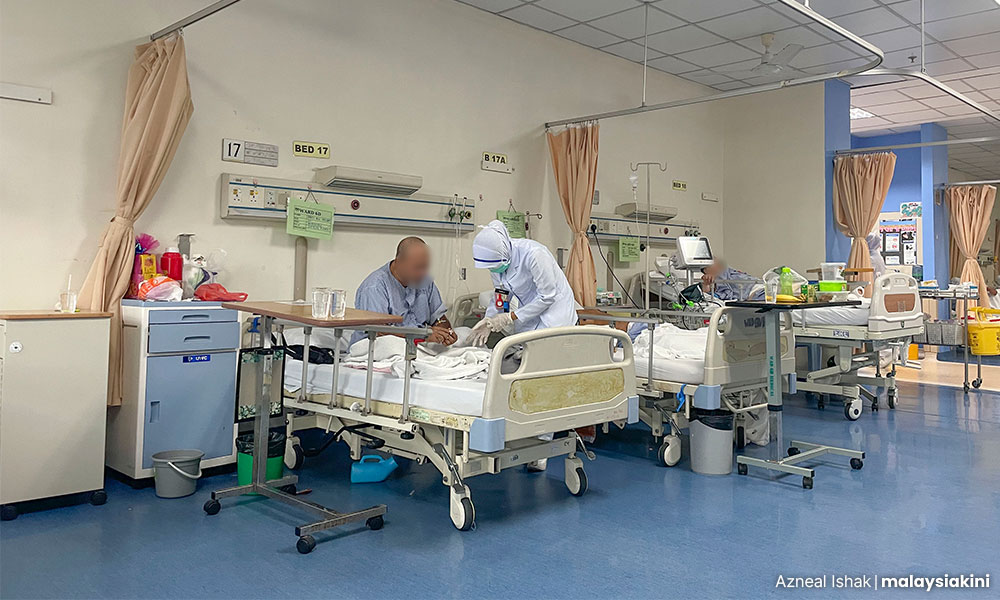
The Base MHIT is an honest product, transparent about its trade-offs, and that honesty is its greatest strength.
Empowering the consumer
Medical inflation is not solely a supply-side problem; demand-side behaviour significantly compounds it.
Individual choices - which hospital to attend, whether to seek admission, which tests to accept - aggregate into system-wide cost trajectories.
The Reset strategy rightly recognises that an informed consumer is the most effective cost-containment mechanism.
The tools now available for this are:
1. The “MHIT Made Simple” Guide, published by the Financial Education Network, demystifies product selection and claims navigation.
2. The Health Insurance/Takaful Preparedness Calculator, due for launch in February, enables Malaysians to project the monthly savings required for premiums and co-payments throughout their coverage period.
3. The Reference Price Guide empowers patients to benchmark costs before committing to treatment.
These instruments shift the patient from passive recipient to active participant. When individuals understand that their choices directly influence both their personal finances and the collective premium pool, the "buffet syndrome" gradually recedes.
Knowledge, in this context, is not just power - it is savings.
Modernising delivery, expanding capacity
Containing costs cannot succeed if the underlying service delivery model remains static and supply is artificially constrained.
Malaysia must simultaneously drive efficiency in existing facilities and unlock new, cost-effective models of care.
Key initiatives that are underway include:
1. Licensing reforms
The government is reviewing private healthcare licensing to "cut red tape without compromising safety," explicitly aiming to catalyse investment in ambulatory care centres and other cost-efficient, community-based models.
This brings care closer to home and avoids costly inpatient admissions for low-acuity conditions.
2. Digital integration
The push for interoperable Electronic Medical Records is not merely about convenience.
A seamless data ecosystem - where a patient’s history follows them across public and private providers - eliminates redundant diagnostic tests, reduces duplication, and enables precision medicine. Efficiency is the quiet cousin of affordability.
3. Workforce sustainability
Medical inflation is also a talent story. Private hospitals are implementing multi-shift schedules, scholarships, and improved career pathways to retain Malaysia’s world-class nurses and allied health professionals. A stable, valued workforce is a productive one.

4. The role of tax incentives
Budget 2026 expands tax exemptions for non-profit hospitals and allows private hospitals to establish tax-exempt welfare funds for underprivileged patients, building on successful programmes like IHH’s ‘Life Renewed’, which has sponsored over 2,000 critical surgeries.
This is a pragmatic public-private partnership that directly addresses access gaps without straining public coffers.
Public communication blueprint
The adage "build it and they will come" has never applied to public policy. The authorities cannot afford to remain in the rarefied air of press conferences and policy briefings. They must go where the people are.
The government has already launched foundational tools, but awareness of their existence remains abysmally low.
The "MHIT Made Simple" Guide, the Health Insurance/Takaful Preparedness Calculator, and the Reference Price Ranges for 26 common procedures are excellent resources - only if people know about them.
The authorities must launch an aggressive promotional campaign across television, radio, and social media, demonstrating how to use these tools.
A dedicated microsite, separate from the dense official portals, should be established with the URL plastered across all communications.
The government cannot reach every household directly. It must enlist trusted intermediaries.
Briefings for private general practitioners, insurance agents, and human resource managers are essential. These are the front-line voices that patients and employees trust.

The media landscape is littered with half-truths and misinterpretations. A rapid-response unit within the Joint Ministerial Committee should monitor news reports and social media trends, issuing timely clarifications.
The Bank Negara moratorium on premium hikes expires in 2027. The Base MHIT is the planned landing zone for those facing premium shock. This urgency must be communicated through a visible countdown campaign.
The reset we need, not quick fix we want
There is no single silver bullet for medical inflation. It is a hydra-headed challenge rooted in demographics, technology, lifestyle disease burdens, structural inefficiencies, and behavioural economics.
The Reset strategy, for the first time, confronts this reality in its full complexity.
The strategy will not please everyone. Insurers must adapt to lower-margin, standardised products.
Hospitals must embrace transparent pricing and outcome-based payment models.
Patients must accept that all-encompassing coverage is incompatible with premium stability. Growing pains are inevitable.
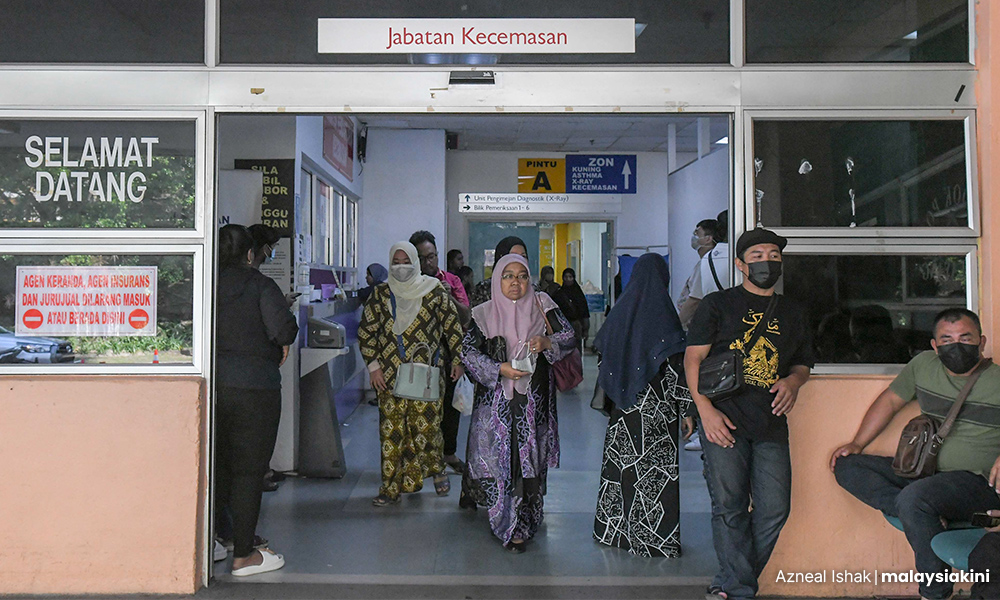
The public system remains our unwavering foundation. The private sector, through Reset, is being recalibrated to play its complementary role sustainably.
In conclusion, the Reset strategy and Base MHIT Plan represent bold, necessary reforms. But as the saying goes, "a vision without execution is just a hallucination."
The execution of these policies is incomplete without a parallel execution of communication. The authorities must now pivot from being policy architects to becoming the nation's most trusted explainers. The confusion is real, but so is the opportunity to dispel it. The time to act is now.
The journey will be measured in years, not months. But with the white paper published, consumer tools launched, pricing benchmarks in the public domain, and a clear regulatory roadmap ahead, Malaysia has finally stopped kicking the can down the road.
The reset has begun. Now comes the hard part: seeing it through. - Mkini
DR RAJEENTHERAN SUNTHERALINGAM is a urologist at Damansara Specialist Hospital (DSH).
Dr MUSA NORDIN is a paediatrician at DSH.
DR AHMAH FAIZAL PERDAUS is a respirologist at DSH.
DR SNG KIM HOCK is a neurologist at Pantai Hospital Kuala Lumpur.
The views expressed here are those of the author/contributor and do not necessarily represent the views of MMKtT.

No comments:
Post a Comment
Note: Only a member of this blog may post a comment.