


This Raya, I published a Raya message titled “Raikan Perbezaan Kaum, Budaya” (“Celebrate Ethnic and Cultural Diversity”) in Utusan Malaysia.
While this may sound novel to many Malaysians who mistakenly view Dong Zong as a monoethnic group, I am in fact continuing a legacy that began 70 years ago, when Lim Lian Geok, president of Jiao Zong (the United Chinese School Teachers’ Association of Malaysia), penned a hopeful Hari Raya Aidilfitri address in Jawi that was published by Utusan Melayu on May 4, 1956.
Titled “Hidup Berbilang, Makmur Bersama” (“Prospering Together Amid Diversity”), Cikgu Lim’s message spoke of cross-ethnic solidarity as the soul of our soon-to-be nation, bringing together Malays, Indians, and Chinese as equal partners.
It was especially meaningful in shaping a shared sense of belonging at a time when leaders across communities were working together to press for Malaya’s independence from British rule.
My message reflects on the nature of diversity, which is often dismissed as a threat or as an error to be corrected through assimilation in the name of national sovereignty and political stability.
Diversity is seen by some as a flaw or imperfection, as though human differences inevitably lead to confusion and division.
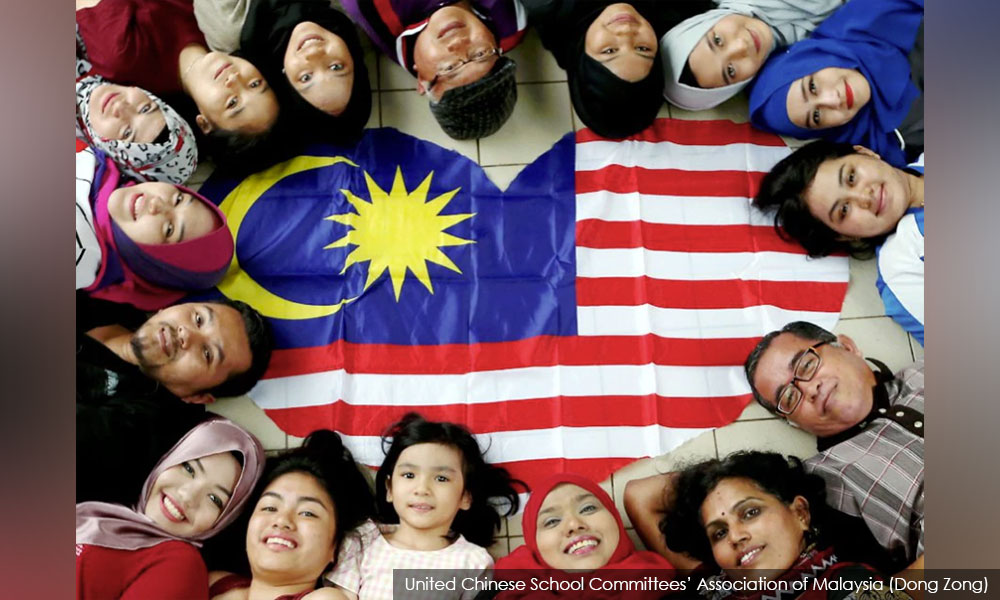
This tendency to suppress, and if possible eliminate, linguistic, cultural, and even religious diversity gained new momentum in Western Europe after the French Revolution.
Homogeneity among citizens was seen as necessary to hold a country like France together after the removal of the monarchy as the focus of political loyalty.
This idea later spread across the Global South, where many political forces took it upon themselves to assimilate and suppress “the others”, often leading to conflict and unrest.
Even geopolitical conflicts in the Middle East, which have destroyed thousands of families, displaced millions, and threatened the global economy, can be partly attributed to intolerance of differences and the failure to recognise our shared humanity.
Diversity a part of creation
My Raya message adopts a spiritual lens: “We are deliberately made different in ethnicity, culture, language, and religion. We are deliberately made neither identical like robots, nor uniform like factory products, so that we may know one another.”
“And to know one another for what purpose? The answer lies in the age-old Malay proverb: Tak kenal maka tak cinta - one cannot love what one does not know.”
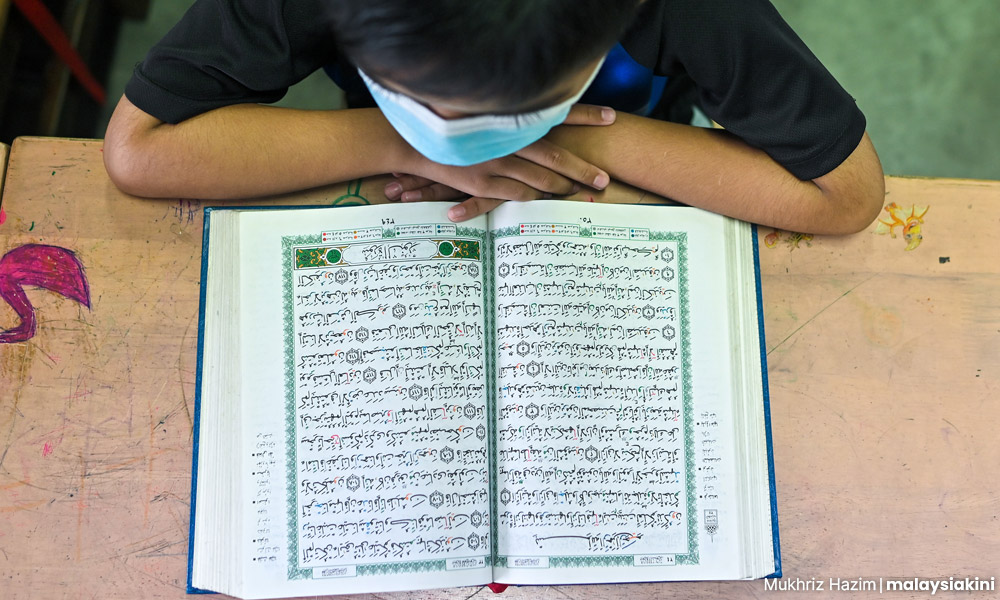
Muslim friends would know the origin of this wisdom in verse 13 of Surah Al-Hujurat in the Al-Quran, which tells us that mankind was intentionally created into nations and tribes so that we may know one another, and that the most noble among us are those who are righteous.
If the Almighty had willed it, we would have been made the same. Our diversity, then, is not a mistake to be erased, but part of the order of creation.
The same wisdom also finds echoes in Chinese thought, whose sages taught that “a gentleman seeks harmony but not uniformity” (君子和而不同, junzi he er butong) and that “the world belongs to all for the common good” (天下为公, tianxia wei gong).
Nature and heritage teach us harmony
Nature itself tells us a compelling story. Situated at the heart of the Nusantara - the Malay-Indonesian archipelago - our region was historically shaped by the northeast and southwest monsoons, which brought merchants from India, China, the Middle East, and the West.
Our backyard is home to spices once so coveted that they shaped empires, and our ancient forests to flora and fauna of all shapes and sizes. This mosaic is, in truth, complementary and enriching.
As a nation of many ethnic communities, speaking 137 living languages, if not more, we should become better at managing diversity rather than treating it as an existential struggle.
We are doubly blessed this year, as the Chinese New Year and the holy month of Ramadan fell in the same festive season, yet we can hardly celebrate freely when the world is engulfed by wars.
I sincerely hope more Malaysians, and indeed people everywhere, can appreciate the wisdom of Al-Hujurat verse 13.
This is not about religious creeds. It is a reminder that we should humbly embrace - not merely tolerate - diversity as part of the natural order, so that we may love and peacefully coexist with one another.
Unity through education
In truth, this effort to uphold diversity is not new to the Chinese-medium education movement.
In the 1980s, the Chinese-medium education movement deepened its embrace of human rights discourse under the leadership of figures such as former Dong Zong president Lim Fong Seng, former Jiao Zong president Sim Mow Yu, former Dong Zong executive secretary Lee Ban Chen, and numerous others who contributed to the cause of Chinese education.
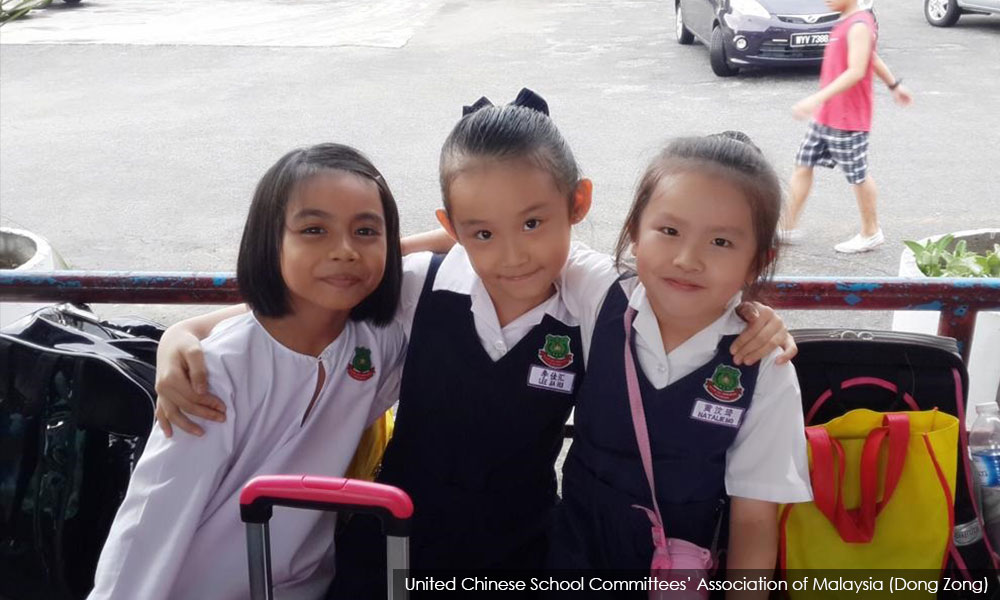
Today, that effort must continue in a broader register. Malay Muslims are already important stakeholders in the Chinese-medium education movement, as our national-type Chinese Schools (SJKC) increasingly reflect the plurality of Malaysian society, with more than one in five students being of non-Chinese descent, many of whom are Muslim.
More effort must therefore be invested in building a broader understanding and support for diversity, so that the Chinese-medium education movement may be seen not as separate from the national mainstream, but as part of Malaysia’s shared future.
Any new venture into uncharted waters risks failure and invites even vicious attacks from those who want us to remain in the comfort zone.
However, by not reaching out and deepening human bonds, we put ourselves at greater risk, as ultra-nationalism - under the banner of ethnic, religious, linguistic, cultural, or regional identity - rises across the globe and within our own country.
It is with great honour that I extend my best wishes of Selamat Hari Raya Aidilfitri and Maaf Zahir dan Batin to all. - Mkini
TAN YEW SING is chairperson of the United Chinese School Committees’ Association of Malaysia (Dong Zong).
The views expressed here are those of the author/contributor and do not necessarily represent the views of MMKtT.

No comments:
Post a Comment
Note: Only a member of this blog may post a comment.