


THE United States and Israel began a coordinated, intensive military campaign against Iran on Feb 28, 2026, and currently, it has entered its fourth week and it seems that the war is getting worse with the United Nations (UN) in a state of paralysis.
Iran in response has fired waves of missiles and drones, targeting US military bases and allies across the Middle East, including locations in Israel, Saudi Arabia, Qatar, Bahrain, Kuwait, and the United Arab Emirates (UAE).
It has effectively blocked the Strait of Hormuz to shipping traffic, particularly targeting vessels connected to the US and Israel following military strikes, causing a major disruption to global energy supplies, while some ships from other nations are allowed.
The move has triggered a significant surge in oil prices causing hardships for common people around the globe.
In this context, the collective voice of strength of regional and global groupings has become critical to facilitate the end of the war by dealing with the root causes of the conflict.
The European Union (EU) seems to be more interested in condemning Iran’s response to the attacks by the US and Israel which shows its hypocrisy and dishonesty.
It also exposes the EU as a group that cannot be relied on to address the root causes of the war which are related to Zionist occupation of Palestinian lands and the expansionist policy of Israel who is strategically supported by the US.
On the other side, intergovernmental organisations and a geopolitical forum such as BRICS which has brought some hope among people of the south to bring about an alternative paradigm to US hegemony seems to be ineffective in the context of war.
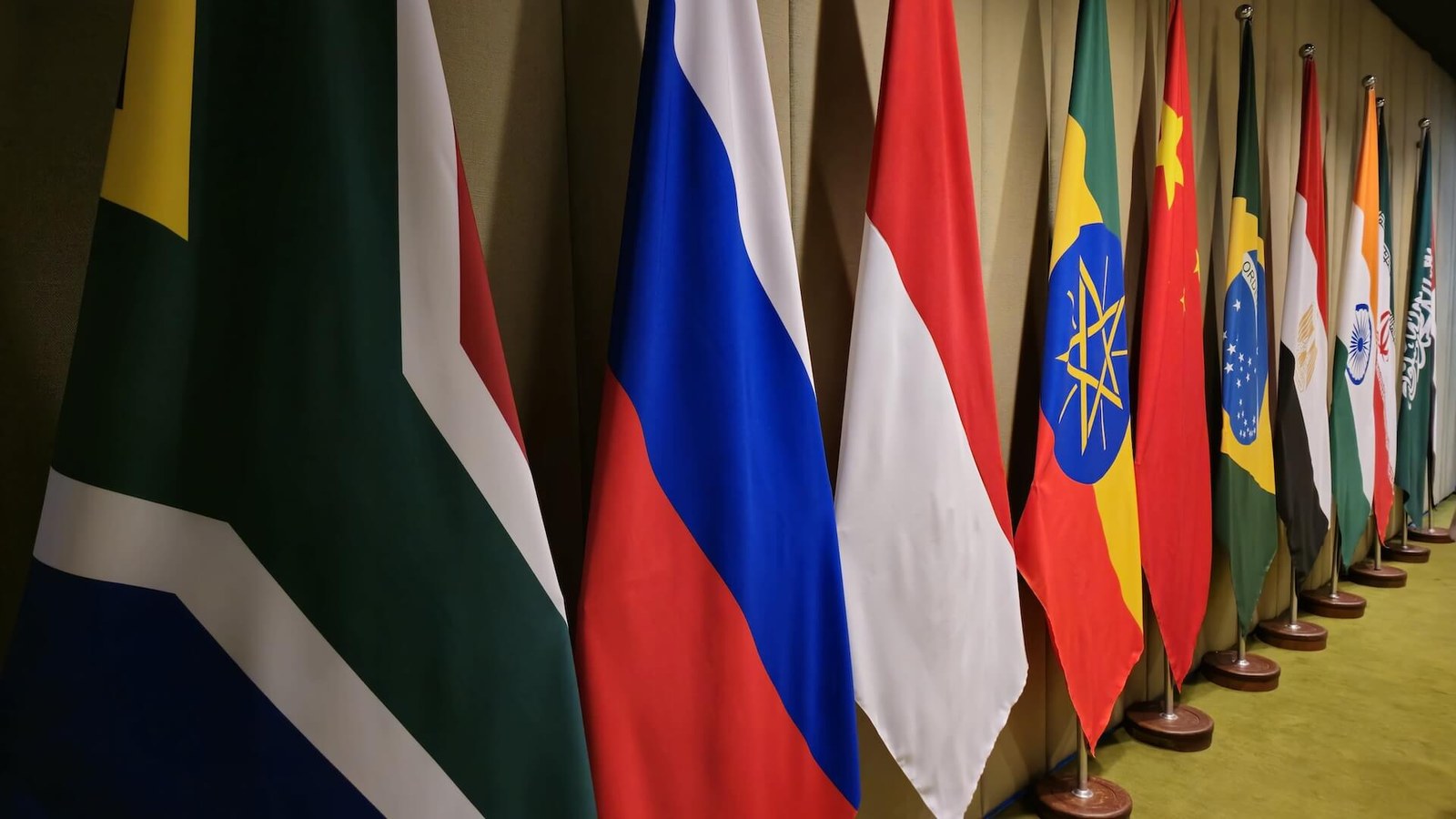
BRICS which connects major emerging economies across different continents (South America, Eurasia, Africa, and Asia) which focuses on enhancing economic cooperation, political coordination, and global influence, is currently in a condition of paralysis.
It has shown its incapability to stand up for Iran who is a member of BRICS and this exposes its ideological shortsightedness and structural dilemma that makes it ineffective.
The big powers in BRICS such as Brazil, Russia, India, China, and South Africa have complex interests and have an informal, consensus-based, and rotating-leadership group rather than a formal organisation led by one nation.
It is not able to collectively and effectively come up with alternative strategies that could restrict and contain the dominance of the US and Israel who are able to dictate the necessity of war in the Middle East.
The reason is obvious since countries like India have close militaristic ties with Israel, and UAE and Saudi Arabia, which are members of BRICS, have strong economic and strategic military relations with the US.
China, which has a record of coming up with great statements, is basically ineffective in stopping the war due to their underlying issues related to Taiwan and the South China Sea while Russia is preoccupied with its aggression in Ukraine.
India, which has reasonably good relations with all parties in the conflict, should have played a mediator role but sadly it has failed or disinterested in such a role due to self-seeking bilateral dealings with the major powers.
The UAE and Saudi Arabia are unable to distinguish who are the real warmongers in the Middle East by continuing to have American military bases in their country.
These have basically weakened the consensus of the BRICS community of nations due to bilateral deals that have weakened its collective power, and are at odds with the common good.
The fundamental question that BRICS nations should ask is whether they are willing to continuously accept the kind of global hegemony perpetuated by the US who uses bullying tactics such as economic tariff and war to subjugate nations.
Do the nations in the grouping having conflicting agendas that undermines BRICS and what are the remedial solutions to address this concern?
It is time the BRICS exerts itself or it will end up as ineffective paper tigers who continue to allow American hegemony of the world and in the process lose the trust of the people in the north and the south.
Ronald Benjamin is a human resources practitioner based in Ipoh. He is currently secretary of the Association for Community and Dialogue.
The views expressed are solely of the author and do not necessarily reflect those of MMKtT.
- Focus Malaysia

No comments:
Post a Comment
Note: Only a member of this blog may post a comment.