


Malaysia’s security agencies have long prided themselves on maintaining relative stability in a region periodically shaken by militant violence.
Police crackdowns, intelligence cooperation and laws such as the Security Offences (Special Measures) Act (Sosma) have helped dismantle extremist networks and prevent major attacks.
Yet the recent arrest of six local youths linked to the Islamic State raises a troubling question: why do extremist ideas continue to resonate with segments of society despite strong counter-terrorism enforcement?
The arrests are a stark reminder that terrorism does not simply emerge from secret militant camps or foreign battlefields. It is cultivated through narratives: ideas about religion, identity and power that gradually radicalise vulnerable individuals.
In Malaysia, these narratives often circulate not only in extremist networks but also in the rhetoric of religious demagogues, race-based NGOs and politicians who exploit religion and ethnicity for political gain.
The result is a dangerous ideological environment where the boundary between populist identity politics and violent extremism becomes increasingly blurred.
Youth radicalisation: A warning sign
The arrest of six youths aged between 16 and 21 illustrates how the next generation is being drawn into extremist thinking.
Police investigations revealed that the suspects were connected to online messaging groups where participants discussed potential attacks on police stations, government buildings and places of worship.
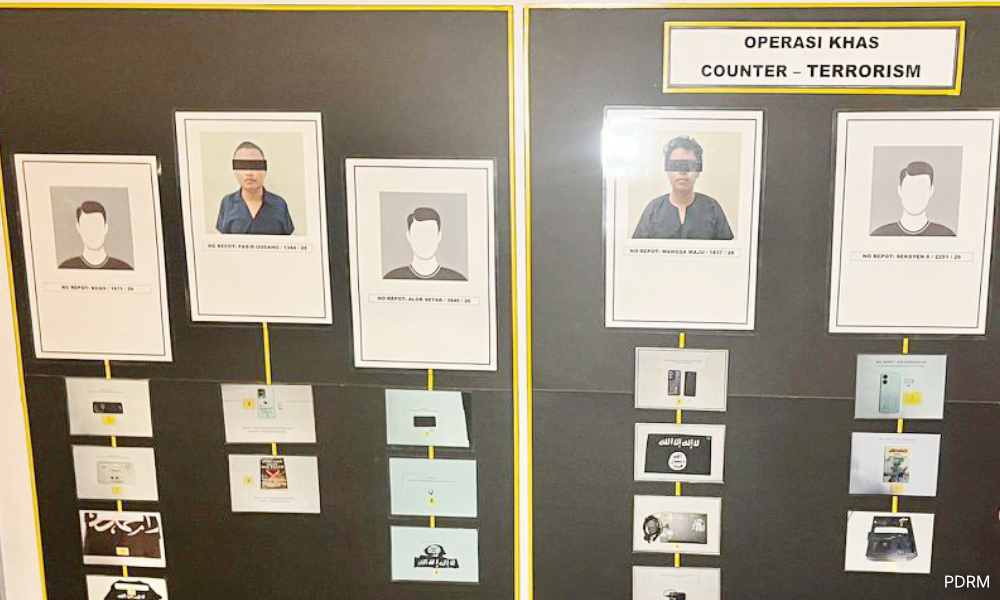
Some of these online groups reportedly involved about 1,000 participants across several countries, demonstrating the global reach of digital radicalisation.
Authorities also noted that the suspects spent long hours on gaming platforms and online networks where extremist propaganda circulated alongside militarised narratives.
Exposure to such content, combined with ideological discussions in private chat groups, can gradually reshape young people’s worldview toward radical beliefs.
The fact that three of those arrested were minors is particularly alarming. It shows that radicalisation is occurring earlier than many policymakers expected.
Prime Minister Anwar Ibrahim acknowledged the seriousness of the situation, warning that Malaysians must remain vigilant even though extremist activities are currently under control.
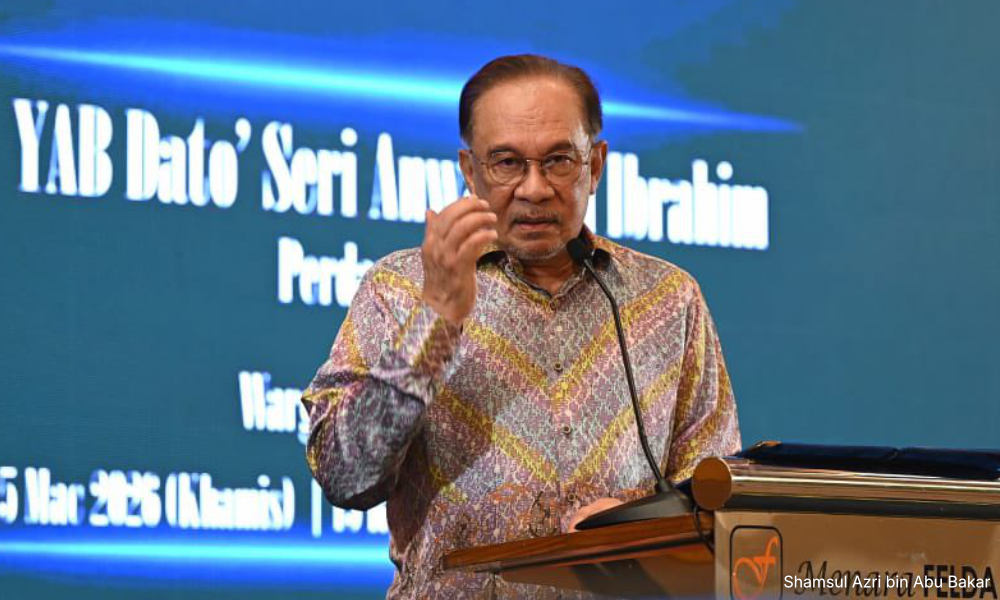
He stressed that young people must be equipped with knowledge and awareness to avoid falling prey to harmful influences.
His warning is important. However, it also points to a deeper issue: what influences are shaping the ideological environment in which these youths are growing up?
The ideological ladder to extremism
Extremism rarely appears suddenly. It evolves through stages.
At the first stage are narratives emphasising religious exclusivism, civilisational conflict and the idea that a particular community is under constant threat.
These narratives do not necessarily advocate violence, but they normalise a worldview built on division and grievance.
At the second stage, these ideas are amplified through social media and online networks, where they are combined with global propaganda from groups such as the Islamic State. The message becomes more radical - believers must defend their faith against enemies.
At the final stage, militant groups transform these narratives into a call for violence.
Malaysia’s challenge lies in the fact that the first stage increasingly occurs in mainstream public discourse.
Some religious preachers promote rigid interpretations of Islam that reject pluralism and portray minorities as threats. Certain NGOs mobilise supporters through racial rhetoric, claiming that the rights or privileges of one community are under siege.
Political parties, both in government and opposition, frequently deploy the same language to rally voters.
While these actors may not endorse terrorism, their rhetoric reinforces the ideological foundations upon which extremist propaganda thrives.
When politics legitimises extremist narratives
The weaponisation of race and religion in Malaysian politics is not new. For decades, political competition has revolved around identity-based mobilisation.
Campaign speeches warn of threats to Islam, to Malay rights, or to national identity. Social media amplifies conspiracy theories about demographic change or religious encroachment.
In many cases, political leaders frame national debates as existential struggles for survival.
Such rhetoric can be politically effective. However, it also normalises a worldview remarkably like the narratives used by extremist groups.
Terrorist organisations thrive on the belief that society is divided into opposing camps: believers versus enemies, insiders versus outsiders. When mainstream political discourse adopts similar language, however less extreme, it helps legitimise that worldview.
Young people encountering extremist propaganda online may therefore see it not as a radical departure from reality but as an intensified version of ideas they already hear in public life.
Digital platforms as accelerators
Online spaces have dramatically accelerated this process.
Messaging platforms like Telegram, Discord and WhatsApp allow extremist communities to operate across borders with relative anonymity.
Once individuals join these networks, they are exposed to propaganda, ideological debates and sometimes operational discussions.

In the recent Malaysian case, investigators found that the youths were connected to international online communities discussing militant activities.
But online radicalisation does not begin in a vacuum. It builds upon grievances, fears and ideological narratives already present in society.
When young Malaysians repeatedly hear that their religion is under attack or that their community must defend itself against others, extremist recruiters simply push that narrative further, arguing that violent struggle is the logical next step.
Counter-terrorism beyond policing
Malaysia’s counter-terrorism apparatus is widely regarded as effective. Police intelligence units have dismantled numerous extremist networks and prevented potential attacks.
The country also participates in regional intelligence sharing and deradicalisation programmes.
Anwar credited the vigilance and competence of security agencies for keeping extremist activity under control.
Yet even the most effective security operations cannot eliminate extremist ideology if the broader political environment continues to nurture it.
Counter-terrorism must therefore extend beyond arrests and surveillance. It requires confronting the social narratives that enable radicalisation.
Political courage Malaysia needs
This is where Malaysia faces its greatest challenge.
Religious hardliners command significant followings. Race-based organisations mobilise large voter blocs. Politicians who challenge identity-based narratives risk alienating their own supporters.
As a result, leaders often condemn terrorism while remaining silent about the rhetoric that helps create fertile ground for extremism.
However, ignoring the problem does not make it disappear.
If Malaysia is serious about preventing radicalisation, it must address the ideological ecosystem that fuels it. Political leaders must stop exploiting religion and ethnicity for short-term electoral gain.
Religious authorities must counter extremist interpretations with inclusive teachings rooted in Malaysia’s pluralistic traditions. Civil society must challenge hate speech and sectarian narratives wherever they appear.
The arrests of six radicalised youths should not be viewed merely as a policing success. They are also a warning.
Extremism is not just a security problem. It is a political and ideological problem: one that grows whenever fear and identity are used as tools of power.
Malaysia can dismantle terrorist cells. But unless it confronts the narratives that nourish them, the seeds of extremism will continue to find fertile ground. - Mkini
R PANEIR SELVAM is the principal consultant of Arunachala Research & Consultancy Sdn Bhd, a think tank specialising in strategic national and geopolitical matters.
The views expressed here are those of the author/contributor and do not necessarily represent the views of MMKtT.

No comments:
Post a Comment
Note: Only a member of this blog may post a comment.