


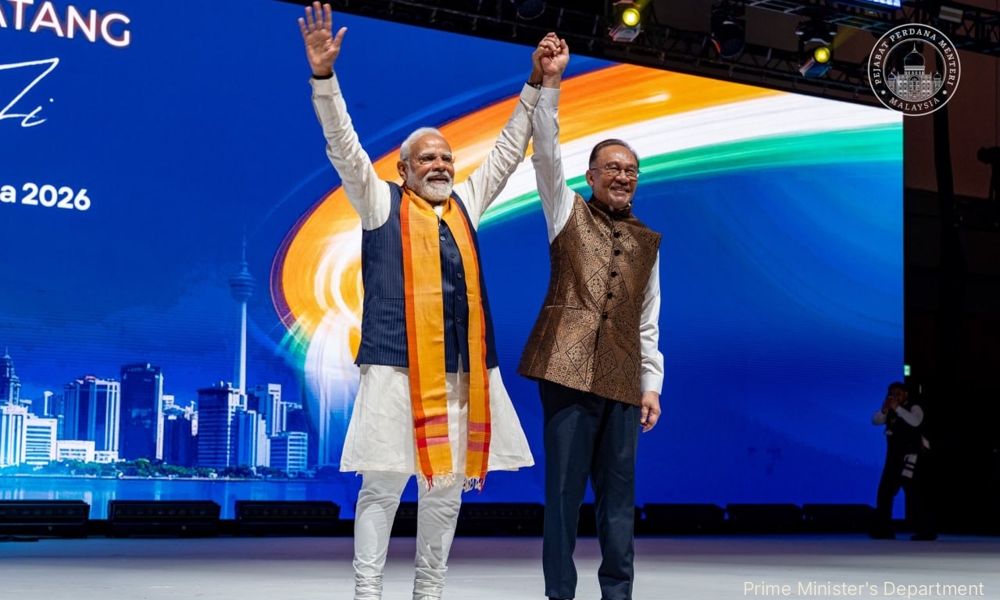
When a powerful head of state like Narendra Modi visits Malaysia, he isn’t greeted with economic ledgers or trade agreements, but with a vibrant dance performance.
Before the policy briefings and bilateral talks begin, culture steps forward as the nation’s first language. The stage becomes a diplomatic space, and the dancer, a vehicle of shared ties.
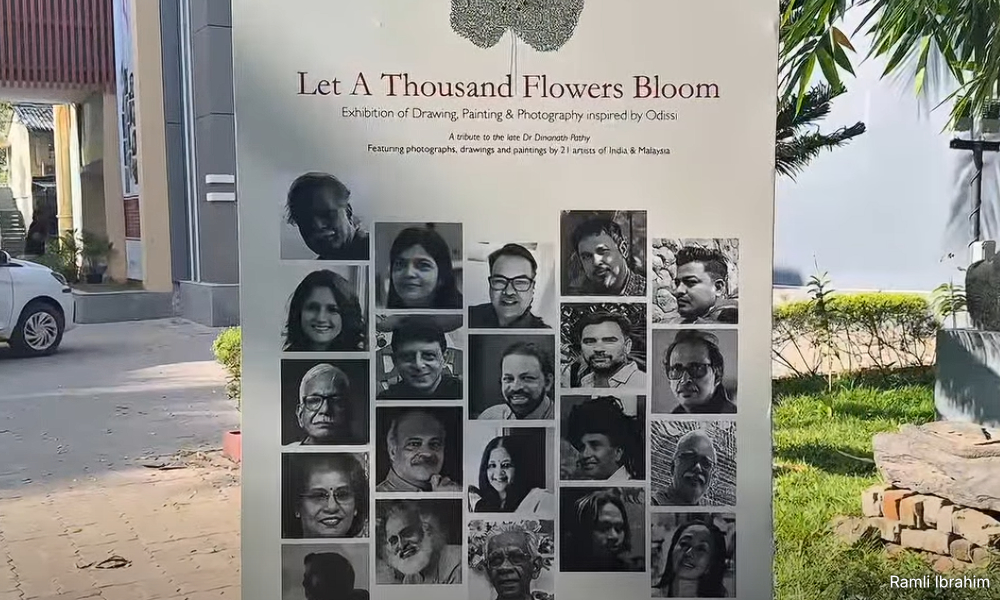
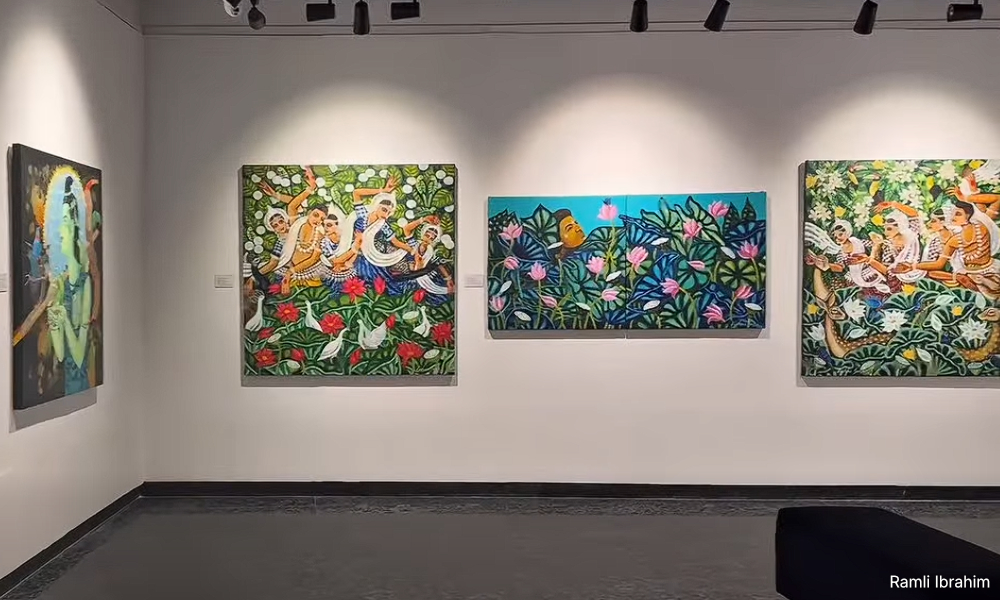
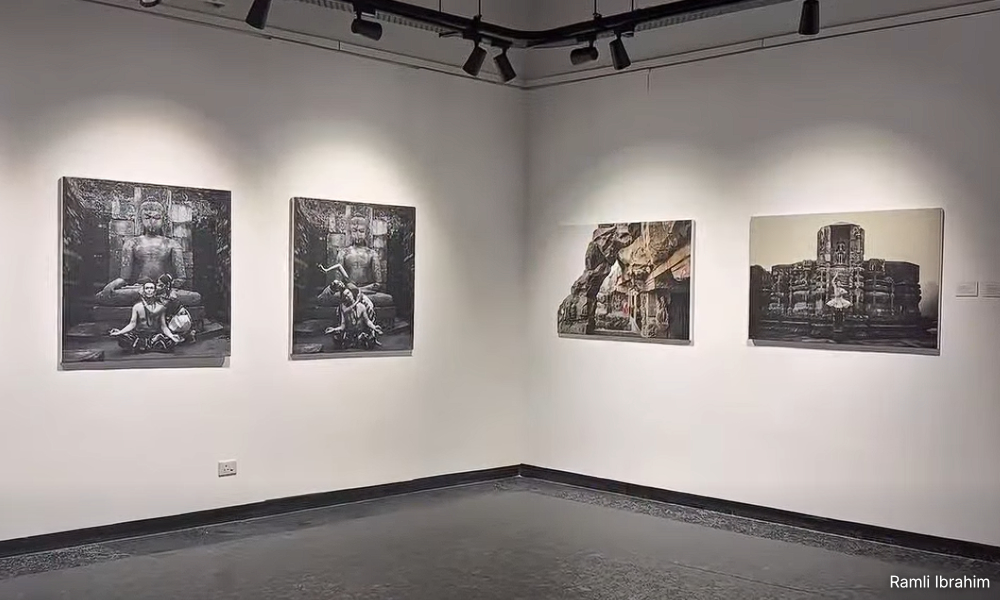
This choreography of welcome is the genesis of “Let a Thousand Flowers Bloom”, an upcoming exhibition featuring artists across India and Malaysia, showcasing paintings and photography inspired by the Indian classical dance, Odissi.
It brings together 21 artists - seven each from Bhubaneswar, Chennai, and Malaysia, with many participating artists having long engaged with the classical dance as a subject and muse.
After its well-received presentations in India, “Let a Thousand Flowers Bloom” is expected to open in Malaysia from April 25 to May 3 at One Bangsar in Kuala Lumpur.
The exhibition also serves as a tribute to the late Dinanath Pathy, widely regarded as a renaissance figure within the Odissi scene. A painter, designer, and scholar, Pathy played a crucial role during what many describe as a reformative period for the dance.
His collaboration with Malaysian artists, particularly through the Sutra Foundation, laid the groundwork for a cross-cultural dialogue that continues today.
Art as diplomacy
Founded in 2007, the Sutra Foundation has positioned itself as a bastion of contemporary and traditional arts, championing performance, exhibitions, and education as its pillars.
At its centre is its founder and artistic driving force, Ramli Ibrahim, whose lifelong dedication to Indian classical dance has shaped the foundation’s vision and cultural outreach.
An accomplished dancer trained in classical ballet and contemporary dance forms, Ramli, with five decades of experience, has transformed the nation’s performing arts landscape.
Since returning to Malaysia in 1983, he has sustained and expanded dialogue on Odissi - not only through performance, but through teaching, scholarships, and collaborations in the visual arts.
However, the significance of his work extends beyond any single production or exhibition.
For Ramli, art reaches where statecraft cannot, transcending economic agreements and the formal cultural showcases of diplomatic exchange.
He believes that art operates beyond these formalities and is diplomacy in its most human form.
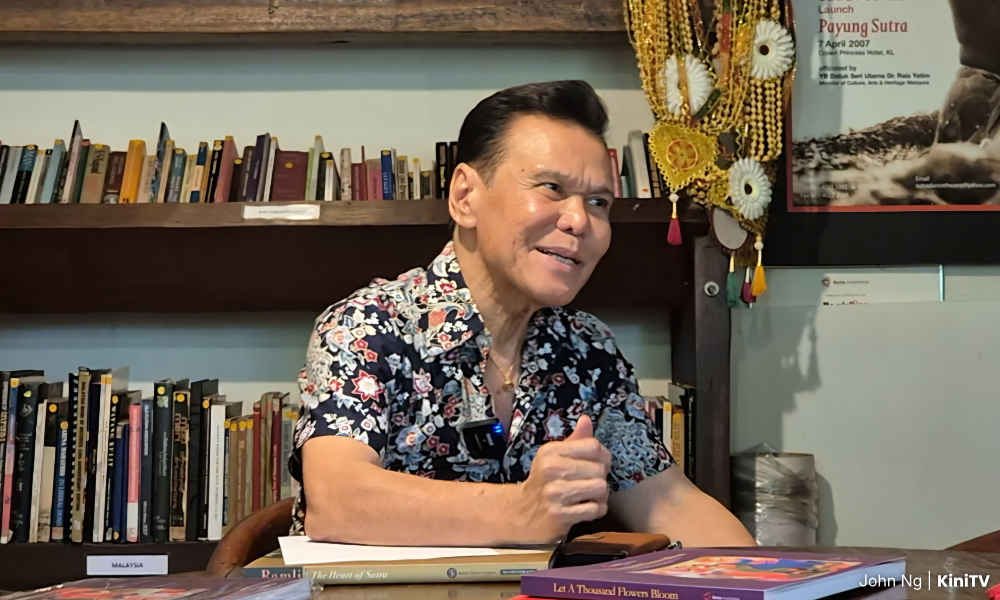
“Everything is art and culture. That takes you into the part where we share a common ground of appreciating the human experience, appreciating beauty, and appreciating history when we were together.
“This is what soft diplomacy is about. We are talking people-to-people, not just something that we should do for political expediency.
“With that, we take off all formalities and talk right where we are, connecting on a human level,” Ramli told Malaysiakini in a recent interview.
He said that in the same vein, “Let a Thousand Flowers Bloom” suggests that art may be the highest form of diplomacy, and that it allows Malaysia to speak not just as a trading partner, but as a co-creator of culture, participating in a shared artistic heritage that continues to evolve.
Sustaining cross-cultural dialogue
Building on this legacy, the Sutra Foundation, representing Malaysian arts on the international stage for over four decades, is no stranger to employing art as a form of diplomacy.
“I think Sutra (Foundation) has done our homework for more than four decades. When a very powerful head of state comes over, we are already talking to them at the highest level.
“People respect us very much because we are able to speak to them at what they think is the highest and most difficult aspect,” Ramli added.
Their groundwork stretches back to 2008, when the foundation organised a month-long festival dedicated to Odissi, accompanied by a major exhibition at the Petronas Gallery in Suria KLCC, featuring more than 20 artists.
The opening drew over 700 guests - a sign of how deeply the art form had begun to take root locally, he noted.
Over time, Ramli observed that Odissi became not merely an imported tradition, but part of the Malaysian artistic expression.
For fellow curator and participating artist Sivarajah Natarajan, that cross-cultural immersion erases rigid boundaries of identity and citizenship.
“As an artist, I don’t think in terms of borders. I don’t carry that sense of citizenship in my work. I feel almost cross-border.
“People don’t categorise me as Indian or otherwise. That’s the advantage of being an artist. You break boundaries and gain freedom of expression,” he said.
Sivarajah’s perspective mirrors the exhibition’s spirit: dialogue over division, and exchange over labels.
Another participating artist, Bayu Utomo Radjikin, sees these collaborations not as a search for similarity, but as an encounter with difference.
“Those differences define you, your roots, where you come from. They push you to see your work more deeply and meaningfully,” he said.
For the exhibition, he presents three figurative paintings inspired by Odissi. Captivated by the dance’s symbolic hand gestures and poses, he placed a female dancer at the centre of each drawing, capturing not only the physical stance but the psychological intensity embedded within it.
Bayu’s focus rests strongly on facial expression and bodily gestures, revealing the inner state that drives the outward movement.
“There is meaning in their pose, and it adds more elements to a storyline. It’s always connected to their feelings and their thoughts towards the movement they are doing in that pose,” he added.
Nurturing an artistic legacy
As the exhibition unfolds, Ramli returns to his guiding principle: the work of an artist is like planting seeds.
“What comes out of it? We can only hope for the best. Whether I am remembered or not is almost irrelevant.
“You can only direct how something is done. How people remember you, how Odissi will take shape - that depends on how you sow it, how you prepare the ground, how you fertilise it,” he reflected.
The same principle, he added, applies across Malaysia’s artistic spectrum - from mak yong to wayang kulit, from classical traditions to contemporary dance. Ramli stressed the question is not whether these dance forms survive in isolation, but whether they live within communities.
He said the goal is not to turn Malaysia into a nation of Odissi dancers, but rather, through the Sutra Foundation, he hopes to nurture artistic excellence across all forms, no matter the discipline.
“The more we accept and understand the differences and similarities, the more we understand that we are not living in a monoculture.
“Then, we accept that we are able to have a diverse human visage; that the human face is not uniform,” he said. - Mkini

No comments:
Post a Comment
Note: Only a member of this blog may post a comment.