


Control of media ownership has long been an important component of political manoeuvring and power struggles in Malaysia.
To control the media is to control a powerful instrument of propaganda: it enables one to disseminate one’s own narratives while attacking political opponents through negative coverage or even fabricated information.
For this reason, changes in shareholding or senior management within major media conglomerates, such as Media Prima Berhad, often serve as a barometer of political contestation within Umno.
Control media, control the party
Looking back to 1993, the “management buy-out” involving shareholding changes in the New Straits Times Press and TV3 was widely interpreted at the time as one of then prime minister Dr Mahathir Mohamad’s manoeuvres to allow Anwar Ibrahim to contest the Umno deputy presidency against the incumbent, Ghafar Baba.
After Anwar was dismissed from his government positions and expelled from Umno in 1998, testimony during a court trial revealed that Mahathir himself had been the mastermind behind the management buy-out.
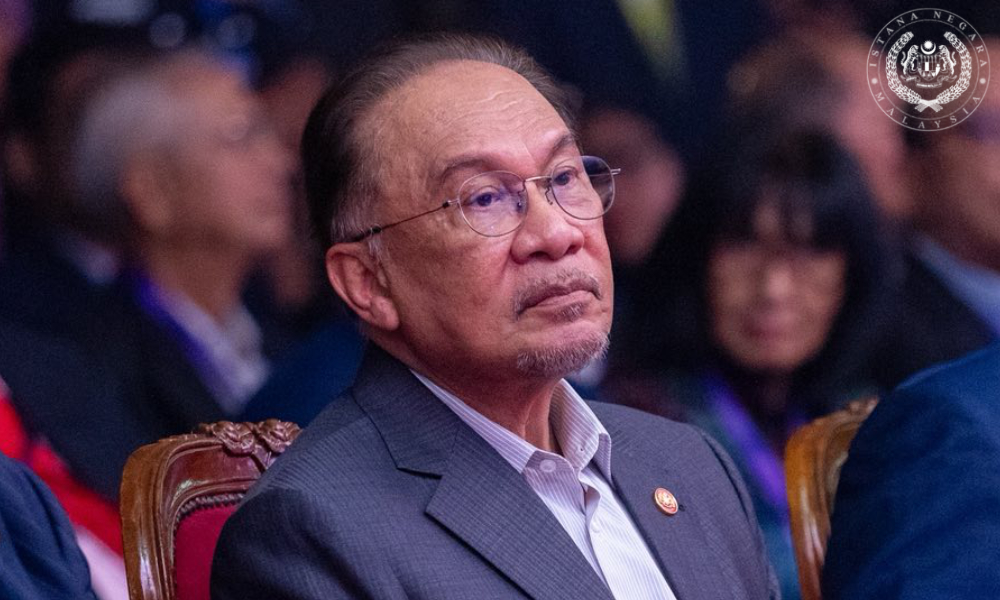
By 1998, relations between Mahathir and Anwar had completely broken down.
Even before the dramatic dismissal of Anwar as deputy prime minister and finance minister, and before stripping him of his position as Umno deputy president and party membership, Mahathir had already acted swiftly to replace three senior executives in Umno-controlled media outlets perceived to be sympathetic to Anwar.
These included Utusan Malaysia, Berita Harian, and TV3.
In 2018, Pakatan Harapan came to power for the first time, allowing Mahathir, then leader of Bersatu, to return as prime minister.
After assuming office, Mahathir suggested that the government set rules to limit political parties’ shareholdings in media companies to 10 percent.
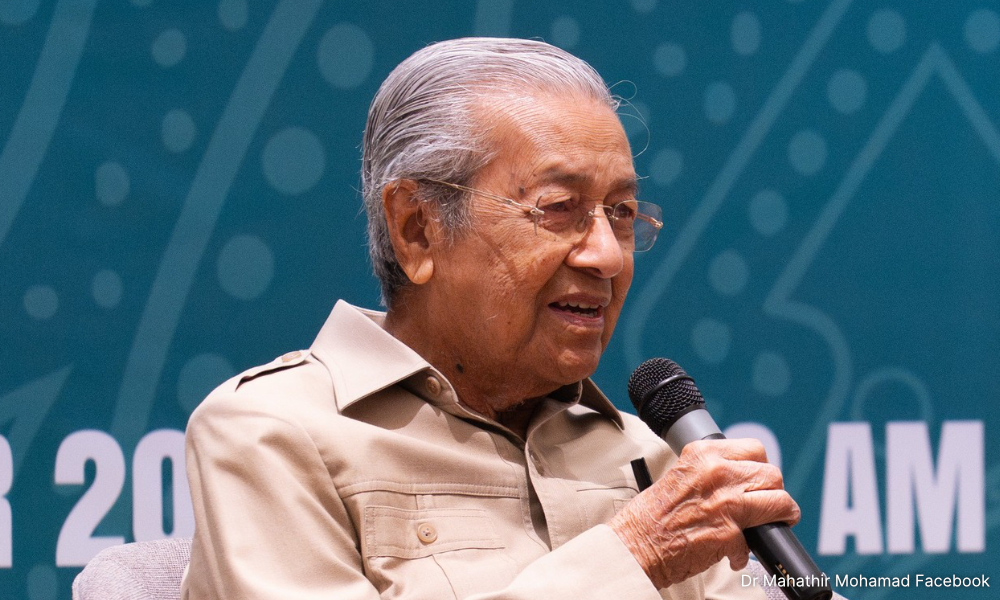
The proposal was presented as “one way to prevent the media from being manipulated by certain quarters… for their own interests”, but in reality, it would have deprived the then-opposition Umno and the MCA of their continued control over Media Prima and The Star Media Group.
At the same time, Syed Mokhtar Albukhary, the tycoon known for his close personal ties with Mahathir, became the largest shareholder of Media Prima and Utusan Melayu (Malaysia) Berhad in 2019.
Mahathir’s intention to regain control over the media landscape was therefore unmistakable.
However, the collapse of the Harapan government following the “Sheraton Move” meant that the proposed restriction on party shareholding in media companies was never implemented.
Umno makes its move
On March 6 this year, Media Prima notified Bursa Malaysia that Amir Nashrin Johari, the son of Investment, Trade and Industry Minister Johari Abdul Ghani, had acquired a 7.96 percent stake in the company.
Johari himself already held 25 percent of Media Prima through JAG Capital Holdings Sdn Bhd.
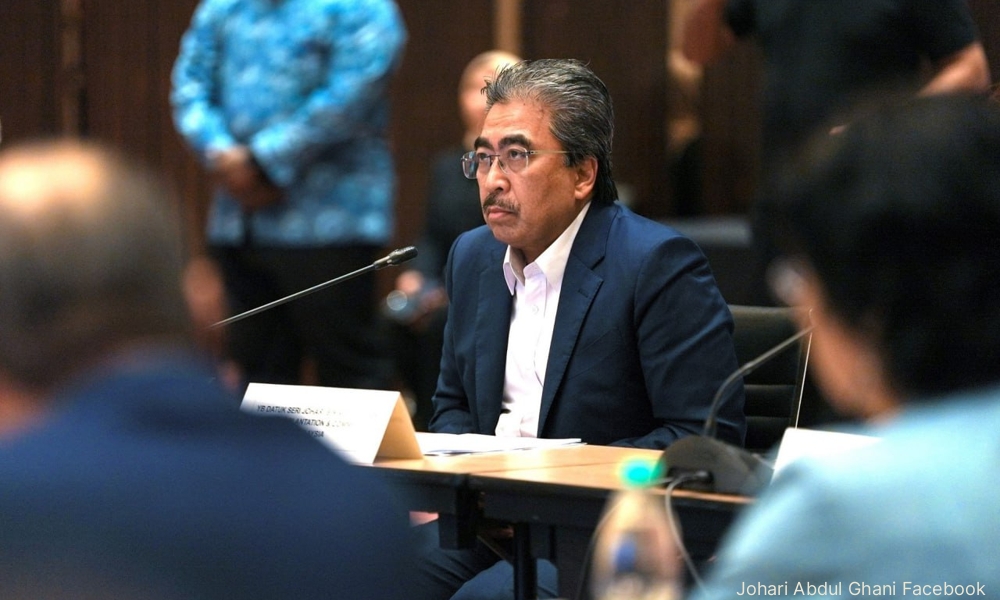
Combined with his son’s newly acquired stake, the father and son together control 32.96 percent, replacing Syed Mokhtar as the largest shareholder of Malaysia’s largest media group.
At the same time, another of Johari’s sons, Amir Rasyidi, reportedly serves as the chief innovation officer of Media Prima and was also recently appointed deputy CEO of the group’s content and television networks division.
The Syed Mokhtar connection
Syed Mokhtar, often described as a “low-profile tycoon” from Kedah, recounted in his 2012 biography, “Syed Mokhtar Albukhary: A Biography”, his enduring ties with Mahathir and his successor in Bersatu, Muhyiddin Yassin.
He first met Mahathir on Jan 16, 1997, and the two subsequently maintained a long-standing relationship.
With Mahathir’s assistance during his first premiership, Syed Mokhtar was able to develop the Kompleks Ilmu Sharifah Rokiah in Kedah and was commissioned to build the Islamic Arts Museum Malaysia.
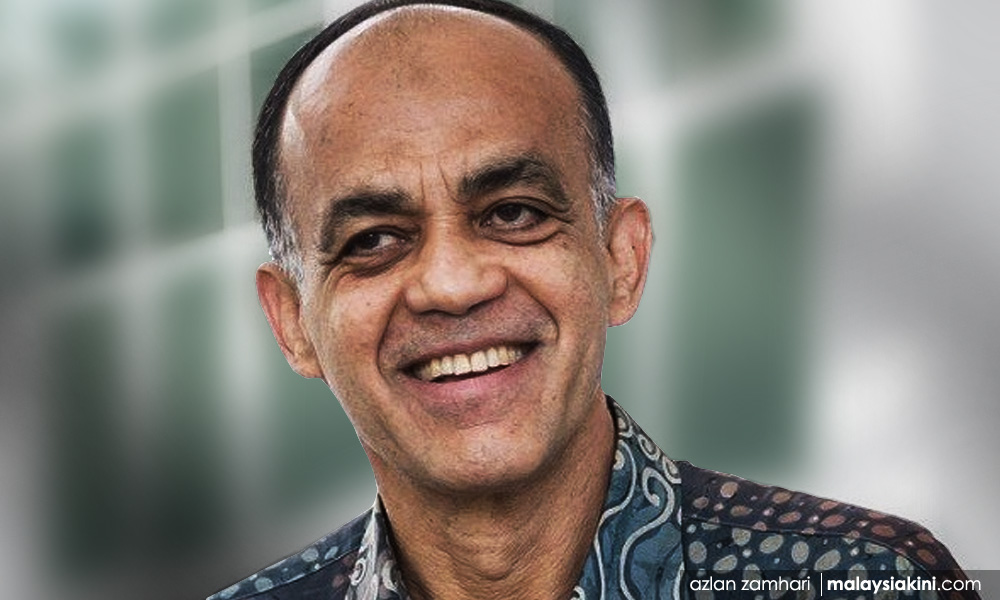
In 2004, Mahathir also wanted him to take over the state-owned Pernas.
The biography records how Syed Mokhtar remained a Mahathir loyalist since the day they met. Even after Mahathir stepped down in 2003, Syed Mokhtar donated to mosques at Mahathir’s request and kept reporting to the latter on what he was doing on a weekly basis.
The same biography recounts that Syed Mokhtar befriended Muhyiddin much earlier, in 1977, when he was a rice trader.
Muhyiddin was then the managing director of Sergam Bhd, the Johor state government agency entrusted to procure government supplies.
The two soon became close friends. Muhyiddin’s family affectionately referred to him as “the bachelor uncle who spoilt the children”.
Syed Mokhtar’s first trip to London and his pilgrimage to Mecca were undertaken together with Muhyiddin and three other friends.
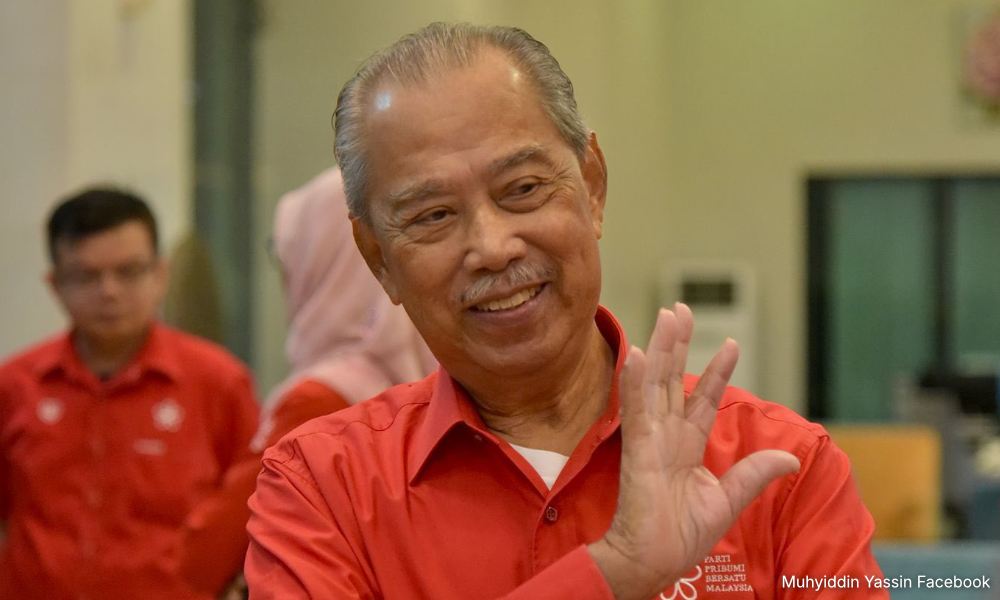
Syed Mokhtar liked eating well and began dining in hotel restaurants, with Muhyiddin counted among his regular dinner buddies.
In 2012, then DAP MP Tony Pua described Syed Mokhtar as “BN’s best crony”. Yet the BN and Umno of today are no longer the same as those Pua referred to then.
At that time, both Mahathir and Muhyiddin were still members and leaders of Umno, the backbone party of the ruling coalition.
Today, however, Mahathir and Muhyiddin lead political forces that oppose Umno and BN.
Under such circumstances, would current Umno leaders feel comfortable allowing Syed Mokhtar to continue controlling Media Prima?
The answer is obvious: Umno would inevitably wish to regain control of the media conglomerate.
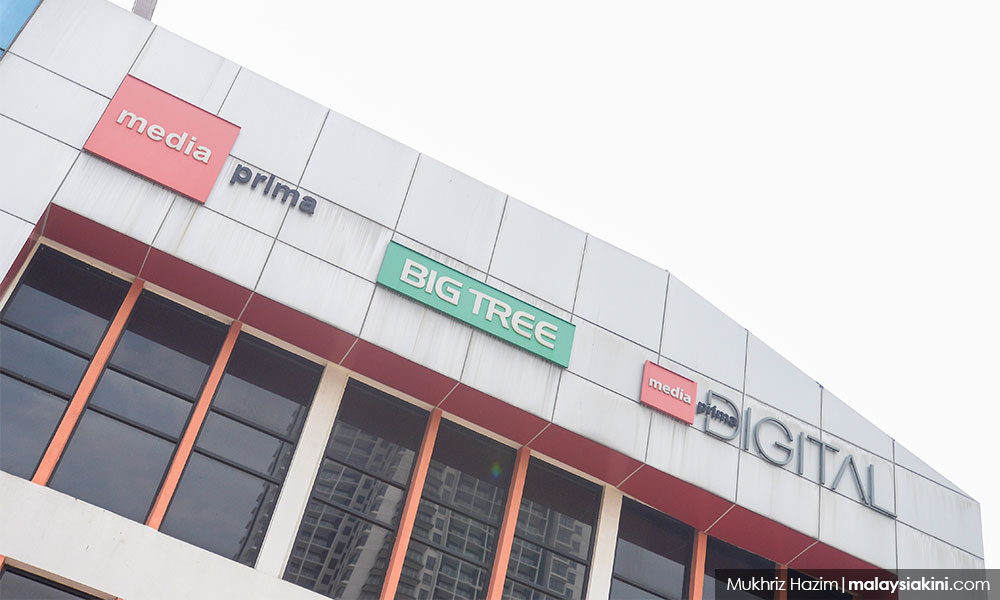
In that case, Johari, among the few who are corporate players within Umno’s leadership, would naturally shoulder the responsibility.
Rescuing Media Prima from the brink
Johari is one of Umno’s four vice-presidents and also serves as the treasurer-general of BN.
He began actively participating in politics in 1988 and first contested a general election in 2013, winning the Titiwangsa parliamentary seat in Kuala Lumpur.
On July 27, 2015, he was appointed deputy finance minister by then prime minister and finance minister Najib Abdul Razak, and during a cabinet reshuffle on June 27, 2016, he was promoted to second finance minister.
Johari suffered a setback in the 2018 general election, losing his seat to a Harapan candidate. He returned in the 2022 general election to reclaim the Titiwangsa seat.
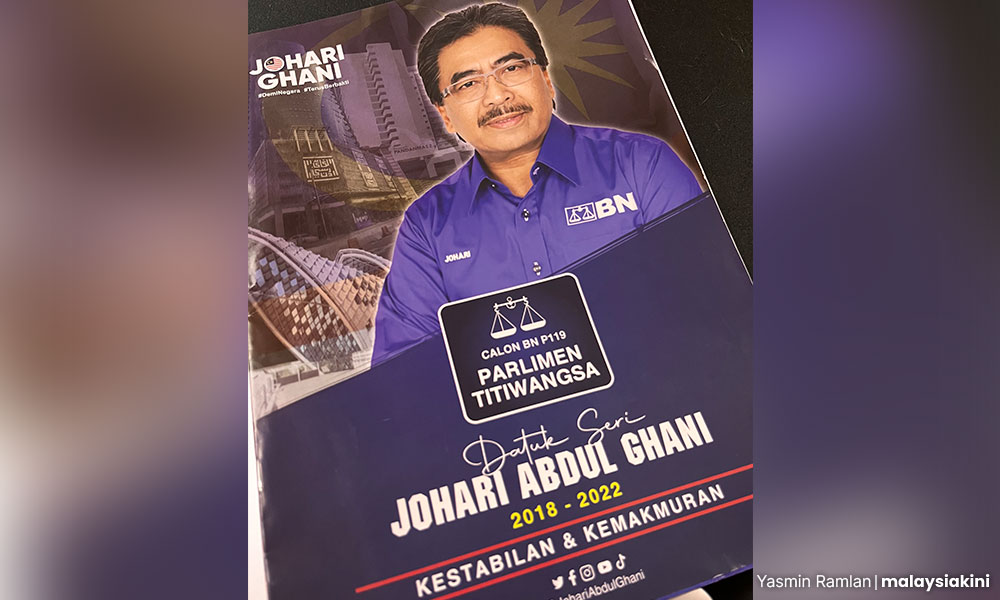
After the formation of the unity government between Harapan and BN, he was appointed plantation and commodities minister on Dec 12, 2023, before being transferred to the Investment, Trade and Industry Ministry on Dec 17, 2025.
Since March 2023, he has also chaired the task force responsible for recovering assets linked to the 1MDB scandal.
Nevertheless, Johari also maintains close ties with Syed Mokhtar. According to an article in The Edge in 2019, there was talk in the market that Johari was a partner of Syed Mokhtar’s and had substantial equity interest in the tycoon’s Tradewinds Corp Bhd and its group of companies.
It was also said that Johari was in Tradewinds Corp and its group of companies purportedly to safeguard Umno’s interests, as Syed Mokhtar himself was said to be holding assets for the political party.
Johari acknowledged that he and Syed Mokhtar are old friends who occasionally exchange business advice. However, he denied being a business partner or holding shares in Tradewinds Corp, although his company, CI Holdings, had business dealings with Tradewinds Plantation Bhd, a subsidiary of Tradewinds Corp.
Johari has reportedly held shares in Media Prima on behalf of Umno, although he has denied participating in the group’s management, stating that he was only an adviser to Syed Mokhtar on Media Prima, and he advised him because he knows how to restructure companies.
After Syed Mokhtar assumed control of Media Prima, the group did indeed announce a restructuring plan in early November 2019, which included retrenchments.
Before that restructuring, Media Prima recorded pre-tax losses in four out of five financial years between 2016 and 2020, with the sole exception of 2018.
After restructuring, however, the group reported pre-tax profits for the financial years 2021 to 2025 as follows:
RM90.223 million (Jan 1, 2021 - Dec 31, 2021);
RM114.038 million (Jan 1, 2022 - June 30, 2023);
RM74.678 million (July 1, 2023 - June 30, 2024);
and RM35.596 million (July 1, 2024 - June 30, 2025).
If these results indicate that Media Prima has gradually emerged from the slump it experienced before 2020, Umno’s move to regain control of the group also reflects the party’s efforts to rebuild its strength and reclaim its media front after more than three years of biding its time within the coalition government.
Control of Media Prima would not only strengthen the position of Umno leaders in internal party power struggles but would also help the party prepare for the next general election.
In that sense, the move kills two birds with one stone. - Mkini
CHANG TECK PENG is a journalist-turned communications academic. He is an associate professor at TAR UMT.
The views expressed here are those of the author/contributor and do not necessarily represent the views of MMKtT.

No comments:
Post a Comment
Note: Only a member of this blog may post a comment.