


I’ve been teaching for quite a while now, 22 years to be exact. It’s something I love doing. Think about it, I love being a journalist, writing and making films. So, teaching and talking about it is fun too.
When you’ve been teaching as long as I have, you start to very easily spot the shortcuts that students take to pass their courses. From copying during exams to plagiarism, and today, AI-generated assignments.
But before anything, I would like to say that incidents like these are not that concerning to me. Students have been doing it since the dawn of time. What student has never tried to cheat a little during exams or copy a little when writing an essay?
It’s part and parcel of student life. It is also part and parcel that teachers and exam invigilators try to prevent these things from happening. I truly believe that it is harmless and builds character.
Of course, it shouldn’t be serious like plagiarising an entire dissertation or systematically copying throughout an entire exam period. That is, of course, too much and needs to be dealt with.
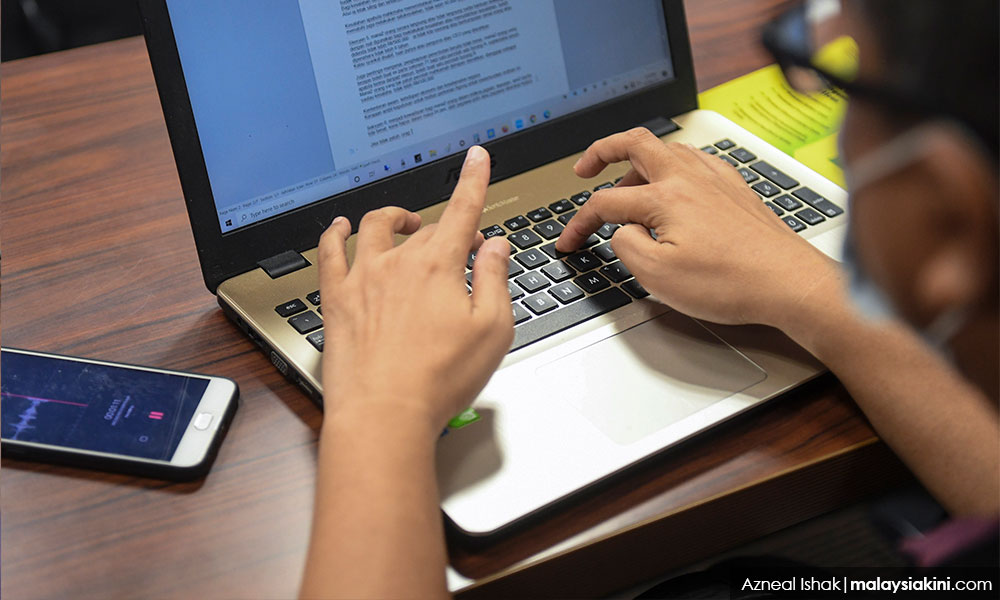
Okay, wait a minute. As an academic myself, I don’t want to come off as condoning cheating in academics. But I think you all know what I mean, it’s a little bit of naughtiness, or in Bahasa Malaysia is “nakal”, won’t really hurt.
In fact, this nakal-ness and mischievousness can be seen as a sign of intelligence. But this isn’t what I want to talk about in this article. I’ll keep it for another time. What I really want to talk about is Artificial Intelligence in education.
Recently, I conducted my last week of classes for the semester. Usually, during this period, I would have already covered the entire syllabus, and the students and I spend this time looking at their final projects and assignments before submission.
They would show me their drafts or rough cuts, and I would give them comments and suggestions to improve before they submit. I like these sessions because a lot of learning happens when I get to demonstrate it on the work they have done.
During one of my journalism writing classes, the students started showing me their drafts for feature articles they had been working on. As I was reading through their writings, I started noticing a mismatch between the writings and the students.
“Hey, Su Xuan! Did you really write this article?” I asked.
“Yes, sir! I did,” Su Xuan replied.
“Hmm… how come the way you speak to me and in class is different from your writing?”
“What do you mean, sir?”
“How do I say this? Okay, let me be frank. The grammar, sentence structures and words you used in your writing are just… so much better than when you speak.”
“Hahaha! Really lah sir! I really wrote myself one lehh!”
Detecting plagiarism and AI
So, I tried to prove this to Su Xuan (of course, this isn’t her real name!). I told her to submit her article to me on the Turnitin platform. Turnitin is a software that teachers use for submissions because it allows us to detect plagiarism.
Unbeknownst to students, it has also added a tool for AI detection. So, when Su Xuan submitted her article, I showed her the results shown on Turnitin. When it came to plagiarism, the detection rate was a mere two percent. But for AI, it detected 98 percent.
So, I told Su Xuan that Turnitin detected that her article was 98 percent generated by AI. She laughed sheepishly. Then, all the other students wanted to submit to see how their articles fared. No one had anything less than 95 percent!
They all finally admitted that they used AI tools like ChatGPT or Gemini to write their articles. They said that they did the interviews themselves, but that prompted AI to write out the articles. A few would write it themselves and then get AI to refine it.
I told them that this shouldn’t be the way, especially since they are still students who are learning how to write. They needed to practise and learn the basic skills of journalism and writing if they wanted to have good careers.
“But, sir! Then how will our articles be good? Our writing and language skills aren’t that great,” Su Xuan complained.
“That’s why you must practise! If you don’t spend time honing your skills, then you will never get better,” I said.
That kind of surprised me a little. How can they not understand or grasp the idea that to become good at something, you need to learn how to do it and then practise till you get better. It’s actually very common sense.
But then again, I wasn’t totally shocked about it. After two decades of teaching, I have also realised that the most common sense isn’t when it comes to students (not all, but most!).
It’s like how so many of them don’t have critical thinking skills because all they ever know is to do things mechanically and never to question the process behind it. We all know this, but nothing has really been done to address it.
Embrace AI
In my classes, I tend to spend a lot of time having discussions on current affairs and social issues just so that they can be exposed to a little bit of critical thinking. This usually isn’t spelt out explicitly in the course outlines, but I do it anyway.
As for AI in education, in the last year or so, a lot of the talk that I have been hearing is that we need to be vigilant that students don’t use it to plagiarise or use it to do the work for them, hence the students start to think that that is the only use AI has.
I think we need to change this perception and start teaching students to embrace AI in their education journey. Honestly, I use AI a lot for my work, be it for my teaching or even in my journalism, writing and film work.
One of the most useful things that I find AI can help me with is brainstorming and coming up with ideas. The next most useful thing is for research and data gathering. This has sped up my work process and made it much more efficient.

I know that these are basic uses of AI, and many people are using it for so much more. But the idea I’m trying to get across is that we need to embrace the fact that AI is here and we need to learn to use it wisely to our advantage instead of detriment.
I think we need to very quickly start introducing the study of AI in our education system right from the early years, all the way up to the tertiary level. Industry professionals and academics need to find ways to integrate into their teachings.
To tell you the truth, Su Xuan and her classmates understood. It was obvious that they all already did the research and interviews. So, I told them that they just need to write it themselves and that they can still get my feedback before submitting.
I told them that most people would rather read a flawed but human article rather than a perfect but robotic one. And they all agreed. - Mkini
ZAN AZLEE is a writer, documentary filmmaker, journalist and academic. Visit fatbidin.com to view his work.
The views expressed here are those of the author/contributor and do not necessarily represent the views of MMKtT.

No comments:
Post a Comment
Note: Only a member of this blog may post a comment.