


Not a day has passed since his announcement that he will blockade the Strait of Hormuz, but US President Donald Trump “Taco-ed” (Taco - Trump Always Chickens Out) again - the blockade will not apply to those ships that are not leaving from or heading to Iranian ports.
Here’s what the US Central Command said: “US Central Command forces will begin implementing a blockade of all maritime traffic entering and exiting Iranian ports on April 13 at 10am ET (Eastern Time), in accordance with the president’s proclamation.
“The blockade will be enforced impartially against vessels of all nations entering or departing Iranian ports and coastal areas, including all Iranian ports on the (Persian) Gulf and Gulf of Oman. Centcom forces will not impede freedom of navigation for vessels transiting the Strait of Hormuz to and from non-Iranian ports.”
This is a clear indication that vessels that are going in and out of non-Iranian ports will have freedom of navigation. The ones that will be affected are those going to or leaving Iranian ports.
What blockade?
That is very different from what Trump had announced earlier, which is a total blockade of the strait.
To be clear, here are extracts from Trump’s statement when talks broke down, and his vice-president JD Vance flew back: “Effective immediately, the United States Navy, the finest in the world, will begin the process of blockading any and all ships trying to enter, or leave, the Strait of Hormuz. At some point, we will reach an ‘all being allowed to go in, all being allowed to go out’ basis.
“...Their navy is gone, their air force is gone, their anti-aircraft and radar are useless, (Ali) Khamenei, and most of their ‘leaders’, are dead, all because of their nuclear ambition.
“...Additionally, and at an appropriate moment, we are fully ‘locked and loaded,’ and our military will finish up the little that is left of Iran!”
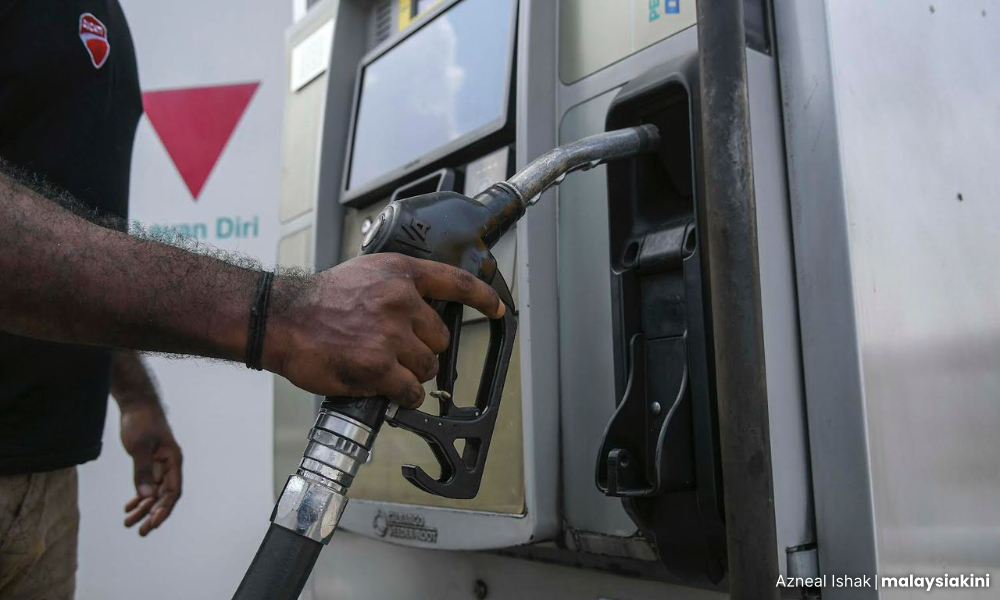
The new conditions make a huge difference because oil and gas from other producing countries in the Persian Gulf can exit through the strait, which would help bring oil supply to more normal levels and prices back down.
That flow - 20 percent of world production - was blocked for some six weeks, leading to an oil supply crisis with reverberations to all commerce.
Oil prices could rise
On paper, this should help stabilise oil prices and even bring them down, provided that the conditional opening is effective and Iran does not react against it.
That’s unlikely since Iran, if the blockade is effective, is being prevented from exporting to countries like China, to which much of its oil exports go, unless the ban on Iranian ports is lifted.
China may not face an immediate threat from this - reports say there are many Iranian tankers at sea which can supply oil to China for a while.
For example, Bloomberg reported yesterday that two sanctioned Iranian supertankers have dropped anchor off Indian ports.
The buyers of the two shipments are unclear, with state refiners including Indian Oil Corp, Reliance Industries Ltd, and Bharat Petroleum Corp operating in the areas where the tankers are anchored, Bloomberg said.
Trump’s announcement of the oil blockade sent oil prices jumping. Anyone who had advanced information on this would have made a huge killing in the markets by taking a leveraged position that oil prices would increase.
Similarly, those who have information that Trump will announce a blockade only to and from Iranian ports will likely take a position that oil prices will ease. It’s a major development - after six weeks - oil and gas from the Gulf states can reach world markets.
There are still outstanding issues. The first question to be answered is whether Iran will retaliate against the blockade.
The second, what would happen when tankers taking badly-needed Iranian fuel to countries like China and India pass through the strait? Will the US stop them forcibly?
Unlikely. It’s a situation that everyone will want to avoid. However, what puzzles is how two US warships are sailing through the Strait of Hormuz and into the Persian Gulf without attracting Iranian fire?
Surely, this will not happen without some kind of agreement in the works with Iran.
The nuclear problem
For some answers, let’s look at Trump’s statement on social media. The first sentence on that post reads, “So, there you have it, the meeting went well, most points were agreed to, but the only point that really mattered, nuclear, was not.”
And then followed the rant, ending with a promise to finish off Iran.
But those who are enlightened know that Iran had complied with everything the US wanted way back in 2015.
On July 14, 2015, the US and its international negotiating partners reached an agreement with Iran on its nuclear programme: the Joint Comprehensive Plan of Action (JCPOA) or the Iran nuclear deal.
The agreement was formally adopted on Oct 18, 2015, and would only go into effect after Iran completed several initial steps.
As a part of the deal, Iran also agreed to implement the Additional Protocol, which is an expanded set of requirements for information and access to assist the International Atomic Energy Agency (IAEA) in its task of confirming that states are using nuclear material for peaceful purposes.
It was Trump who withdrew the US from the JCPOA in May 2018, even though Iran was still in compliance at the time. The deal was endorsed by UN Security Council Resolution 2231, making it part of binding international law. The US’ European allies (UK, France, Germany) opposed the withdrawal.
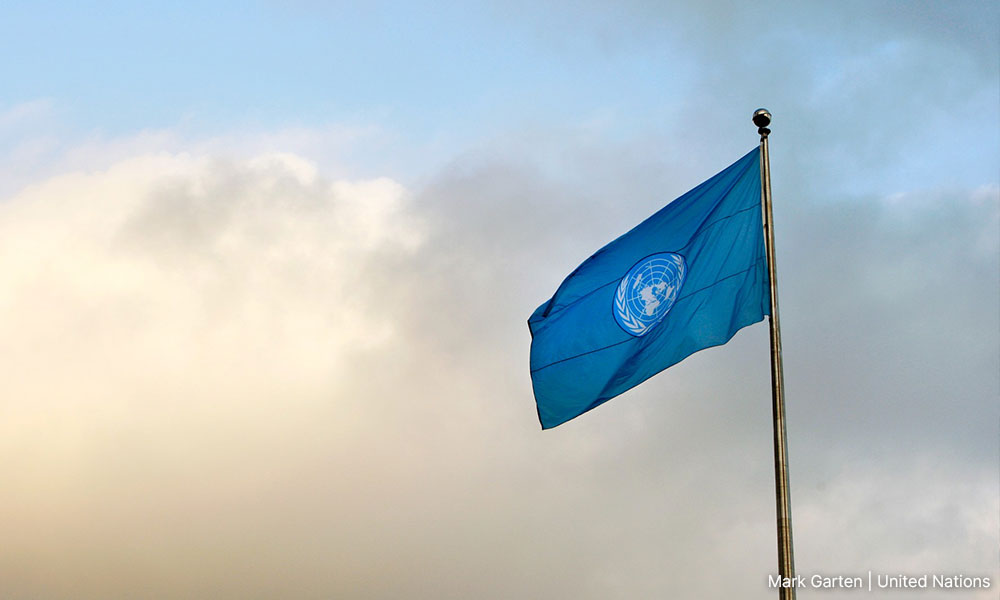
So, Trump had everything to do with Iran becoming a rogue state, reimposing sanctions on Iran, which then embarked on a nuclear programme progressing rapidly with uranium enrichment programmes to reach near weapon-grade levels.
The only beneficiary from this one-sided treatment of Iran is Israel, which the US has used for decades as its instrument of foreign policy through force in West Asia and supporting it with the latest weapons and hundreds of billions of dollars in aid.
Even now, Iran is willing to abandon a nuclear weapons programme but not uranium enrichment totally. If Trump wants peace with Iran, go back to the original JCPOA - under a different name if that is more politic which provides safeguards for peaceful use of nuclear energy. It’s really as simple as that.
Back against the wall
But currently, Trump, with his back against a wall on a regime he could not vanquish completely, wants an exit that will make it appear, at least to his support base and the undecided voters, to be an American victory. It is not.
That’s what all this is about: a face-saving exit for Trump. It will probably help him in the mid-term elections for the House of Representatives, where there is a good chance that he will otherwise lose the majority and face consequences such as impeachment.
The rest of the world has to suffer, and Iran, Gaza, Lebanon, Venezuela and Cuba terribly so, because of US domestic politics and its penchant for world dominance at all costs and times. It shouldn't be that way. - Mkini
P GUNASEGARAM says the world has become lopsided and lawless following Donald Trump’s ascendancy to the US presidency. But what can we expect from a felon?
The views expressed here are those of the author/contributor and do not necessarily represent the views of MMKtT.

No comments:
Post a Comment
Note: Only a member of this blog may post a comment.