


Analyst Asrul Sani says PAS is signalling firmness to its support base while keeping political channels open.

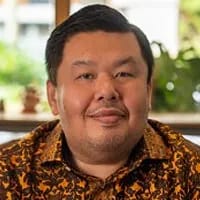
The Asia Group associate vice-president Asrul Sani said PAS deputy president Tuan Ibrahim Tuan Man’s insistence that ties with Bersatu had not been completely severed should not be interpreted as dissent within the Islamic party.
Rather, he told FMT, it signalled concern over the optics and consequences of PAS’s decision.
“This is less about reversing the decision and more about managing its political fallout. His language reassures the wider Malay political ecosystem that PAS remains a coalition builder.
“The next election will be shaped by coalition-building, seat negotiations, and post-election alignments, so PAS has every interest in avoiding a complete break from Bersatu even as their formal cooperation ends,” he added.
In contrast, Asrul said certain PAS leaders — such as information chief Ahmad Fadhli Shaari, who declared that trust between PAS and Bersatu had been broken — represent the harder line within the Islamic party.
“But that does not mean Tuan Ibrahim is isolated. These are two sides of the same strategy: signalling firmness to the base while keeping political channels open.”
On Monday, PAS put an end to its cooperation with Bersatu, saying it was keen to explore a new political pact in preparation for upcoming elections, with the goal of uniting the ummah.
Two days later, Tuan Ibrahim said PAS’s decision was aimed at giving both parties room to determine their respective directions without being tied down by the other.
He said the relationship should not be severed, appealing for both parties to remain united for the sake of the ummah.
Pragmatism will dictate future steps
Azeem Fazwan Ahmad Farouk of Universiti Sains Malaysia said PAS leaders like Tuan Ibrahim may believe that a grand coalition of Malay-Muslim parties would make a much more formidable alliance in facing elections.

He said this may be why Tuan Ibrahim wishes to maintain ties with like-minded parties, whereas PAS president Abdul Hadi Awang appears to favour former Bersatu deputy president Hamzah Zainudin’s faction over Bersatu itself.
Nonetheless, Azeem expects pragmatic political calculations to outweigh personal preferences and sentimental as PAS braces for nationwide elections.
“PAS’s overriding objective is to retain its existing parliamentary and state seats while expanding its influence in the next general election. Any alliance that can maximise those prospects will naturally become the preferred option.
“In that sense, PAS’s decisions are likely to be guided less by personalities and more by a pragmatic assessment of which coalition offers the best path towards achieving its long-term electoral goals,” he said.
Asrul said PAS, which holds the Perikatan Nasional chairmanship through party vice-president Ahmad Samsuri Mokhtar, also has to manage the broader opposition ecosystem.
While PAS is electorally stronger than Bersatu thanks to its well-drilled, expansive machinery, he said a messy divorce between both parties risked splitting Malay opposition voters, benefiting Pakatan Harapan and Barisan Nasional.
“PAS wants several pathways open: working with selected Bersatu leaders, engaging Hamzah’s faction, building a wider Malay-Muslim consensus, or even exploring an understanding with Umno post-election.”
Umno president Ahmad Zahid Hamidi has said that Umno had no intention of resurrecting its Muafakat Nasional pact with PAS, adding that the BN lynchpin had “closed the book on it”. - FMT

No comments:
Post a Comment
Note: Only a member of this blog may post a comment.