


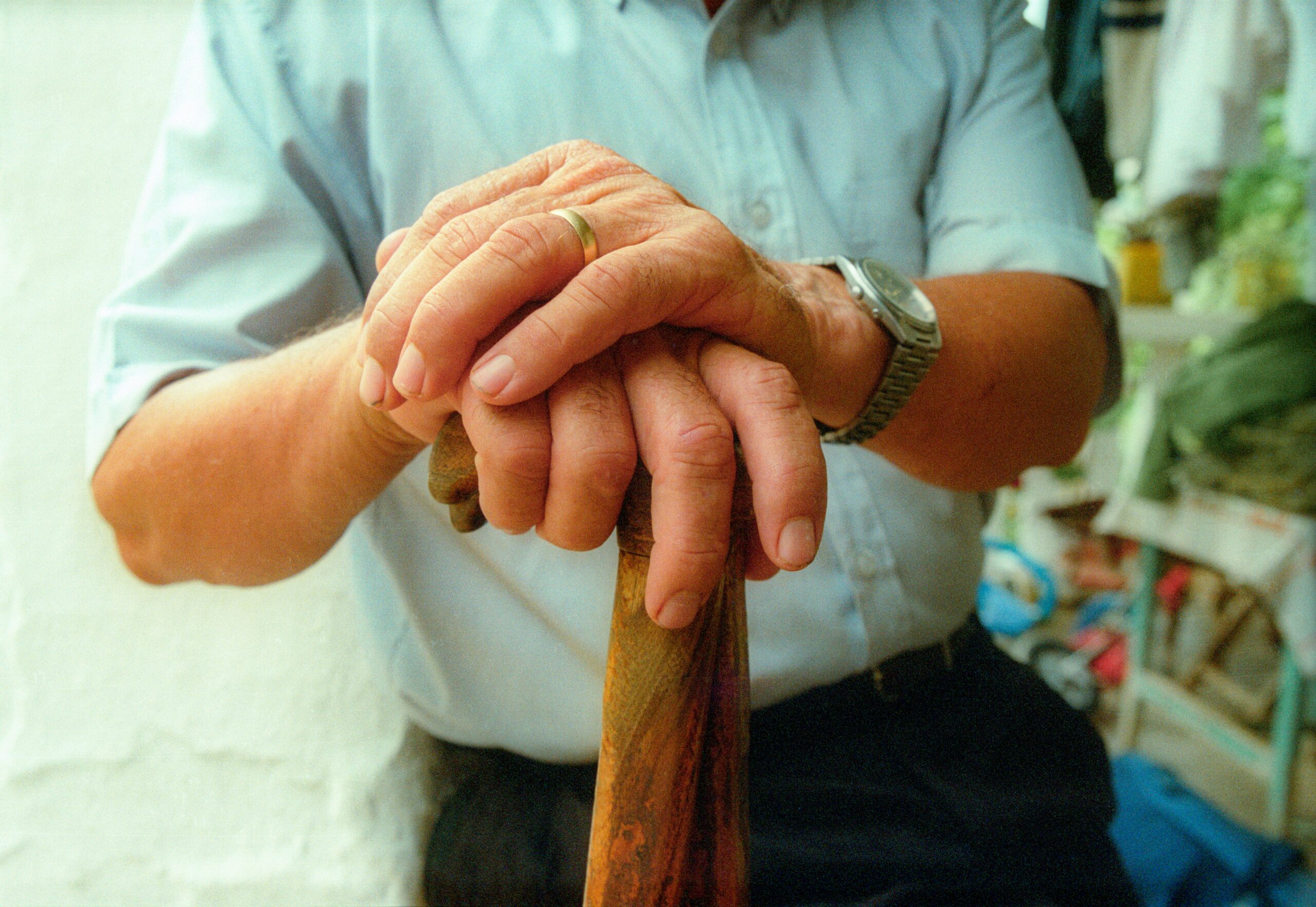
MALAYSIA is ageing rapidly. With birth rates declining and more than 11% of the population aged 60 and above, preventing falls among older adults should be a public health priority.
The World Health Organisation (WHO) recognises falls as a major cause of injury, disability and death among older people. Yet the true impact of falls is often hidden in official statistics.
The Department of Statistics Malaysia’s Statistics on Causes of Death Malaysia 2025 shows that the leading causes of medically certified deaths among those aged 60 and above are pneumonia, heart disease, diabetes mellitus and stroke. However, these figures do not always tell the full story.
For example, an older person may suffer a fall resulting in a hip fracture, become bedridden and later develop pneumonia. In such cases, the death is recorded as pneumonia rather than the fall that triggered the chain of events.
Falls, therefore, remain an under-recognised contributor to illness, disability and death among older Malaysians.
According to WHO, falls can lead to traumatic brain injuries, hip fractures and prolonged immobility. Extended periods of bed rest often result in secondary complications such as pneumonia, pressure ulcers and blood clots.
Studies show that 20‒30% of older adults who suffer a hip fracture die within a year, while around 60% never regain their previous level of independence.
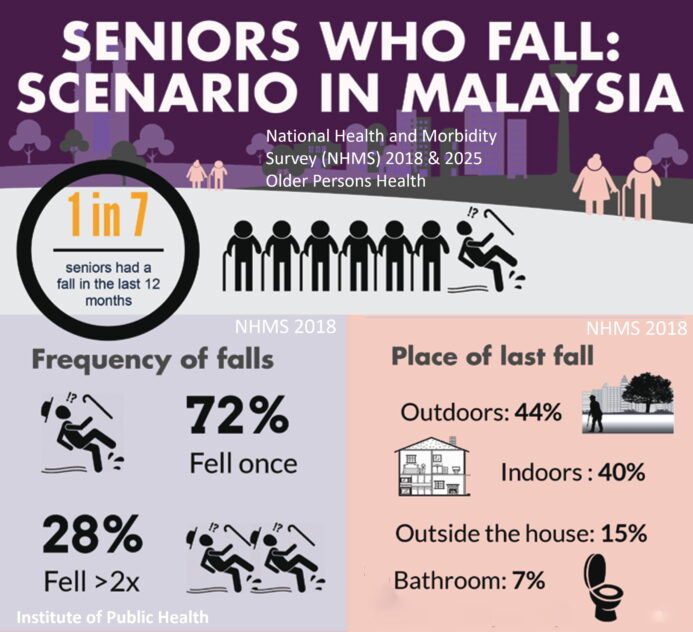
Data from the National Health and Morbidity Survey (NHMS) 2018 and 2025 found that one in seven Malaysians aged 60 and above experienced at least one fall in the previous 12 months.
Several factors increase the risk of falls. Age-related loss of muscle mass, known as sarcopenia, affects balance, mobility and reaction times. NHMS 2025 found that 45% of older Malaysians have sarcopenia, while 10% live with dementia.
Chronic illnesses and medications can also contribute to falls through dizziness, drowsiness or sudden drops in blood pressure. Among Malaysians aged 60 and above, 39% have diabetes and 73% have hypertension.
As we age, many of us experience some decline in physical function. NHMS 2025 found that 10% of older Malaysians have limitations in daily activities, 4% have vision impairments, and 30% are physically inactive.
For these reasons, fall prevention deserves far greater attention.
Our own experience reflects this reality. Once we reached the age of 60, we began routinely using lightweight, adjustable walking sticks, despite remaining active and relatively fit.
Over time, we came to appreciate the added stability and confidence they provide. Today, we rarely leave home without them.
Some people look at us curiously. Why would two healthy-looking individuals use walking sticks?
The answer is simple. We have seen too many older people suffer falls that resulted in fractures, prolonged disability, loss of independence and, in some cases, premature death.
A walking stick provides extra balance and support, particularly on uneven pavements, stairways, slippery surfaces and poorly maintained walkways.
Unfortunately, many older people are still malu or feel embarrassed to use a walking stick because they believe it makes them appear old or frail.
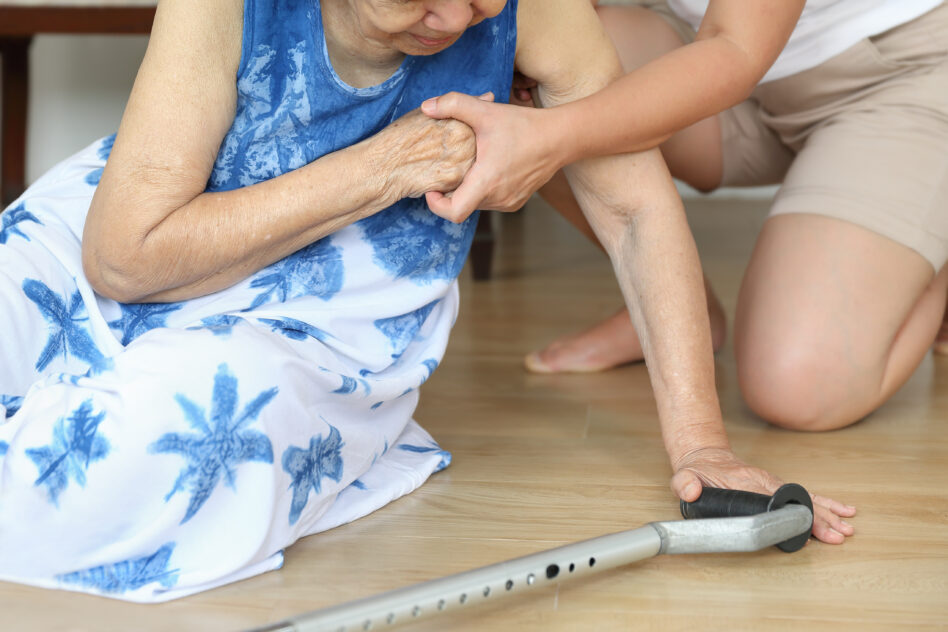
Instead, some rely on umbrellas, which are not designed to support body weight and can create additional hazards. Others depend heavily on family members for support. We often see seniors walking unsteadily, shuffling cautiously and placing themselves at unnecessary risk.
Falls do not occur only outside the home. NHMS data shows that many falls take place in and around the house.
Recognising this, we have made several modifications to our own home. We installed non-slip bathroom flooring, covered drains and lowered storage areas that were difficult to reach. As we approach our seventies, we are also considering installing grab bars and handrails.
There is another issue worth addressing. Many Malaysian buildings, including hospitals, clinics and government offices, continue to use polished marble flooring.
While visually attractive, marble surfaces can become extremely slippery when wet and pose a significant risk to older adults, people with disabilities and young children.
Public facilities should place greater emphasis on safety and accessibility when making design choices.
If you are over 60 and believe you do not need a walking stick because you are still fit and active, that may well be true today. However, falls often occur unexpectedly, and a single fall can permanently alter a person’s quality of life.
There is no shame in taking simple precautions to remain mobile, independent and safe. A walking stick is not a sign of weakness. It is a practical tool that can help prevent injuries, preserve independence and improve quality of life as we age.
Datuk Dr Amar-Singh HSS is a consultant paediatrician and child disability activist.
The views expressed are solely of the author and do not necessarily reflect those of MMKtT
- Focus Malaysia.

No comments:
Post a Comment
Note: Only a member of this blog may post a comment.