


However, Ilham Centre's Hisommudin Bakar says the struggle for control of the PN brand and direction is the more immediate issue that must be addressed.
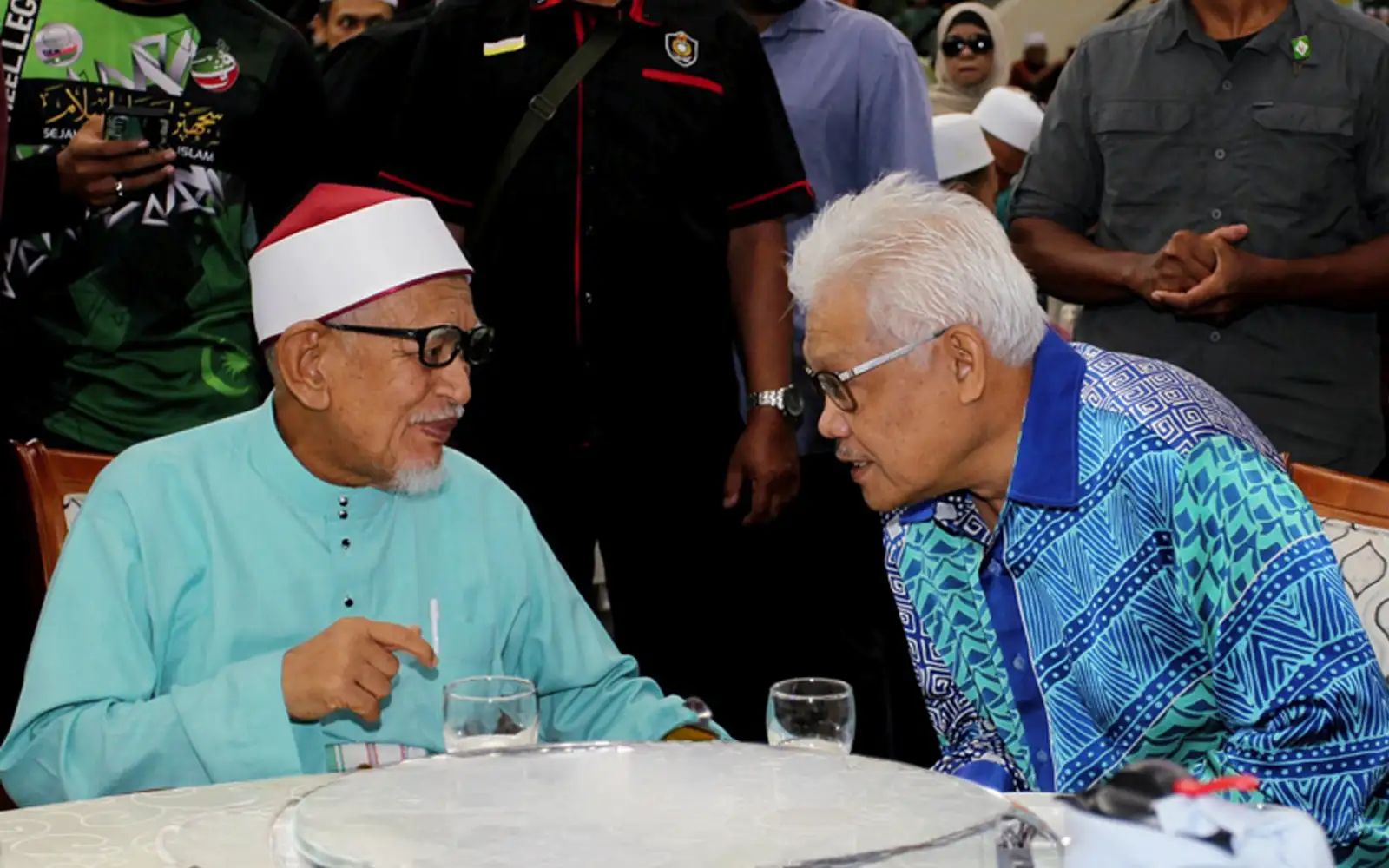
Universiti Teknologi Malaysia’s Mazlan Ali said that although PAS had ended its political alliance with Bersatu, Perikatan Nasional components Gerakan and the Malaysian Indian People’s Party (MIPP) were likely to stick with Muhyiddin Yassin’s party.
PAS, for its part, is expected to forge ties with ex-Bersatu deputy president Hamzah Zainudin’s Reset movement in preparation for the 16th general election (GE16).
“PAS has no other option but to go with Reset. Other small Malay parties like Berjasa, Putra, and Pejuang could join PAS since its Malay-Muslim narrative aligns with their causes,” he told FMT.
PAS contested the 2018 general election as part of Gagasan Sejahtera, an informal Muslim-based coalition that included Berjasa and Parti Ikatan Bangsa Malaysia.
Berjasa, Putra and Pejuang are already part of the loose Ikatan Prihatin Rakyat alliance started by Muhyiddin last year.
PAS’s biggest challenge
Hisommudin Bakar of Ilham Centre said PAS’s biggest challenge now was resolving its position within Perikatan Nasional following its fallout with Bersatu.
“Recent developments suggest that PAS and Bersatu are now competing over who holds political legitimacy over the PN brand and its future direction.
“Bersatu appears unwilling to back down or relinquish its influence within the coalition. As such, this issue will likely need to be settled before PAS can move towards forming new political alliances.”
In the more immediate term, he said PAS would be more comfortable working with Hamzah’s band of former Bersatu leaders, rather than rushing to form a new grand coalition.
The relationship between PAS and Hamzah’s camp could then serve as the foundation for a more organised Malay-Muslim political bloc, Hisommudin added.
“Only when the ‘post-Bersatu’ landscape becomes clearer will PAS be in a position to assess broader cooperation options,” he said.
Hisommudin believes that parties such as Pejuang, Berjasa and Putra are unlikely to work with PAS presently since the Islamic party was not a central player in IPR’s formation.
“Its organisational and political ties with these groups are not yet strong enough to facilitate the rapid creation of a new coalition.”
PAS ended its political alliance with Bersatu on Monday and said it would explore new alignments to face future elections and “unite the ummah”.
This drove speculation of PAS and Umno reviving their defunct pact, but Umno president Ahmad Zahid Hamidi said his party had no such intention, and that the party had “closed the book on it”.
PAS-Bersatu split a boon for BN?
Mazlan said the split between PAS and Bersatu would benefit BN in GE16 as the fallout between the two parties would divide pro-opposition Malay voters.
“BN would be more capable of facing PAS’s challenge in this situation,” he said, pointing to PAS’s haul of 43 seats at the 2022 general election it contested with Bersatu, compared with Umno’s 26.
However, Hisommudin said it was too early to assess how a standalone BN would fare against a PAS-led coalition in GE16, as many key variables remained uncertain.
This includes PAS’s new political alignment, its organisational strength, and the willingness of Malay voters to embrace a new political configuration, he said. - FMT

No comments:
Post a Comment
Note: Only a member of this blog may post a comment.