


Peninsular Malaysia emerged through successive waves of migration, settlement, interaction, intermarriage, and cultural adaptation over many centuries.
The Orang Asli, Malays, Chinese, Indians, Ceylonese, Eurasians, and numerous other communities have contributed, in their different ways, to the peninsula’s economic development, cultural diversity, and nation-building.
Understanding this history challenges simplistic and exclusive claims of belonging. While the communities arrived at different times and played different roles, many eventually developed deep roots in the peninsula and came to regard it as their homeland.
The story of Peninsular Malaysia is therefore not one of a single people, but of multiple communities whose histories became intertwined in a shared land.
Orang Asli: The earliest inhabitants
The Orang Asli, who number about 230,000 today, are the earliest known inhabitants of Peninsular Malaysia.
They comprise three broad groupings: the Negrito, Senoi and Proto-Malay, although each contains distinct communities with their own languages, cultures, and historical experiences.
The Negritos, formerly called “Semang”, are generally regarded as the earliest surviving population stratum in the peninsula, with a presence dating back at least 10,000 years. Traditionally hunter-gatherers, they are found mainly in Perak, Kelantan, Pahang, and Kedah.
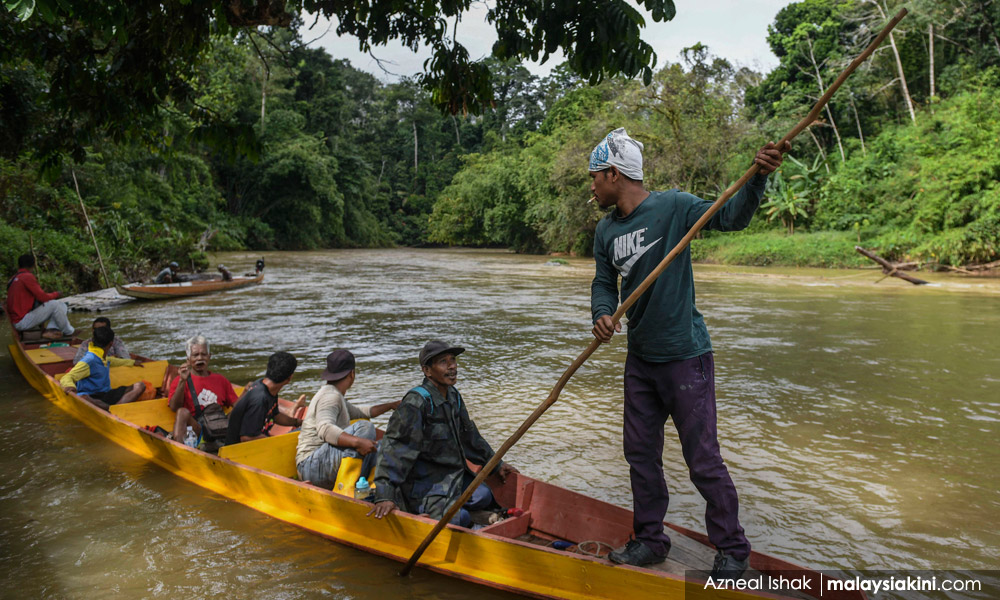
The Senoi, the largest Orang Asli grouping, are associated with later Neolithic migrations and historically practised shifting cultivation, hunting, fishing, and the collection of forest produce.
The Proto-Malays, who share cultural and linguistic affinities with Malays, were generally more settled and engaged in agriculture, riverine activities, and trade.
Originally occupying coastal swamps, river valleys, and forests, many Orang Asli communities were gradually displaced towards the interior as expanding Malay settlements, kingdoms, and trading networks spread across the peninsula.
During the era of the Malay sultanates, many were pushed further inland by periodic raids conducted by Malay and other Sumatran slave traders, who captured women and children for sale into slavery.
The Orang Asli were not passive bystanders. They played an important role in the early economy of the Malay Peninsula as collectors of rattan, resin, camphor, and other jungle produce.
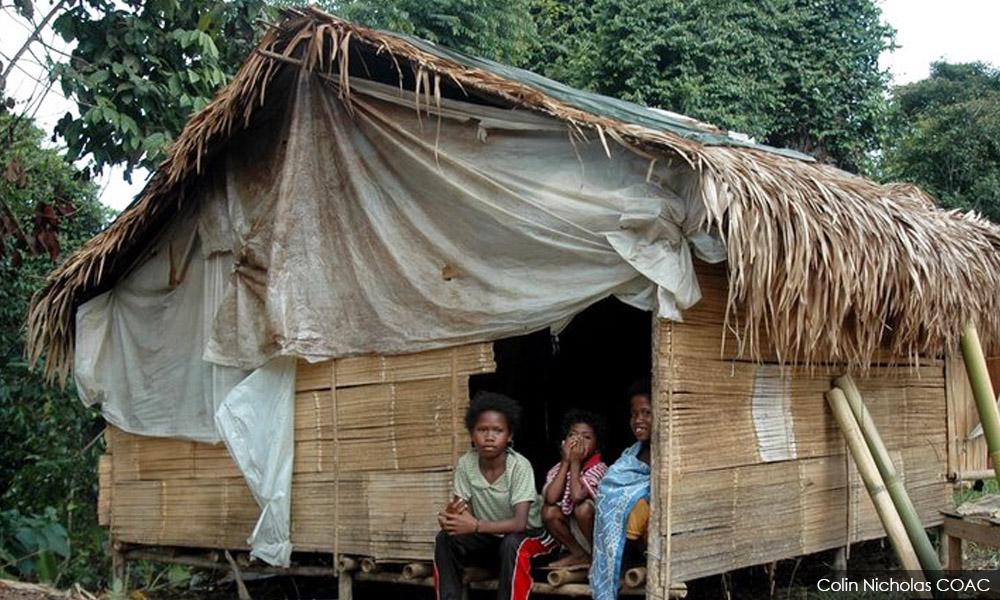
They also served as guides and porters along overland routes, helping to connect river systems and trading centres. Their historical role deserves fuller recognition in Malaysia’s national narrative.
Malays: Architects of peninsula’s political, cultural landscape
The Malays, an Austronesian-speaking ethnic group, have been the people most closely associated with the political and cultural formation of Peninsular Malaysia.
For centuries, Malay kingdoms and sultanates provided the institutional foundations of Malay society, including monarchy, Islam, language, literature, and systems of political authority.
Regarding their origins, many scholars accept the “Out-of-Taiwan” hypothesis, associated with archaeologist Peter Bellwood and linguist Robert Blust.
According to this theory, Austronesian-speaking people moved from southern China to Taiwan about 6,000 years ago.
From around 4,500 years ago, some migrated to the Philippines and, by about 3,500 years ago, to northern Borneo, Sulawesi, and parts of Indonesia.
Subsequent migrations brought Austronesian populations to Sumatra and the Malay Peninsula around 3,000 years ago.
Several prominent scholars, including Rupert Emerson, Leonard Andaya, and OW Wolters, have identified Sumatra as the homeland of the ancestors of ethnic Malays (Malays proper).

This view was echoed by CA Vlieland, superintendent of the 1931 Census of British Malaya, who observed that the historical homeland of the Malays lay in Sumatra rather than the Malay Peninsula.
The Malay Peninsula became a Malay homeland not because Malays were its first inhabitants, but because they established deep historical, cultural, and political roots there over many centuries.
As the 1931 Census Report observed, “their constitutional rights are not those of original inhabitants but of earliest settlers”.
Centuries of migration
Malay society was subsequently shaped by centuries of migration from across the Malay-Indonesian world. Javanese, Bugis, Acehnese, Banjarese, Mandailing, Kerinci, and other communities migrated to the peninsula, many of whom gradually assimilated into Malay society through intermarriage, cultural adaptation, and the adoption of the Malay language.
Over time, their descendants came to be classified as Malays under the constitutional definition.
During the late 19th and early 20th centuries, large-scale migration from Java and Sumatra further increased the Malay population.
The 1931 Census Report noted that fewer than 60 percent of those classified as Malays had resided in Malaya for more than 40 years, underscoring the dynamic and evolving character of Malay society.
Traditionally, Malays lived in villages along rivers, coastal areas and fertile plains, engaging in wet-rice cultivation, fishing and trade.
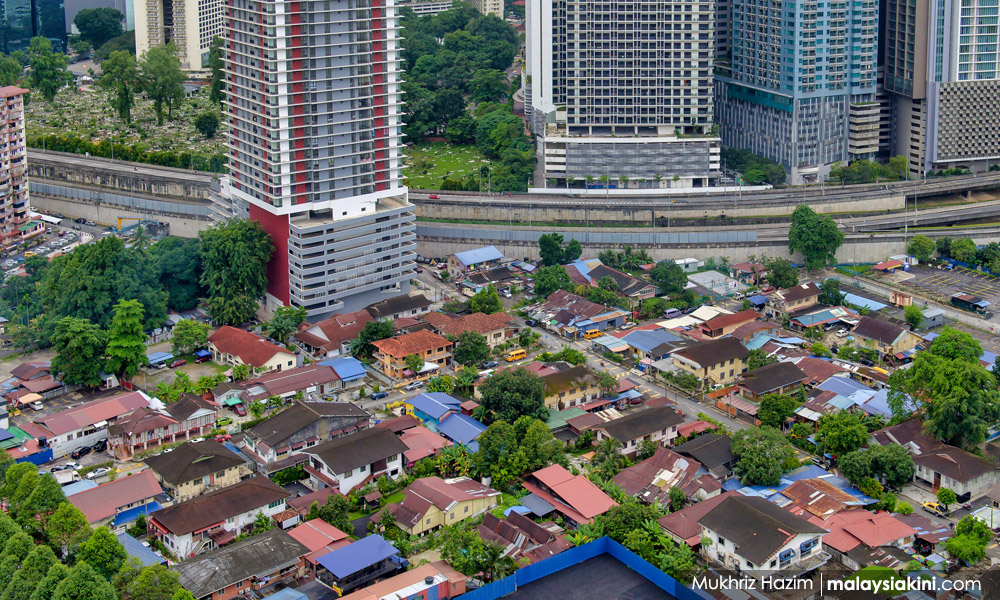
NN Dodge, a leading historical demographer, estimated that the Malay population of the Malay Peninsula, including Patani, was about 630,000 in the 1830s.
By 1947, the Malay population of Peninsular Malaysia had risen to about 2.2 million, compared with about 1.2 million in 1911.
Indian communities: Ancient links and modern migration
Peninsular Malaysia’s Indian community is heterogeneous, comprising many linguistic subgroups, with Tamils consistently forming over 80 percent of the total Indian population.
Indian connections with the Malay Peninsula stretch back at least 2,000 years. Historian Roland Braddell noted that Indian traders had established settlements in the peninsula as early as the first century CE.
These early contacts profoundly influenced language, religion, kingship, law, literature, and culture in the Malay world.
Modern Indian migration expanded under British rule. By the early 1790s, about 1,000 South Indian shopkeepers and labourers, mainly Tamil Muslims or Chulias, were already living in Penang.
From the mid-19th century onwards, large numbers of Indians were recruited to work on plantations, railways, roads, and public infrastructure.
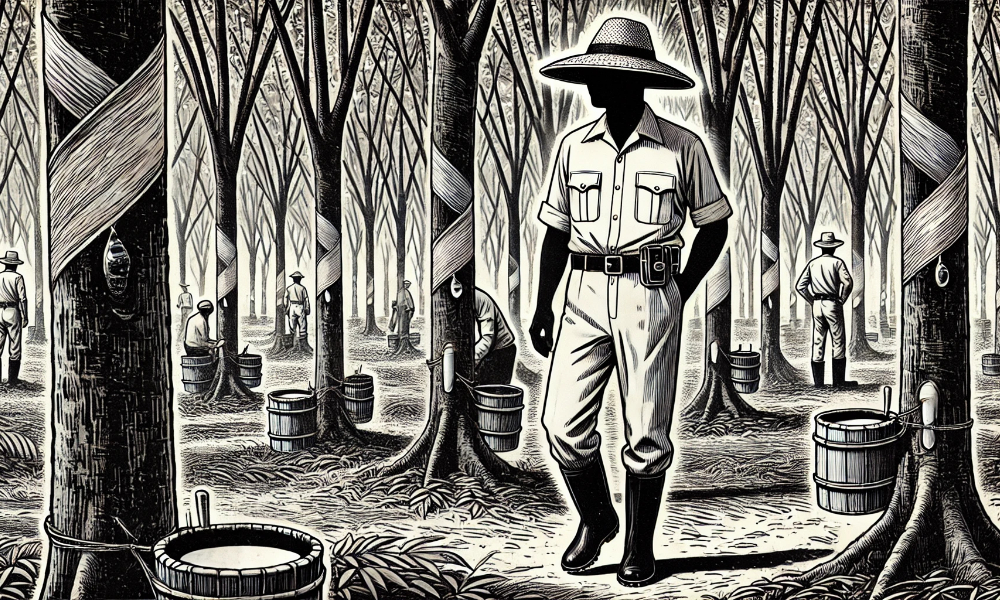
Academic Kernial Singh Sandhu estimated that about 250,000 South Indian indentured labourers arrived in Malaya between 1844 and 1910.
Between 1901 and 1941, the Indian population of Peninsular Malaysia grew more than sixfold, from 115,536 to 767,693, largely as a result of labour migration associated with the expansion of the rubber and public works sectors.
By 1947, 51.6 percent of Indians in Peninsular Malaysia were locally born, indicating that a substantial proportion of the community had already established deep roots in the peninsula and regarded it as their home.
The Tamils formed the largest Indian community and were central to the development of the plantation economy and public infrastructure.
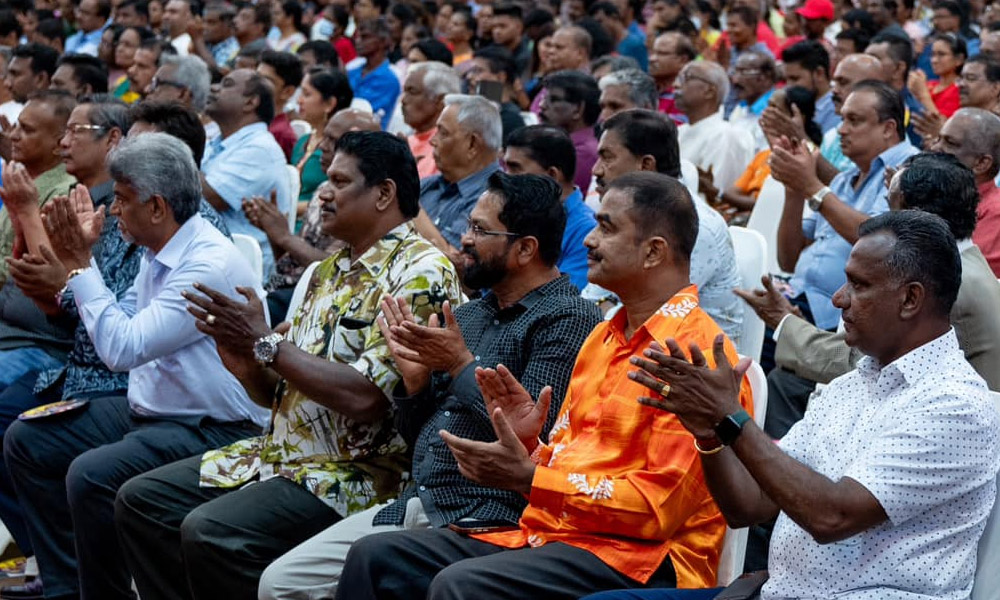
Malayalees from Kerala were prominent in education, clerical service, administration, and technical occupations. Telugus from Andhra Pradesh worked mainly in rubber and coconut plantations and were recognised for their agricultural skills.
Gujaratis from north-west India became successful traders and entrepreneurs, linking Malaya to wider commercial networks across Asia.
Ever since the 1870s, Sikhs have migrated to Malaya from Punjab in India, initially serving in the police and paramilitary forces because of their reputation for discipline, courage, and reliability.
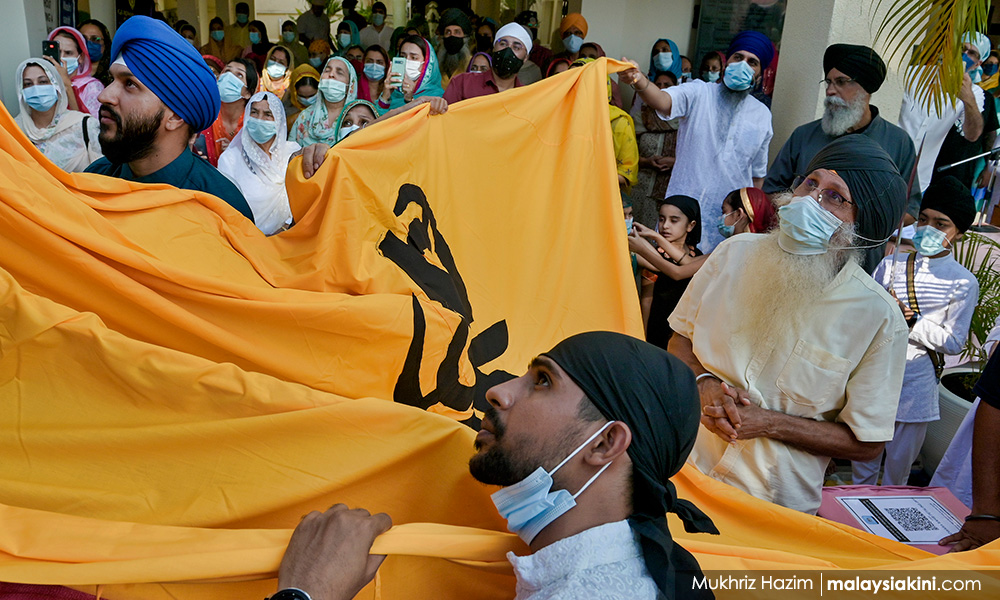
They formed the backbone of the police and paramilitary forces of colonial Malaya at least until 1914.
By 1931, there were about 20,000 Sikhs in Malaya. In subsequent generations, they moved into business, law, medicine, education, and public service - becoming an integral part of Malaysia’s multi-ethnic society.
Ceylon Tamils and Sinhalese
The Ceylon Tamils, mainly from the Jaffna peninsula, began arriving in significant numbers from the 1880s. English education enabled many to serve as teachers, railway officials, surveyors, clerks, and administrators.
By 1931, their population in Malaya had grown to about 14,500. Kuala Lumpur’s Scott Road became so closely associated with them that it was known as the “Jaffna of the Far East”.
The Sinhalese formed a smaller but distinct community. Some arrived as convicts transported from Ceylon to the Straits Settlements from the 1840s, while later arrivals entered professional, commercial, and public service occupations.
Chinese: Traders, miners, entrepreneurs and nation builders
Chinese links with the Malay Peninsula are centuries old. During the Malacca sultanate, Chinese merchants settled, intermarried, and formed families.
Chinese communities also flourished in Kelantan, Terengganu, and Pahang during the 18th and 19th centuries. In Kelantan, intermarriage between Chinese settlers and Malays was particularly common.
By the 1820s, there were reportedly not fewer than 15,000 Chinese in Kelantan, Terengganu, and Pahang.
Large-scale Chinese migration to the Malay Peninsula began in the second half of the 19th century, driven by opportunities in tin mining, agriculture, commerce, and urban development. Most Chinese immigrants came from the southern provinces of Fujian, Guangdong, Guangxi, and Hainan.
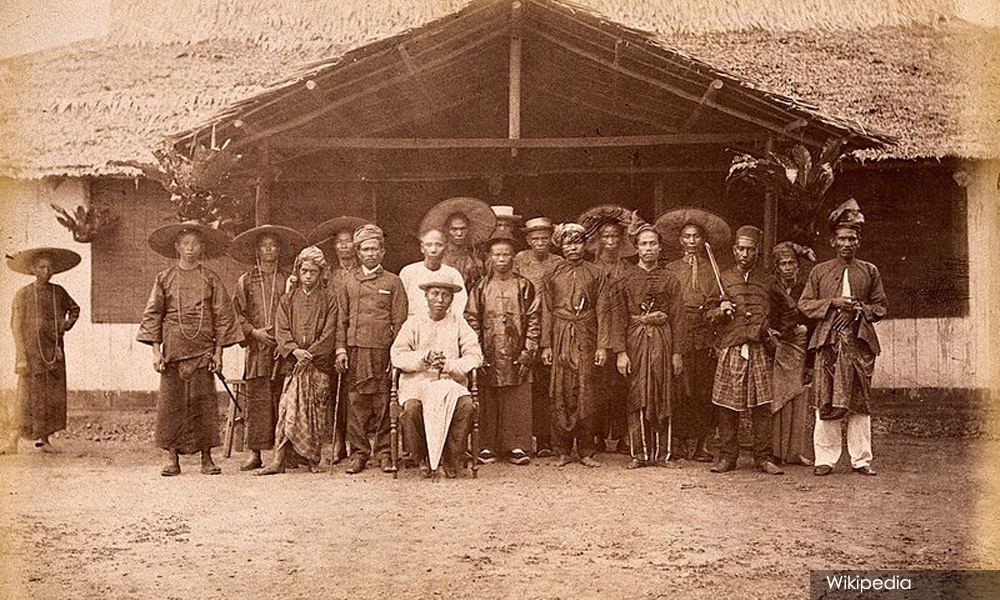
Chinese miners transformed the tin industry, while Chinese entrepreneurs played a pivotal role in the development of towns, commerce, and transport networks.
Their contribution to the colonial economy was so significant that Frank Swettenham observed in his book titled “The Real Malay” that the Chinese “are the labourers, the miners, the principal shopkeepers, the contractors, the capitalists, the holders of the revenue farms, the contributors of almost the whole of the revenue; we cannot do without them”.
The Chinese population in Peninsular Malaysia increased from 583,396 in 1901 to 2,418,615 in 1941, forming about 44 percent of the total population.
By 1947, 63.5 percent of the Chinese population in Peninsular Malaysia was locally born, reflecting the transition from a migrant community to a settled population with enduring attachments to the land.
Hybrid communities: Baba-Nyonya, Melaka Chettis and Portuguese Eurasians
The Baba-Nyonya or Peranakan Chinese community traces its origins to the 15th century. Chinese settlers in Malacca married local Malay, Javanese, Batak and Balinese women, producing a distinctive hybrid culture that blended Chinese ancestry with Malay language, dress, cuisine and customs.
During the Dutch and British periods, many Baba-Nyonya families became influential merchants and community leaders.
The Malacca Chettis, often described as Peranakan Indians, emerged from marriages between South Indian Hindu traders and local women during the Malacca sultanate. They retained their Hindu faith and aspects of Tamil tradition while adopting the Malay language, dress, cuisine, and customs.
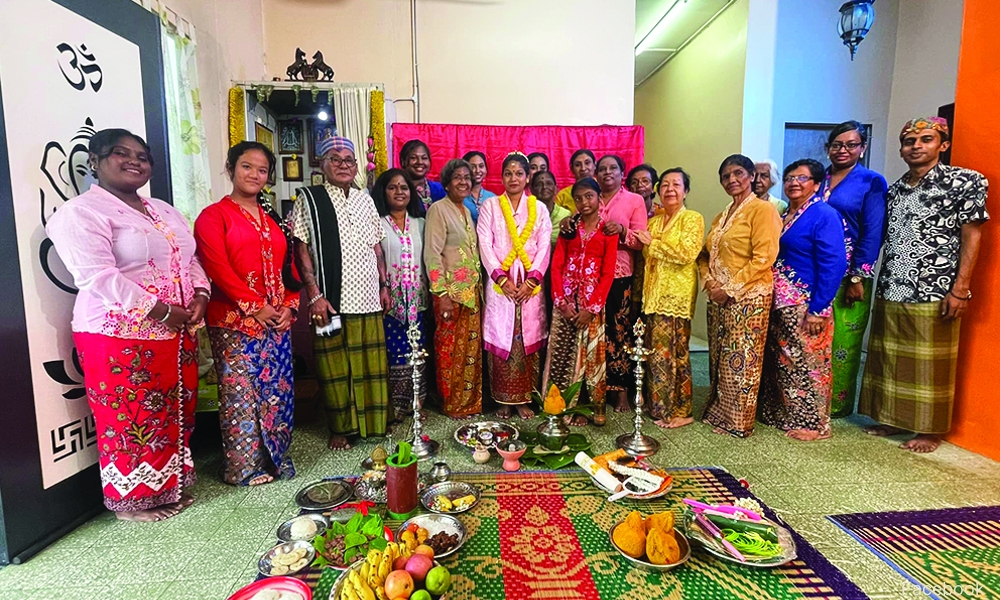
The Portuguese Eurasians trace their origins to the Portuguese conquest of Malacca in 1511. Intermarriage between Portuguese settlers and local women produced a community that preserved Roman Catholicism, developed the Kristang language, and maintained a distinctive cultural identity through music, dance, cuisine, and religious traditions.
These hybrid communities show that Malaysian identity has long been shaped by cultural exchange, adaptation, and intermarriage.
They puncture rigid ethnic boundaries and reveal the peninsula’s deep history of pluralism.
Many roots, one shared homeland
The peopling of Peninsular Malaysia reveals a layered and interconnected history. The Orang Asli were the earliest known inhabitants, while the Malays became the principal shapers of the peninsula’s political and cultural order.
The Chinese, Indians, Ceylonese, Eurasians and other communities contributed significantly to its economic development, urban growth, public institutions and cultural diversity.
This history neither supports claims of exclusive belonging nor diminishes the legitimate historical place of any community. Rather, it shows that Peninsular Malaysia was shaped through the interaction of many peoples across time.
The peopling of the peninsula demonstrates that communities arriving at different periods ultimately developed enduring attachments to the same land.
Peninsular Malaysia became not merely a place of settlement, but a shared homeland whose development was shaped by the collective contributions of many communities. - Mkini
RANJIT SINGH MALHI is an independent historian who has written 20 books on Malaysian, Asian, and world history. He is highly committed to writing an inclusive and truthful history of Malaysia based upon authoritative sources.
The views expressed here are those of the author/contributor and do not necessarily represent the views of MMKtT.

No comments:
Post a Comment
Note: Only a member of this blog may post a comment.