


If the government is serious about curbing graft, one quick way is to totally revamp land allocation and conversion in Malaysia, where there is tremendous leeway for graft and huge money to be made by bribing people in charge.
In the last five years alone, hundreds of billions of ringgit that could have been state revenue have been lost due to avoidable land corruption. The government can easily save that amount in the next decade and 10s of billions each year.
Malaysia lost about RM277 billion to corruption between 2018 and 2023 - in a mere five years, said the MACC. While this covers all sectors, land is a major contributor because of its high value and systemic vulnerabilities.
The figure for this since independence in 1957 would have been stupendous. There are two points at which corruption occurs. The first is when state land is allocated, and the next is when land-use conversion takes place.
RM4.5 trillion corruption losses
According to one 2023 estimate, the cost of corruption in Malaysia over the previous 26 years could have been as high as RM4.5 trillion. Given the large sums involved in property transactions, land deals could constitute a majority of this.
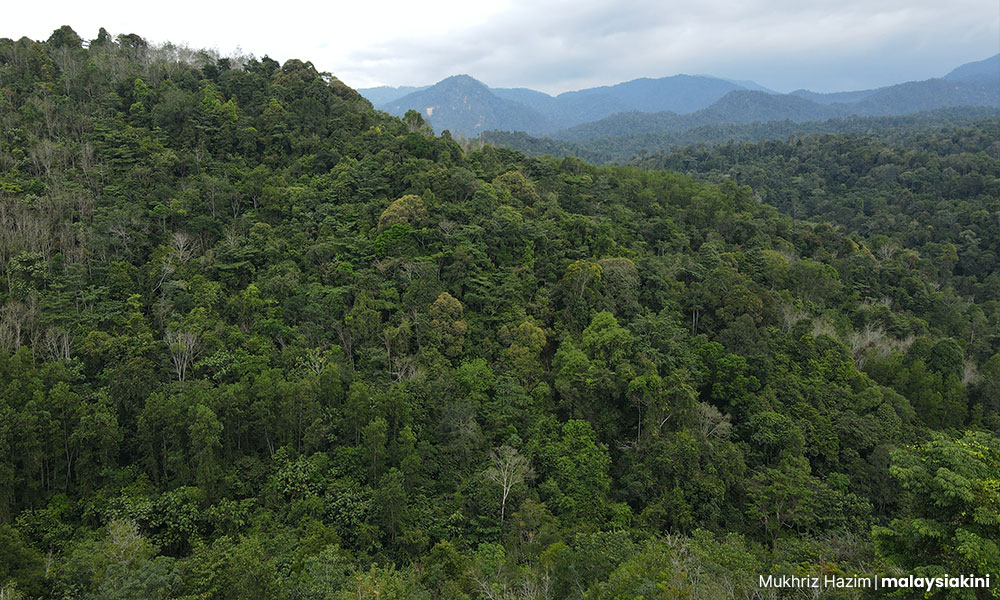
To estimate the size of land-related corruption losses, let’s take an example of land allocation, which I wrote about last week, involving the Jakel group, a rapidly growing diversified conglomerate now expanding into property.
While the attention is focused on Jakel for illustration, this is by no means isolated and is practised across the length and breadth of the country and for all manner of companies and individuals.
Subang MP Wong Chen highlighted that land was allocated in 2019 at RM13.80 per sq ft near the Ayer Hitam forest reserve in Selangor, the same price at which similar land was sold seven years ago, raising questions.
That second parcel involved some 138 acres. Given that the price for a 2022 deal in the same area was RM73 per sq ft, the market price would probably have been at least around RM45 per sq ft in 2019, a difference of RM31.20 (RM45.00-RM13.80) per sq ft.
For 55.8ha and an undervaluation of RM31.20 per sq ft, that’s a cool, almost RM188 million instantaneous gain to the purchaser.
Let’s take land conversion next. On conversion, agricultural land can rise in value by as much as 10 times, from say, RM100,000 to RM1 million per acre around Kuala Lumpur. One can make a cool RM900,000 almost out of thin air for every acre or RM1 billion for 1,100 acres (445.2ha).

Even after paying a premium for allocation and conversion, much of the profit can be kept. It’s no wonder property development is such a good business. Buy some agricultural land, convert it to mixed development, for instance.
The premium, the amount paid to the state, for both is rather arbitrary and not according to a fixed formula.
Before you have even turned a bucket of soil, you have made tonnes of money - perhaps five to 10 times as much. There’s no easier way to mint money than that- through land allocation and conversion.
The Sabah and Sarawak conundrum
Repeat that for hundreds of thousands of other transactions, for state land and for land in the federal territories. The amount lost by the state and federal governments, and gained by cronies, would easily be in the trillions of ringgit since independence.
We are not yet talking about the allocation of land for timber and mining concessions. How many billionaires have been created, especially in land-heavy states such as Sabah and Sarawak, where prosperity notoriously trickles down slowly?
It’s a good thing that Petronas controls oil wealth, or some more trillions of ringgit of wealth will be in private hands, read cronies. Why do you think that after more than half a century of the setting up of Petronas, the elites in Sabah and Sarawak are clamouring to take back oil concessions from Petronas?
Do you really think it will go to the people of those two states if that happens? As with mining and timber, the elites and their cronies will be given the wealth. Timber has hardly helped the poor in those two states. Give them the oil, and it still won’t work because of corruption.

Back to land, what happens when there is land allocation and conversion? Is there a standard calculation? No! So those in control decide on the allocation, conversion, and premiums. When it is arbitrary, anything goes.
The solution is to have all allocation of land - except for social purposes - to be made transparent through an open tender. The highest bid gets the land. Concessions can be made for those holding stakes for underprivileged groups.
Better still, the state should decide on land-use first - agricultural, residential, commercial, industrial, etc., under a masterplan. And then invite bids. That way, no private party or crony benefits from undervaluation.
For land conversion, there is a need for at least two independent valuations and a standard payment based on a percentage of gain on conversion, which can be paid immediately or over time as the land is developed.
These are the broad requirements. Details need to be tweaked as we move forward. But you can be sure that implementing such a system will squeeze out nearly all corruption in land deals involving the government.
Signs of wealth accumulation
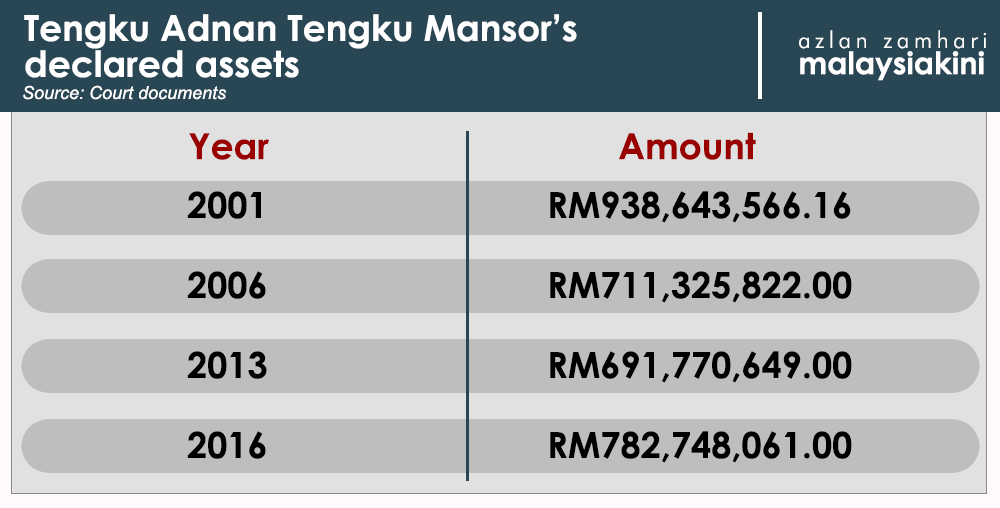
Some ministers in government have actually reported assets of hundreds of millions while in government, for example, former minister Tengku Adnan Mansor. This came to light when he had to declare his assets in court. The table shows the amounts declared.
Adnan has not been convicted of any crimes, and the source of his wealth has not been established in court.
Corruption is terribly insidious. For relatively small amounts of bribes, many times more is lost by the federal government and the states, effectively, wealth that belongs to the people.
If politicians really want to help the bumiputera and preserve the wealth they are being cheated out of, then they should be clamouring for an end to corruption. Solving this land issue is low-hanging fruit, and we can speculate why that’s not being harvested yet.
There is much corruption that needs to be weeded out. But a huge chunk of it, maybe even the major part, may be removed by focusing on government land transactions and putting in place an infallible system. It’s easy to do.
It may require the introduction of new laws and perhaps even a change in the Constitution, but it is a small price to pay for killing most land corruption by making the system impossible to game.
If it is not done, we are entitled to believe that this Madani government is not interested in cutting corruption but instead selectively allows it for the benefit of the political class and its cronies. - Mkini
P GUNASEGARAM says corruption can be killed if there is political will - look across the Causeway.
The views expressed here are those of the author/contributor and do not necessarily represent the views of MMKtT.

No comments:
Post a Comment
Note: Only a member of this blog may post a comment.