


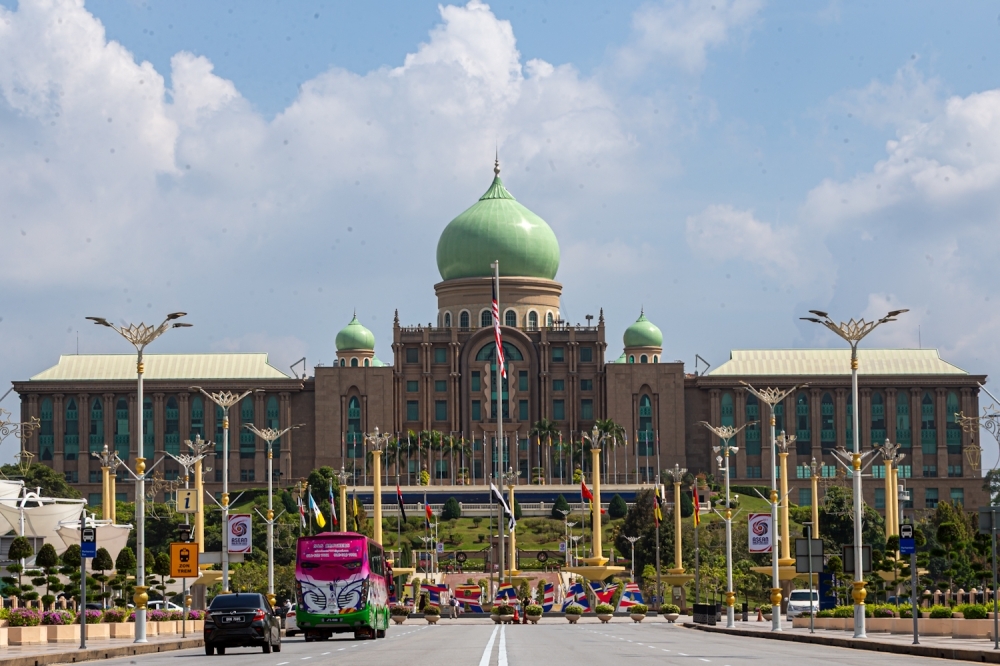
KUALA LUMPUR, Jan 12 — Prime Minister Datuk Seri Anwar Ibrahim has announced that the federal government will push for a new law to limit the tenure of the prime minister to two full terms, or a maximum of 10 years.
Here are seven things you need to know about the proposal.
1. Malaysia tried this before — but it was dropped. Why?
Malaysia previously attempted to introduce a two-term limit for the prime minister, but the effort was abandoned midway.
Based on the Hansard, or official record of Dewan Rakyat proceedings, this is what happened under two different governments led by Tun Dr Mahathir Mohamad and Tan Sri Muhyiddin Yassin:
On December 3, 2019, then minister in the Prime Minister’s Department in charge of law, Datuk Liew Vui Keong, tabled the Bill for its first reading. However, the second and third readings — required for it to become law — were deferred to 2020.
On August 26, 2020, then minister in the Prime Minister’s Department (Parliament and Law), Datuk Seri Takiyuddin Hassan, withdrew the Bill before it could proceed to the second reading.
A day later, on August 27, 2020, Takiyuddin said the government was not required to give reasons for withdrawing any Bill, including this one, noting that it had been introduced by the previous Pakatan Harapan (PH) government.
He said the withdrawal reflected the current government’s “policy” and confirmed that the Perikatan Nasional (PN) administration was not interested in pursuing the reform.
2. So what could the Bill look like?
Article 43(2)(a) of the Federal Constitution states that the Yang di-Pertuan Agong shall appoint a member of the Dewan Rakyat to be the prime minister.
At present, the only condition under Article 43(2)(a) is that the Agong must be satisfied that the individual is “likely” to command the confidence of a majority of MPs.
The 2019 Bill proposed adding just one additional line to Article 43(2)(a): “who has not at any time held the office of Prime Minister for two terms of Parliament”.
In effect, this would mean anyone who has served as prime minister for two terms cannot be appointed again.
It is, on paper, that simple.
The 2019 Bill did not spell out how the limit would apply in scenarios such as a prime minister taking office mid-term without a general election.
There are also other constitutional conditions governing eligibility to be prime minister, including Article 43(7), which bars naturalised citizens from holding the post.
3. What needs to be done now to turn it into law?
The federal government must table a fresh Bill in Parliament to impose a limit on the prime minister’s tenure.
It remains unclear whether the new Bill will mirror the 2019 proposal.
As this would require an amendment to the Federal Constitution, the Bill must be supported by a two-thirds majority in both the Dewan Rakyat and Dewan Negara, in line with Article 159 of the Constitution.
Once passed, the Bill becomes law after receiving royal assent from the Yang di-Pertuan Agong, and takes legal effect upon gazettement or on a specified later date.
4. How soon could the process begin?
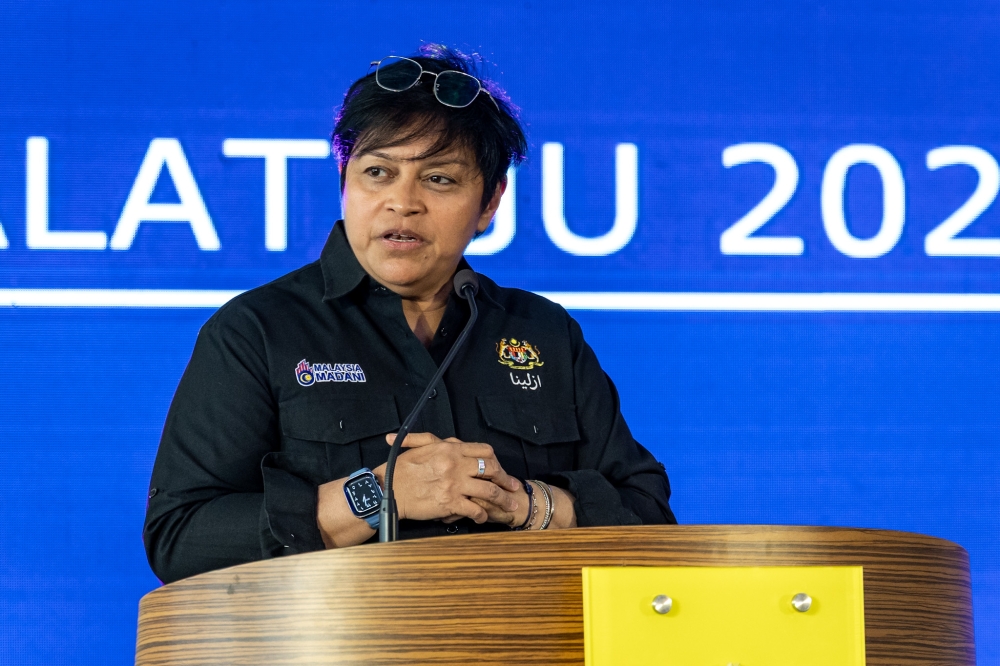
On January 5, Minister in the Prime Minister’s Department (Law and Institutional Reform) Datuk Seri Azalina Othman Said said the constitutional amendment process is expected to begin in February at the Dewan Rakyat.
The lower house sits three times this year: January 19 to March 3; June 22 to July 26; and October 5 to December 8.
If passed by the Dewan Rakyat, the Bill will move to the Dewan Negara, which will also meet three times this year — from February 19 to March 12; July 20 to August 4; and November 30 to December 22.
5. What about term limits for state leaders? Penang leads the way
Penang
On November 16, 2018, Penang became the first state to impose a two-term limit on its chief minister.
More than two-thirds of lawmakers in the state legislative assembly voted in favour of amending the Penang State Constitution to cap the tenure of the chief minister at two terms.
Melaka
On March 20, 2019, Melaka’s state assembly passed a motion to limit the chief minister’s tenure to two terms.
However, the state did not amend its constitution to give effect to the limit. Then chief minister Adly Zahari said the amendment would be tabled in the future once a two-thirds majority was secured.
Adly lost his post on March 2, 2020 — less than two years into his term — after PH lost its slim majority following defections.
Sabah
On September 24, 2022, Sabah Chief Minister Datuk Seri Hajiji Noor said the state Cabinet had agreed in principle to a two-term limit for the chief minister, subject to consensus among state assemblymen.
Ahead of the November 2025 state election, Hajiji’s Gabungan Rakyat Sabah coalition pledged in July 2025 to introduce the reform if it won, citing state Cabinet approval in December 2023.
Hajiji is now in his second term. His political secretary, Datuk Mazlan @ Joehari Manan, said in a January 5 Facebook post that the Bill would be tabled in the Sabah state assembly this year.
6. What are the pros and cons of term limits?
Supporters see a two-term limit as an institutional reform that strengthens democracy by preventing excessive concentration of power in a single individual for too long.
On January 8, Perak Menteri Besar Datuk Seri Saarani Mohamad said term limits encourage leadership renewal and create opportunities for others to lead.
However, he noted that a capable leader’s long-term vision could be disrupted, as some policies and development plans may take more than 10 years to come to fruition.
Sarawak’s Parti Pesaka Bumiputera Bersatu information chief Datuk Seri Abdul Karim Rahman Hamzah was reported on January 6 as saying he was personally open to a prime minister serving beyond 10 years if the leader is good, young and healthy, and able to deliver progress, harmony and stability.
He questioned the need for term limits, saying that political parties and voters already have ways to remove an ineffective prime minister.
7. And what about Malaysia’s Asean neighbours?
Among the 11 Asean member states, six have term limits for their leaders — mostly presidents.
They are Laos, Thailand, Timor-Leste, Indonesia, Myanmar and the Philippines.
Brunei, Cambodia, Singapore and Vietnam do not have stated term limits for their heads of government.
- malaymail

No comments:
Post a Comment
Note: Only a member of this blog may post a comment.