


THE 2026 US National Defense Strategy (NDS) signals a decisive shift in how Washington views both global order and the Indo-Pacific. No longer framed primarily as a space for managed competition, the region is now treated as the central theatre of potential great-power conflict.
Anchored in President Donald Trump’s “peace through strength” doctrine, the strategy prioritises deterrence by denial, demands greater allied burden-sharing, and assumes a far higher risk of simultaneous wars.
For Malaysia and its Southeast Asian neighbours, this recalibration will reshape the strategic environment in ways that cannot be ignored, even by states committed to non-alignment.
At its core, NDS 2026 reflects a harsher assessment of China’s trajectory. Unlike earlier strategies that balanced rivalry with engagement, the new document assumes that China is approaching military parity with the US in key Indo-Pacific contingencies.
As a result, Washington’s focus is no longer on shaping Chinese behaviour through norms and diplomacy, but on preventing Beijing from achieving military dominance.
This translates into heavier US force posture along the First Island Chain, greater emphasis on forward basing, and tighter operational integration with selected partners.
For the Indo-Pacific as a whole, this posture increases strategic density. More assets, more exercises, and more hardened positions raise deterrence, but also heighten the risk of miscalculation.
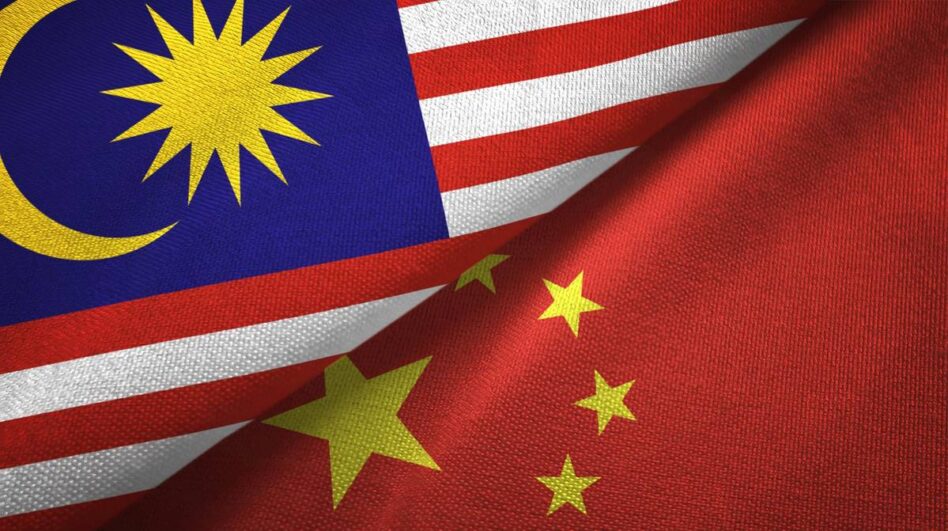
Southeast Asia—geographically adjacent to major sea lanes and contested zones like the South China Sea—will feel these effects indirectly even if it is not the primary target of US or Chinese military planning.
Regional waters will become more crowded, regional airspace more contested, and crisis scenarios more compressed in time.
Malaysia’s position within this environment is particularly delicate. Kuala Lumpur is neither a US ally nor a Chinese proxy, and it has consistently pursued strategic autonomy grounded in ASEAN centrality. Yet NDS 2026 narrows the space for ambiguity.
The strategy’s transactional tone toward partners suggests that Washington will increasingly differentiate between states that contribute to regional stability and those that merely benefit from it. Neutrality, while still respected diplomatically, may no longer be sufficient as a strategic posture.
One immediate implication is that Malaysia must contend with a US that is more selective and less patient. The NDS emphasises burden-sharing not only with NATO allies, but implicitly with Indo-Pacific partners as well.
While Malaysia is not expected to meet formal spending benchmarks, the expectation of tangible contribution is clear. States that enhance maritime security, protect sea lines of communication, and reduce vulnerabilities in contested domains will be viewed more favourably than those that rely solely on diplomatic hedging.
At the same time, NDS 2026 does not demand formal alignment from Southeast Asian states. In fact, its emphasis on deterrence by denial creates space for capable, non-aligned actors to strengthen their own defenses without choosing sides.
For Malaysia, this points toward investment in capabilities that are defensive, sovereign, and stabilising: maritime domain awareness, coastal surveillance, cyber defence, and unmanned systems. Such capabilities protect national interests in the South China Sea while avoiding overt power projection that could be perceived as escalatory.
The strategy also reshapes the role of minilateral cooperation in the Indo-Pacific. As Washington pushes allies to take greater responsibility, it increasingly values flexible, issue-specific groupings over broad multilateral frameworks.
For Malaysia, deeper engagement in minilateral defence cooperation which focused on training, humanitarian assistance, disaster relief, and interoperability – offers a way to enhance capacity without entering binding alliance structures.
Cooperation with the US, Japan, Australia, and selected European partners can coexist with stable relations with China, provided it remains transparent and functionally oriented.
China’s response to NDS 2026 will further complicate Malaysia’s strategic calculus. As US deterrence hardens, Beijing is likely to double down on influence-building in Southeast Asia through economic statecraft, diplomatic pressure, and grey-zone activities.
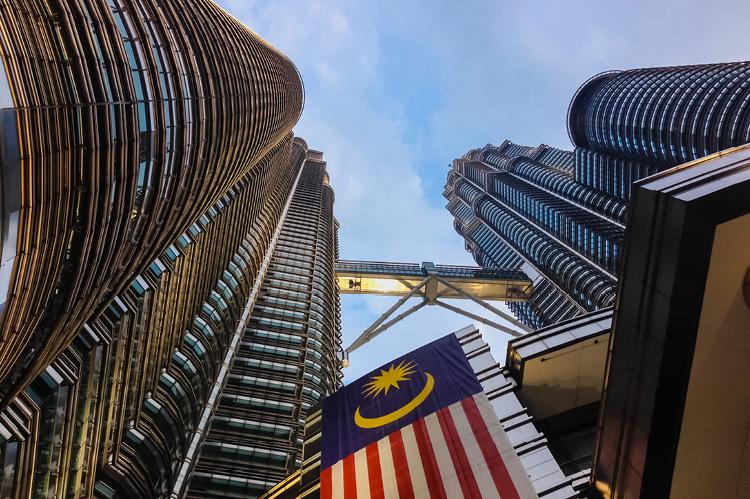
Malaysia may face intensified scrutiny over its positions on freedom of navigation, energy exploration, and regional security initiatives. Maintaining consistency and predictability in policy will be critical to avoiding misinterpretation by either major power.
At the regional level, ASEAN will face growing strain. NDS 2026’s emphasis on power politics and bilateral or minilateral arrangements risks sidelining ASEAN-led mechanisms that rely on consensus and gradualism.
Malaysia, as a proponent of ASEAN centrality, will need to work harder to keep regional forums relevant while recognising their limits in an era of sharper strategic rivalry.
ASEAN may no longer be the primary venue for hard security outcomes, but it remains essential for managing perceptions and reducing escalation risks.
Ultimately, NDS 2026 underscores a sobering reality: the Indo-Pacific is entering a period where deterrence, not reassurance, defines stability. For Malaysia, the challenge is not to resist this shift, but to adapt intelligently.
Preserving national interests will require greater strategic clarity, modest but focused defence investment, and diplomacy that is principled yet flexible.
In an environment shaped by great-power competition, Malaysia’s strength will lie in its ability to remain relevant, capable, and calm – projecting quiet confidence rather than rhetorical neutrality as the regional order grows more contested.
R Paneir Selvam is Principal Consultant at Arunachala Research & Consultancy Sdn Bhd (ARRESCON), a think tank specialising in strategic and geopolitical analysis.
The views expressed are solely of the author and do not necessarily reflect those of MMKtT.
- Focus Malaysia.

No comments:
Post a Comment
Note: Only a member of this blog may post a comment.