


Transport Minister Anthony Loke has assured that the authorities have undertaken efforts to improve road infrastructure safety, following the findings and recommendations from the ministry’s special task force report on the fatal Gerik bus crash in June last year.
When questioned if the authorities would take responsibility for the infrastructural defects outlined in the report, Loke merely reiterated the report’s findings that the driver had driven above the speed limit and that the bus brakes had not been functioning properly.
“Regarding the Upsi (Universiti Pendidikan Sultan Idris) bus crash, the report has stated that the condition was that the driver was driving exceeding the speed limit - 140km per hour while descending the hill.
“Secondly, the brakes were not functioning well - perhaps because he was speeding throughout the journey, which caused the brakes to fail. Those are the two main causes,” he told reporters at a press conference today.
However, the minister also stressed that the Public Works Department (PWD) already made efforts to improve road infrastructure following the incident, and that such efforts will continue to improve.
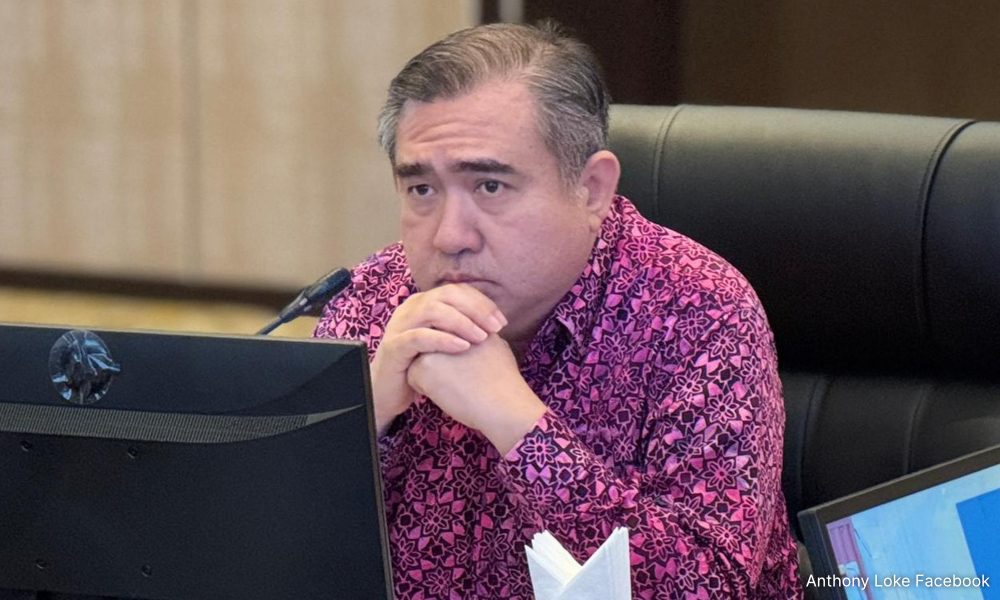
“For example, firstly, they have painted clearer road lines. Secondly, streetlights have also been installed in certain areas. This is because these specific areas are not only dark but also shrouded in fog.
“Visibility is indeed poor in those areas, so PWD has also installed streetlights in those locations,” he said.
15 lives lost
In the early morning of June 9 last year, a tragic accident on the East-West Highway (JRTB) claimed the lives of 15 Upsi students when a chartered bus transporting them from Jertih, Terengganu, to the university’s main campus in Tanjung Malim, Perak, overturned.
Last week, Malaysiakini highlighted the various infrastructural defects and systemic regulatory failures which were found by the Transport Ministry’s special task force in the final 188-page report.
Among its findings was that no streetlights, retroreflective road markings, such as road studs or delineator posts, were installed at the scene, making it difficult for drivers to identify lane boundaries and curves.
The report also concluded that these deficiencies in infrastructure maintenance severely impaired the driver’s judgment and visibility issues within the complex terrain at night, highlighting that the road segment at the scene was curved and the driver’s line of sight had been obstructed.
The report further found that road conditions at the scene had severe “alligator cracking” on its surface, and noted that road markings were blurred due to wear and tear.
This was in contrast to Works Minister Alexander Nanta Linggi’s statement last July, who said that the lane involved was still at a good service level and was sufficient to handle existing traffic volume, and that the highway was “in good condition, and safe for use.”
Personal negligence, inspection limitations
Regarding the driver’s brake failure, as Loke highlighted, the investigation report had also explained that the gradual brake fade was due to continuous and heavy braking on the downhill stretch.
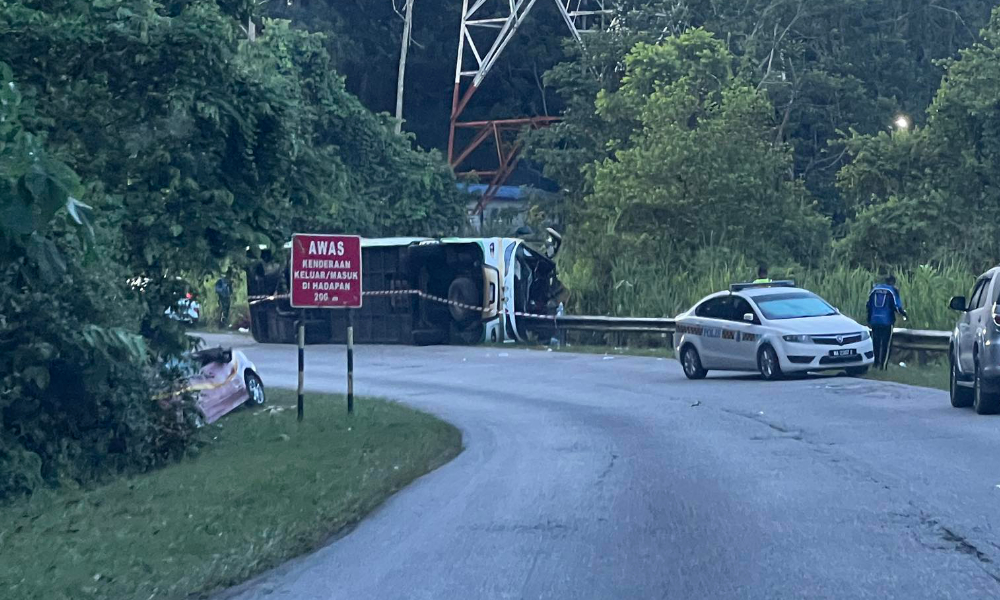
However, the report also highlighted deficiencies in maintenance and oversight - noting that before the accident, critical repairs to the brakes and wheel hubs were carried out by an unauthorised and unregistered workshop, despite passing an inspection by the Computerised Vehicle Inspection Centre (Puspakom) on April 13, about two months before the crash.
After the crash, the mainstream narrative logic attributed the problem to “individual cases”, focusing on the driver and the company, such as the driver’s unpaid fines or company violations (leasing commercial vehicle licences).
However, the final report also stated directly that regulatory agencies, such as the Land Public Transport Agency (Apad), the Road Transport Department (RTD), and the Tourism, Arts and Culture Ministry, needed to bear responsibility.
The report pointed out that while technical failure of the brakes, reckless driving patterns, and a lack of driver discipline management were key causes, they reflected deeper weaknesses at the organisational level and within safety management systems.
Guardrail issue
Two days after the accident, the works minister defended the PWD, claiming that the guardrails at the scene fully met “international safety standards” and had functioned to save lives by preventing the bus from plunging into a deep ravine.
He denied claims on social media that the “guardrails were useless”, emphasising that such claims were “groundless” and misleading to the public.
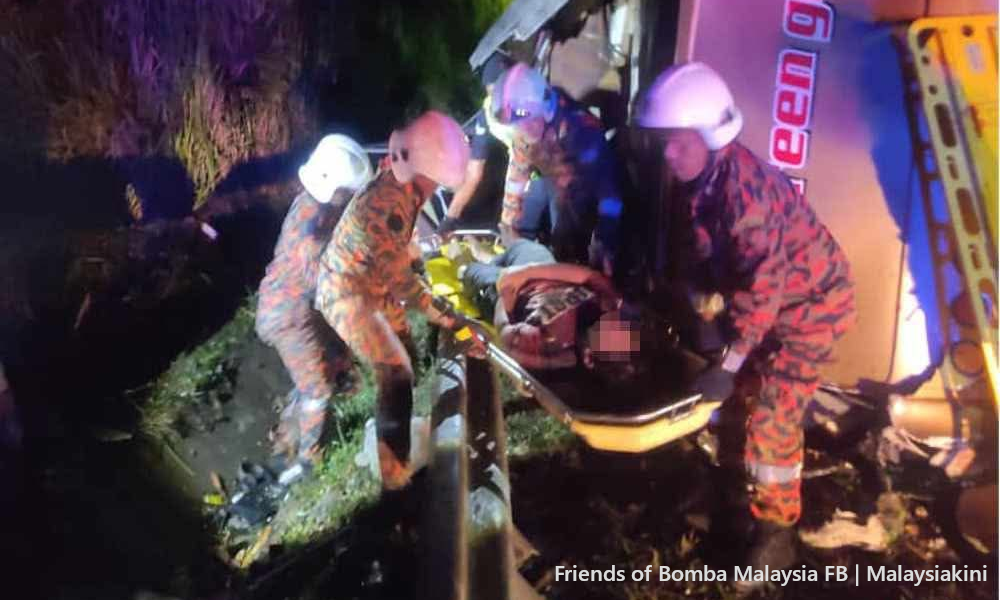
However, the investigation report told a different story, pointing out that the guardrail not only failed to perform its intended function but was actually the “primary mechanism” that exacerbated the severity of the accident.
“The guardrail penetrated the bus cabin, determined as the primary mechanism that aggravated the severity of passenger casualties,” read the report.
Only the driver and companies involved have faced specific punishments, such as fines, licence revocations, and criminal charges.
No government departments or responsible officials within the regulatory chain have been held accountable, and have only been given official “recommendations”. - Mkini

No comments:
Post a Comment
Note: Only a member of this blog may post a comment.