



EVERY morning, a young child in Kuala Lumpur sits at the dining table with a cup of sweetened chocolate drink and a plate of nuggets before heading to preschool. His school bag waits by the door. A tablet glows softly on the table. It is an ordinary weekday morning, the kind many families recognise.
There is love in that kitchen. There is care. There is no intention to harm.
And yet, across Malaysia, more children are gaining weight at younger ages. Many parents look at their child and quietly wonder, “Are we doing something wrong?”.
For a long time, the answer seemed simple. Eat less. Move more. Be disciplined. Weight gain was often described as a matter of choice or willpower.
But as research deepens, a gentler and more complex truth is emerging. Some children gain weight more easily not only because of their habits, but because of how their bodies are built.
Science has shown that body weight is partly influenced by genetics. Some children are born with bodies that store energy more efficiently. In another time, when food was uncertain, this may have been protective.
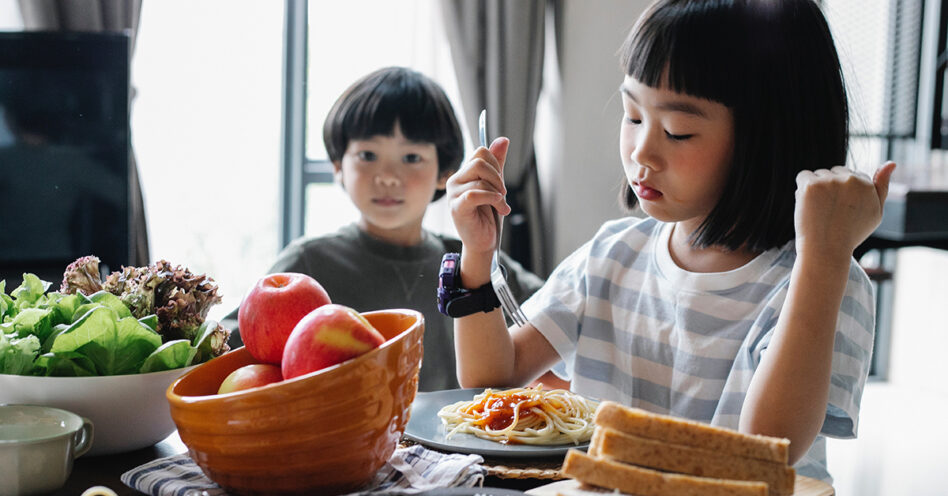
Today, when calorie-dense food is everywhere and movement is limited, that same trait can quietly increase vulnerability.
A research conducted by Universiti Malaya in 2024 found several genetic variations among Malaysian youths that may be linked to higher obesity risk. These differences do not seal a child’s fate.
They simply mean that some bodies respond differently to hunger, fullness and fat storage. Two children can share the same meal and the same routine, yet their bodies may react in very different ways.
Certain biological pathways influence how long we feel full after eating. Others affect how our bodies process sugar or how easily fat is stored. These processes are invisible. They cannot be seen from the outside.
But they may help explain why some children struggle more than others, even when their lifestyles appear similar.
Still, genes are only part of the picture.
Childhood, especially between the ages of two and six, is a tender window of development. It is during these years that food preferences take shape, that movement becomes either joy or chore, and that sleep patterns settle into rhythm. These early routines often stay with a person long after the toys are packed away.
Modern life, however, is demanding. Parents work long hours. Convenience foods are quick and affordable. Screens are easy companions. Bedtimes shift later. None of these choices come from neglect.
They are often the result of exhaustion, time pressure and the realities of raising children in a fast-moving world.
But when a child who is biologically more sensitive grows up in an environment where food is abundant and movement is limited, weight gain can happen quietly and steadily.
Recent collaborative work by Malaysian universities has begun looking at children more holistically. By combining genetic information with physical measurements and early learning assessments, researchers are starting to see clearer patterns.
Some children show higher biological sensitivity but thrive in supportive, structured environments. Others may have lower biological risk yet struggle due to lifestyle or social pressures.
The lesson is not that genes control destiny. It is that health is shaped by a conversation between the body and its surroundings.
Understanding this can change how we respond. It shifts the focus away from blame and towards support. It reminds us that encouragement, structure and healthy routines matter deeply, especially in the early years.

Children benefit from simple things: time to run outdoors, meals shared at a table, screens switched off before bed, enough sleep to grow and repair. These habits are powerful. They can soften biological vulnerability and strengthen resilience.
Recognising that some children carry a heavier biological load should not lead to stigma. It should lead to compassion. It should inspire schools, communities and policymakers to design environments that make healthy choices easier, not harder.
Obesity is not a story of failure. It is a reflection of how our modern world meets our human biology. When we understand this, we begin to approach the issue with more empathy and realism.
And so tomorrow morning, when that same child sits at the table with his breakfast before school, perhaps the conversation feels slightly different. Not one of guilt or fear, but of awareness. Small changes may begin quietly. A shorter screen time. An earlier bedtime. A walk in the evening air.
Ordinary moments, reshaped with care.
Because sometimes, the path to healthier children does not begin with blame. It begins in the same kitchen, with a little more understanding.
Dr Nikman Adli bin Nor Hashim is a Senior Lecturer in Microbiology and Molecular Genetics at the Faculty of Science and the Programme Director of Master of Bioinformatics, Universiti Malaya.
The views expressed are solely of the author and do not necessarily reflect those of MMKtT.
- Focus Malaysia.

No comments:
Post a Comment
Note: Only a member of this blog may post a comment.