


The Malay world was not a collection of isolated states. It was a network of interconnected Muslim sultanates, bound by shared law, religion, and political culture.
From the Tengku Ampuan of Pahang, Tunku Azizah Aminah Maimunah Iskandariah
Much of our national narrative still assumes that constitutional governance arrived with colonial rule, and that structured administration began only under European influence. Yet this assumption overlooks a deeper truth, long before the British, the Malay world had already developed its own constitutional order, rooted in law, faith, and governance.
At the centre of this legacy stands the Hukum Kanun Melaka (HKM), one of the earliest and most influential legal texts in the region. It was not a loose collection of customs, but a structured system governing statecraft, trade, justice, and social order. Melaka’s success as a global trading hub was not built on power alone, but on law, trust, and stability.
When Melaka fell in 1511, its laws did not disappear. They endured.
The Portuguese, upon encountering Melaka, did not find a lawless port, but a legal and constitutionally driven civilisation. They had a copy of the Hukum Kanun Melaka (HKM) transcribed and sent to the Vatican Apostolic Library, where it remains preserved today, representing one of the earliest European renderings of the text.
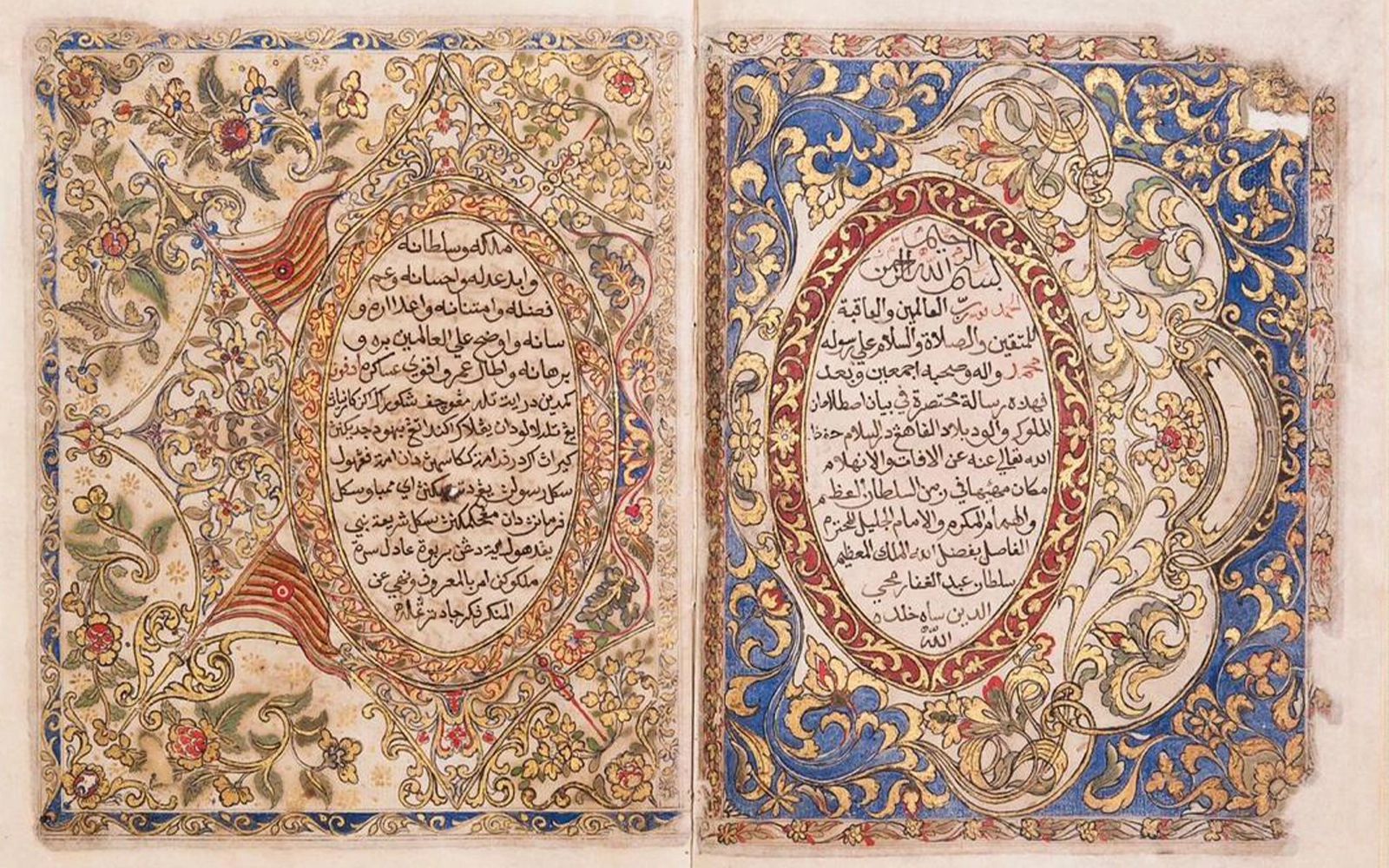
However, the Hukum Kanun Pahang manuscript preserved at the Royal Pahang Museum, written in the early seventeenth century, predates the Vatican copy, which was transcribed in the late seventeenth century, represents one of the earliest European renderings of the text. This was not incidental. It reflects the recognition that Melaka was governed by a structured and functioning legal system. While Europe possessed its own legal traditions, the HKM presented a distinctive model in which governance, commerce, and moral order were closely integrated within a coherent polity.
The survival of Malay legal texts reveals an important distinction between transmission and preservation. The HKM is known today largely through multiple manuscript copies. The earliest European rendering was recorded by the Portuguese and transmitted to the Vatican, while subsequent versions were reproduced in the 18th and 19th centuries and preserved in British and Dutch collections. These copies reflect the wide circulation and influence of the HKM across time and space.
This legacy continued in Pahang through the Hukum Kanun Pahang (HKP), compiled and codified during the reign of Sultan Abdul Ghaffar Muhyiddin Shah. Drawing upon the foundations of Melaka, Sultan Abdul Ghaffar, together with religious scholars and orang besar, refined and expanded these principles into a comprehensive legal code. This was not merely preservation, it was intellectual statecraft.
A kingdom without law and administration cannot endure. Sultan Abdul Ghaffar understood this. His legacy lies not only in ruling a vast polity, but in ensuring that governance was anchored in justice, responsibility, and Islamic principles. In this sense, he stands as both ruler and lawgiver. Yet, in many ways, he remains a forgotten Sultan in the broader narrative of Malay history. His role in compiling and codifying the HKP marks him as a central figure in the development of Malay-Islamic constitutional thought, one whose legacy deserves to be remembered.
By contrast to the HKM, the Hukum Kanun Pahang, rediscovered in 1993, stands out as one of the oldest, most complete, and intact Malay legal manuscripts. Rather than surviving primarily through later reproductions, the HKP preserves a more coherent and continuous form of the legal tradition. If the HKM demonstrates how Malay law spread, the HKP reveals how it endured.
The Malay world was not a collection of isolated states. It was a network of interconnected Muslim sultanates, bound by shared law, religion, and political culture. Through dynastic marriages and alliances, legal traditions such as the HKM and HKP circulated and were adapted across regions. This created a civilisational continuity, a Dār al-Salām, where governance was guided by a common moral and legal framework.
In many ways, this historical unity finds a modern reflection in today’s Conference of Rulers in Malaysia, where Malay rulers convene regularly to deliberate on matters of state and religion. While the contexts differ, the underlying principle of collective leadership and shared responsibility has deeper roots. The earlier Malay sultanates, though independent and at times in conflict, were also connected, through law, lineage, and Islam.
As historical accounts suggest, Melaka was once described as the “Venice of the East.” Its importance was such that to conquer and control Melaka was to command global trade routes. Yet its strength did not lie in conquest, but in governance. It was a kingdom where law regulated commerce, protected merchants, and ensured justice.
This was a kerajaan Melayu Islam Beraja yang berperlembagaan, a Malay-Islamic constitutional monarchy. Melaka’s greatness was built on law. Its ports thrived because merchants trusted its governance, its justice, and its stability.
Today, the Straits of Melaka remains just as vital, but the nature of its importance has evolved. In the 16th century, Melaka was not merely a trading port, but a strategic gateway, control of which enabled influence over the wider East. That reality has not changed. The Straits of Melaka continues to stand as one of the most critical maritime corridors in the world, central to global trade and energy flows, much like the Strait of Hormuz in contemporary geopolitics.
Yet what has shifted is not its importance, but how it is secured. Trade still flows, but it is now accompanied by strategic presence, surveillance, and geopolitical interest. Where once order was maintained through legal and moral authority, it is now reinforced through security frameworks and power projection.
The corridor has not changed, but the way it is secured has.
The historical importance of Melaka finds a striking parallel in the contemporary significance of the Straits of Melaka. Just as the Strait of Hormuz today commands global attention for its role in energy security, the Straits of Melaka continues to serve as a critical chokepoint in international trade.
While the forms of power have evolved, from direct territorial conquest to economic leverage, military presence, and geopolitical positioning, the underlying logic remains unchanged. Great powers, then as now, recognise that control over such corridors confers disproportionate influence. What was once pursued through colonial expansion is today expressed through more subtle yet persistent forms of dominance, often described as neo-colonial dynamics, where influence replaces occupation, but strategic control remains the objective. From this perspective, contemporary external engagement in the Straits of Melaka may be understood not merely as commerce, but as a continuation of historical patterns of asserting power over critical maritime spaces.
What makes this legacy especially important today is what it tells us about ourselves.
We were not a people without structure, waiting to be organised. We were a civilisation with law, administration, and vision. The HKM and HKP demonstrate that governance in the Malay world was grounded in principles, where authority was an amanah, law was a guide, and justice was central.
For younger Malaysians, this history matters.
It challenges the idea that we inherited everything from outside. It reminds us that we had our own systems, rooted in Islam, expressed through Malay civilisation, and sustained through knowledge and governance. It also invites us to rethink how we understand unity, not as uniformity, but as a shared commitment to values that transcend individual states.
The Malay sultanates may have differed in power and politics, but they were united by a deeper framework, law, faith, and responsibility.
The HKM began it.
The HKP continued it.
And together, they represent a constitutional tradition that predates colonial rule.
We had law.
We had governance.
We had civilisation.
It is time we remembered that.
The Tengku Ampuan of Pahang, Tunku Azizah Aminah Maimunah Iskandariah, is a master’s candidate at the International Institute of Islamic Thought and Civilisation (ISTAC), International Islamic University Malaysia.
- FMT

No comments:
Post a Comment
Note: Only a member of this blog may post a comment.