


BN will most likely win Johor, and anyone inside Pakatan Harapan who cannot admit that is not reading the ground properly.
Johor is not a state where BN has to start from zero. The machinery is there, the branches are alive, and the local figures are known.
In many areas, people still know which BN man to call when something needs to be solved. Some complain about BN, some are bored with BN, some want better choices, but familiarity still carries weight.
Harapan cannot fight the election by pretending otherwise.
The issue is not whether BN can form the next state government. BN probably can. The issue is whether BN returns with the same comfort it had in 2022, or whether voters cut that comfort down.
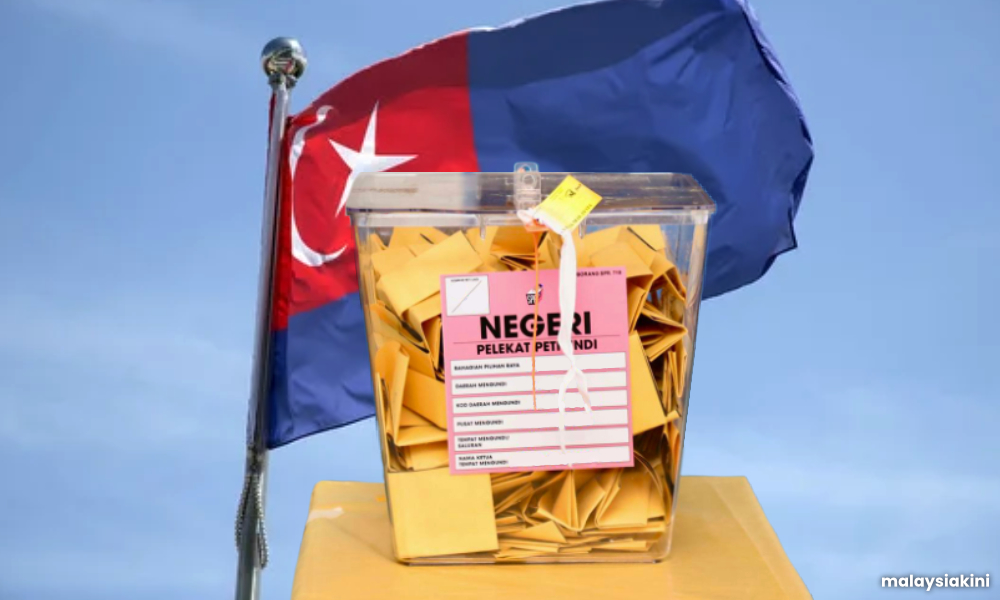
BN won 40 out of 56 seats in the last state election. That was enough for BN to behave as if Johor was safely back in its hands. If BN now wins around 35 seats, it still governs because the simple majority is 29.
But 35 is not 40. It means BN has lost ground. The state is still under BN, but not as securely as before.
Harapan cannot afford to lie about its own target either. Johor will not be taken by mood, slogans or speeches alone. BN’s base is still wide, especially outside urban and mixed constituencies. Harapan’s strength is more concentrated. The numbers are not easy.
Not a useless election
But the election is not useless. If Harapan cannot form the government, it must take as many seats as possible from BN and make the next BN government smaller than it wants to be.
Even that argument is not enough. Harapan cannot walk into Johor pretending voters are waiting to be rescued from a government that has done nothing.
BN has been handling the usual rakyat work. Floods, housing issues, small traders, state aid and local services still go through the BN-led machinery. Voters know this. Some may be unhappy with the speed, the quality or the politics behind it, but they are not blind.
So Harapan must answer the question properly: what exactly are you offering that BN is not already doing? Another service centre? Another assemblyperson to forward complaints? Another speech about checks and balances?
If that is all, voters will shrug. Harapan cannot survive in Johor by selling a weaker version of BN’s ground service, especially while sitting with BN in Putrajaya. It must prove why its presence changes anything.
Does it expose what BN hides? Does it force faster action? Does it protect areas BN takes for granted? Does it speak when state agencies fail, or only when cameras are around?
If Harapan cannot answer that, not all disappointed voters will return to BN. Some are still anti-BN, but no longer fully convinced by Harapan. They may want to punish Harapan without crossing back to BN.
They may still reject BN, but they are tired of Harapan’s compromises. These voters exist in urban seats, mixed seats, younger circles, professional groups, old reform networks and among people who once defended Harapan with real conviction.
Moving beyond BN
Harapan asked voters for years to reject BN. Many did not treat that as normal party talk. They defended Harapan in family arguments, in WhatsApp groups, at workplaces and in coffee shops.
They stood by the idea that old politics had to be challenged. Then the federal arrangement happened, and Harapan sat with BN in Putrajaya.
There are reasons for it. There is arithmetic behind it. But voters are not calculators. They remember the old speeches. They remember the old anger. They remember being told that Malaysia needed to move beyond BN, and now they are asked to separate Putrajaya from Johor.
Parti Bersama Malaysia lives in this gap. It does not need to take over Johor. It only needs to give disappointed Harapan voters somewhere to dump their anger without going back to BN.

In a marginal seat, a few hundred votes can decide everything. A voter may think he is only punishing Harapan, only rejecting the compromise in Putrajaya, only sending a message that the party should not take reform voters for granted.
Once the votes are counted, that protest may appear as another BN seat.
Don’t laugh Bersama off
That is why Bersama should not be laughed off. It does not need a massive wave. It only needs the right frustration in the wrong seats.
It can speak to younger voters who think Harapan has compromised too much, urban fence-sitters who dislike BN but no longer feel excited by Harapan, and old supporters who still cannot fully accept seeing Harapan and BN under the same federal roof.
Bersama is not strong enough to replace Harapan, but it may be strong enough to weaken Harapan.
Harapan cannot answer this by scolding voters. No party owns voters. Harapan does not own urban voters, Chinese voters, Indian voters, young voters, or reform voters.
If they are disappointed, Harapan has to face them properly. The answer cannot be guilt. It cannot be arrogance. It cannot be “you have no choice.” Voters hate that tone, and they should.
The honest answer is simpler: if the aim is to reduce BN’s majority in Johor, the vote must go where it can become a seat. In most constituencies, that means Harapan.
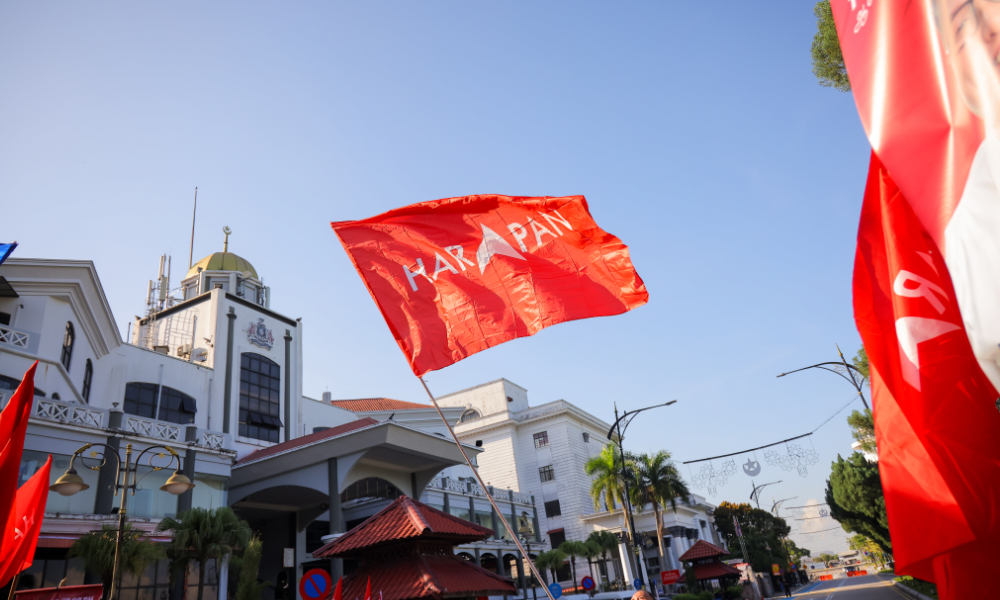
A Bersama vote may feel clean to an angry Harapan voter. It may feel like a way to punish the party without returning to BN.
The trouble is that elections do not care how clean a vote feels. If Bersama takes enough votes from Harapan in a close seat, BN benefits.
BN does not need every voter to love it. BN only needs its base to hold, its machinery to work, and its opponents to split. That is how seats are won even when the wider mood is not fully behind the winner.
Harapan has to speak to its own voters before Bersama does. Harapan works with BN in Putrajaya. That part cannot be hidden. But it does not follow that Johor must give BN another large mandate.
The federal arrangement was forced by national numbers, not by love for BN. Cooperation in Putrajaya does not mean BN should be rewarded with an oversized mandate in Johor.
If Harapan cannot explain that in plain language, Bersama will explain it against Harapan, and BN will quietly enjoy the damage.
Strong Harapan vs weak Harapan
This is the practical value Harapan must sell. A stronger Harapan bloc may not form the state government, but it can still bargain, pressure and force commitments on issues that affect Johor voters.
A weak Harapan can only complain from the side. A stronger Harapan can make the next government think twice. If Harapan cannot make that case, then its campaign becomes another recycled promise that sounds good during campaign week and disappears after polling day.

The worst outcome for Harapan is not simply losing Johor. BN winning Johor is already the likely outcome. The worst outcome is losing seats that could have been won because Harapan’s own disappointed voters drifted to Bersama, allowing BN to walk through the gap and claim a stronger mandate than it deserves.
That would not be bad luck. That would be Harapan failing to manage the doubt created by its own compromises.
Johor voters who still want BN checked have to decide what their vote is meant to do. If the vote is only a message, Bersama may look attractive. If the vote is meant to change the seat count, Harapan remains the more practical vehicle in most constituencies.
A message can feel good for one night. A seat changes the balance for five years.
Harapan should not waste time pretending BN is weak. The task is to stop BN from winning too comfortably. That starts with Harapan proving its added value, facing its own voters, and stopping Bersama from turning disappointment into extra seats for BN. - Mkini
MAHATHIR MOHD RAIS is a former Federal Territories Bersatu and Perikatan Nasional secretary. He is now a PKR member.
The views expressed here are those of the author/contributor and do not necessarily represent the views of MMKtT.

No comments:
Post a Comment
Note: Only a member of this blog may post a comment.