


Letter to Editor
IT IS with great concern that I see the halal-status of non-Muslim-owned restaurants being used to stir up the emotions of the masses.
This can be seen from the numerous social media postings as exemplified by those on the Halal inquiry Company direktori [sic] Facebook site which purportedly aims to raise awareness among Muslim consumers of eateries that are certified halal by the Islamic Development Board of Malaysia a.k.a. JAKIM.
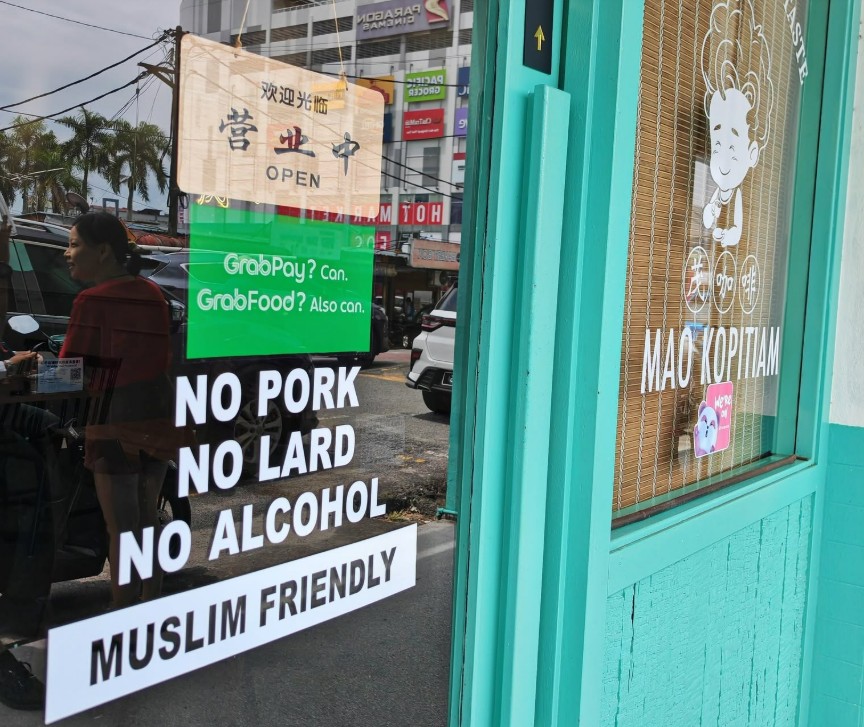
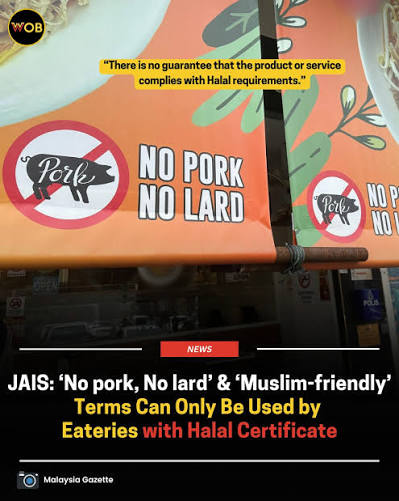
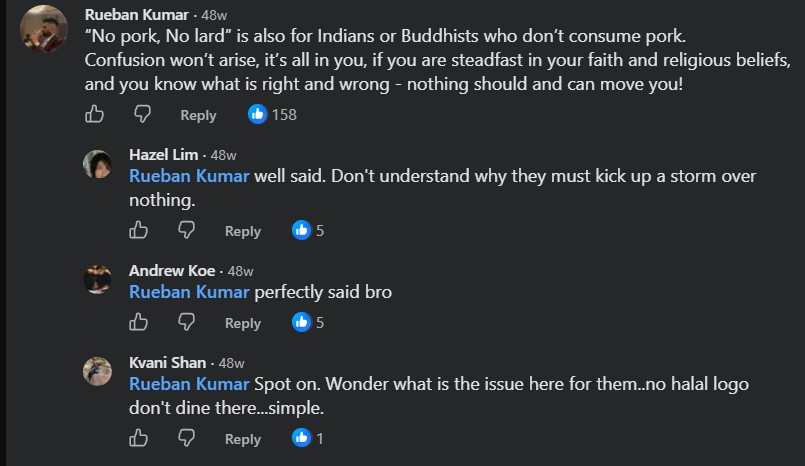
In one of its latest postings, the administrator took issue with a comment (from an unidentified source) stating the non-Muslim perspective regarding restaurants that use the “no pork, no lard” signage to assuage Muslim customers.
It was contended that that many Muslims are fine with it and why are nons being accused of being deceptive or doing something wrong.
Lamenting that too many Muslims were accepting such unofficial halal guarantees, the administrator of the site grumbled that it was precisely the attitude that is preventing Muslim solidarity.
Lopsided query
There are a few things non-Muslims are noting about this site and posts of a similar ilk.
Firstly, it only seems to target non-Muslim businesses. Why is that?
I am continuously and repeatedly informed that the concept of halal extends beyond mere pork, lard and alcohol. It governs matters of hygiene and cleanliness a.k.a. halal toyyiban as well.
Thus, if a Muslim-owned eatery has decorated its premises with verses from the Holy Book and images of holy places and hires only Muslim staff but has a kitchen that is deplorable and filthy, isn’t that, too, misrepresentation of that particular diner’s halal status?
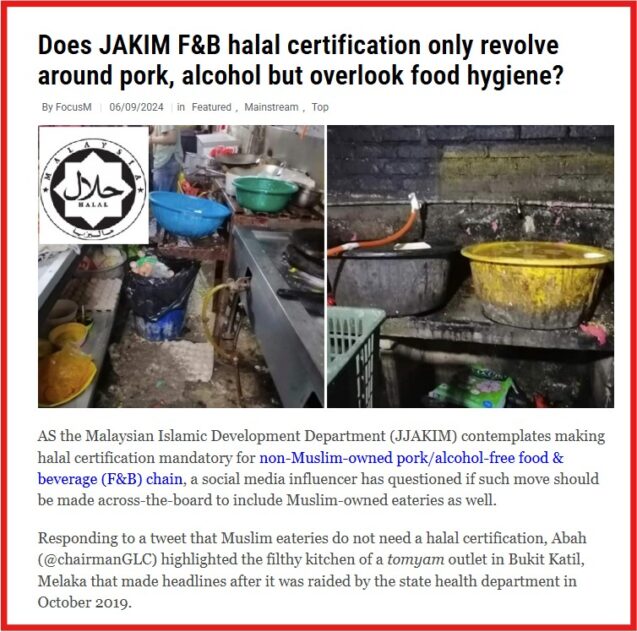
Just look at the number of food stalls that clearly do NOT meet basic hygiene standards at any Ramadan bazaar. How come the venerable Halal inquiry Company direktori [sic] does not kick up a fuss about Muslims consuming non-halal foods during the fasting month?
Also, I am reminded JAKIM certification is preferred as it has a strict vetting process that covers the entire cooking process as well as the ingredients used, including common household items like noodles, cili boh and soya sauce – all of which must come from halal suppliers/manufacturers. Fair enough.
But can it be guaranteed that Muslim-owned eateries also adhere to this requirement. It is easy enough for a cook to mistakenly use a bottle of kicap that does not bear the all-important halal logo. Or does it only matter when used in a non-Muslim kitchen?
Why the double standards? To this cynical observer, the site looks like a poorly-disguised vehicle to spread unease among Muslims while painting nons as opportunistic money-grabbers. All this is, of course, is done under the guise of promoting religious values.
All are equal; before the law
Secondly, speaking from first-hand experience as a former restaurateur without the JAKIM logo, I firmly believe that it is the right of the customer to choose.
The eatery served no pork and hired only Muslim staff in the kitchen which was respectfully pointed out to patrons who enquired.
There were those who were fine with it and those who said they’d prefer to dine elsewhere. Which is perfectly acceptable, isn’t it?
Leave it to the consumer to self-determine if they are comfortable dining in an establishment that has no JAKIM certification.
Yes, it is completely understandable that Muslims place great importance on the issue of halal when it comes to what they put in their stomachs.
However, the laws should apply equally to all cafes, restaurants and diners. If halal certification is a must for those that serve Muslim clientele, then it should apply to all regardless of whether it is Muslim-owned or otherwise.
One cannot force non-Muslim-owned restaurateurs to chase away Muslim customers as they are not officially certified. The onus is on the patrons to choose and make a decision they are comfortable with.
For now, I can only surmise that the Halal inquiry Company direktori’s [sic] efforts – while is praiseworthy to say the least – are nothing but a thinly-disguised vehicle to undermine non-Muslim-owned restaurateurs who have a sizeable Muslim clientele.
Until it shows that it is genuine in its efforts in raising awareness by insisting that Muslim-owned enterprises adhere to the same exacting standards it claims to promote, I remain convinced that this is yet more of 3R (race, religion, royalty) baiting in the guise of gastronomic policing.
Former Non-Muslim Restaurateur
Petaling Jaya, Selangor
The views expressed are solely of the author and do not necessarily reflect those of MMKtT.
- Focus Malaysia

No comments:
Post a Comment
Note: Only a member of this blog may post a comment.