


When Petaling Jaya mayor Zahri Samingon announced that the Petaling Jaya City Council (MBPJ) had opened the draft Petaling Jaya Local Plan (RTPJ) 2035 (Replacement) for public feedback on Dec 15, 2025, the plan was described as aiming to align the city’s development with federal and state policies.
But has it? Only 367 submissions were received from a city of 800,000 residents. That is less than 0.05 percent of the population.
Is this apathy? Or were residents given the full picture?
Gap 1: Can a city be built without checking if foundations can hold it?
No engineer would design a building without first understanding what the ground beneath it can carry. No responsible planner should design a city's growth without first understanding what its infrastructure can absorb.
Does the proposed RTPJ (Replacement) include a city-wide infrastructure masterplan? Without one, there can be no carrying capacity study.
Without such a study, no one can say with certainty what population and density Petaling Jaya can actually absorb before its roads, drains, utilities, schools and emergency services fail.
At the March 12 technical session, MBPJ presented three population scenarios for 2035: 884,004, 1,048,681 and 1,508,494. The population figure used in PIPPJ 2.0 - the traffic study underpinning the RTPJ (Replacement) - is 979,244. That figure does not match any of the three scenarios MBPJ presented.
The target of 1,048,681 was chosen based on Selangor's two percent annual growth rate. Was this based on what Petaling Jaya's infrastructure can actually carry?
Is the RTPJ (Replacement) built for the wrong city?
Gap 2: Are buildings planned to be larger than residents realise?
You have lived on your street for 20 years. The building across the road has always been four storeys. Under the old rules, a plot ratio of 1:4 meant exactly that.
Under a 2023 Selangor state circular that changed how plot ratio is calculated across all local authorities in Selangor, that same 1:4 on paper can now deliver a building that is effectively 30 percent larger. More floors. More units. More families. More cars on your street every morning.
The number did not change. What it allows did. Was this visible in the exhibition materials?
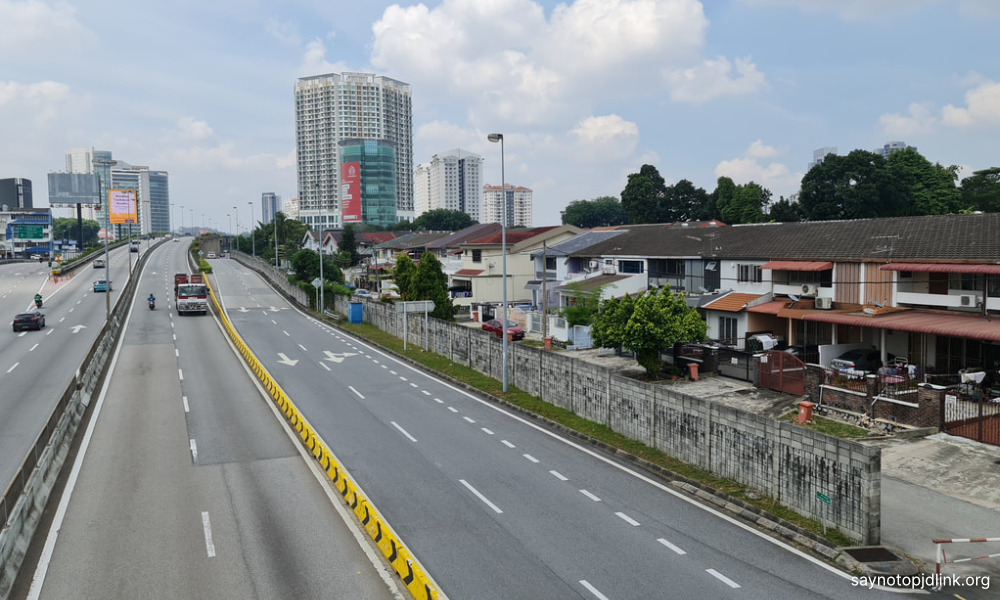
A city has a carrying capacity. Think of it like a lift. The lift has a maximum load. Exceed it, and it breaks down.
Roads, schools, drains and hospitals work the same way. Every additional floor, every additional unit adds weight to a city that is already at its limit. Can Petaling Jaya carry what the RTPJ (Replacement) allows?
Gap 3: Are infrastructure promises legally binding?
There is no public hospital under the Health Ministry in Petaling Jaya. The nearest are in Shah Alam, Sungai Buloh and Selayang. Petaling Jaya residents need to drive out of their own city for emergency care.
Imagine moving into a neighbourhood where there should be a public hospital, public schools and reliable public transport. But none of it is in writing. None of it is legally required.
You move in. The hospital is never built. The schools are over capacity. From Seksyen 6, there is no direct bus to the nearest LRT station.
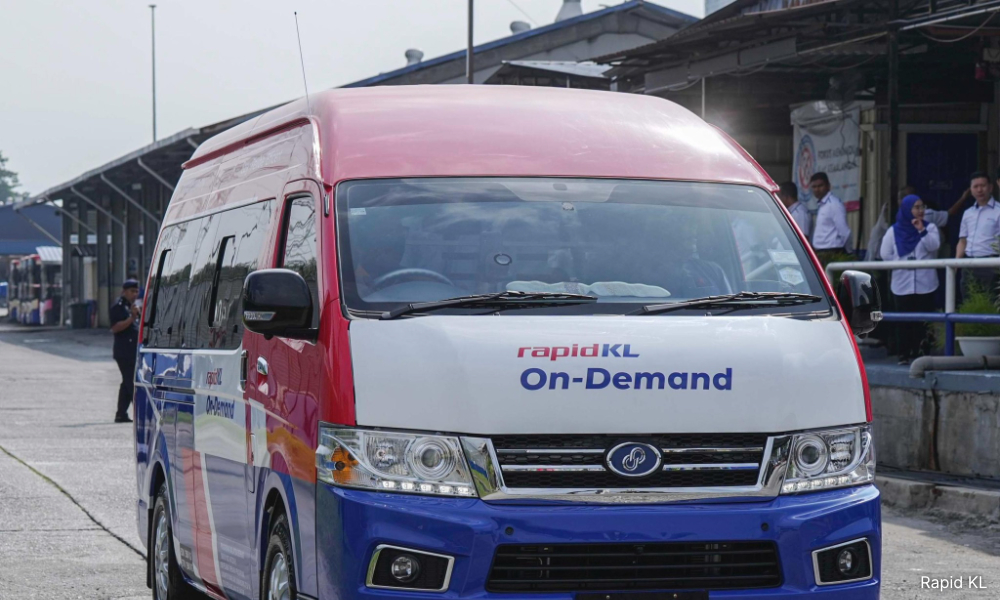
A demand-responsive ride was quoted at 58 minutes waiting time to travel 2.2km. The practical solution was a private ride plus LRT, costing RM8.20 for a journey public transport should have covered. This is the last-mile reality in Petaling Jaya today.
The RTPJ (Replacement) includes infrastructure assessments attributed to Tenaga Nasional Berhad, Irrigation and Drainage Department, Prasarana, Air Selangor and Indah Water Konsortium.
At the March 12 session, MBPJ confirmed these are assessments only, not legally binding commitments tied to development approvals. Is any one of them legally obligated to deliver?
What residents did
These gaps are sourced entirely from MBPJ's own documents and confirmed on record by MBPJ at a technical session on March 12.
PJ Sejahtera engaged formally through every available channel across 10 months. The most recent response from MBPJ was a letter dated June 19 rejecting both the request to extend the Section 12A exhibition period and the proposed dialogue session on plot ratio and traffic.
What is at stake
With Section 13 public exhibition proposed to open in mid-July, and given the complexity of what is being asked, can the three gaps realistically be resolved in time?
How can residents effectively object during the Section 13 public exhibition to an RTPJ (Replacement) whose full implications they have still not been shown?

PJ Sejahtera and Sustainable Petaling Jaya Association (SPJA) call on MBPJ, the Selangor State Planning Committee and PlanMalaysia Selangor to commit to resolving the three critical technical gaps before committing to gazetting the RTPJ (Replacement).
We are not against development. We are for a technically sound plan, honestly presented, and backed by commitments that can actually be enforced.
SPJA chairperson T Chakaravarthi said: "A RTPJ (Replacement) that cannot be enforced is not a plan. It is a statement of intent. Petaling Jaya residents deserve a liveable city." - Mkini
PJ SEJAHTERA is a community advocacy group.
SUSTAINABLE PETALING JAYA ASSOCIATION (SPJA) is an NGO promoting sustainable development.
All figures and technical references in this statement are sourced from MBPJ's own planning documents, including the RTPJ (Replacement), PIPPJ 2.0, and official MBPJ presentation slides from the technical session on March 12. A summary of that session was shared with MBPJ on March 15. No corrections were received.
The views expressed here are those of the author/contributor and do not necessarily represent the views of MMKtT.

No comments:
Post a Comment
Note: Only a member of this blog may post a comment.