


Malaysia today faces not merely a crisis of governance, but a far deeper crisis of political character.
It is my considered view – formed through decades of observation, engagement, and reflection – that far too many members of our political class are fundamentally self-serving, with integrity too often sacrificed for expediency and gain.
A worrying number of politicians have perfected the art of moral posturing: speaking eloquently about the rakyat, race, religion, and national interest, while quietly enriching themselves, entrenching patronage networks, and hollowing out public institutions.
Politics, for many, has ceased to be a vocation of noble service; it has become a lucrative enterprise.
Against this dispiriting reality, only a small number of leaders in our nation’s history stand out in my esteem – men who, despite their differences in ideology, background, and temperament, shared a rare and unwavering commitment to courage, integrity, and genuine service to the rakyat.
Among them (besides Lim Kit Siang) were the late V David, Hussein Onn, Ismail Abdul Rahman, Karam Singh Veriah, Karpal Singh Deo, Nik Abdul Aziz Nik Mat, DR Seenivasagam, SP Seenivasagam, and Tan Chee Khoon.
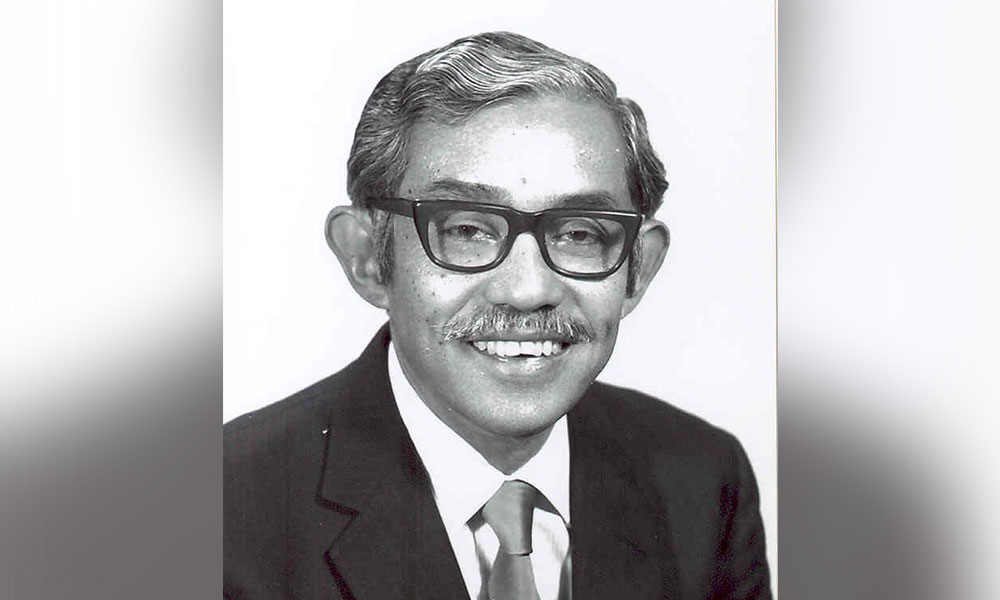
They were not admired because they were flawless, but because they were principled. They spoke truth to power, resisted corruption, and placed the national interest above personal gain. Such leaders are exceptional precisely because they are rare.
Politicians alone can’t save M’sia
The uncomfortable truth is this: we can no longer depend on politicians alone to build a truly united, meritocratic, and progressive Bangsa Malaysia – a Malaysian nation founded on integrity (honesty and ethical conduct), meritocracy tempered by necessary affirmative action, shared citizenship, diversity, constitutionalism, justice and fairness, moderation, rational discourse, and commitment to the common good.
While many electoral cycles have come and gone, coalitions have realigned, and slogans repackaged – our underlying political culture remains stubbornly resistant to reform. When politics is driven primarily by money, ethnicity, and fear-mongering, meaningful nation-building becomes impossible.
If Malaysia is to chart a different future, leadership must emerge from beyond the narrow confines of partisan politics. The civically minded intelligentsia – comprising academics, professionals, civil society leaders, writers, journalists, entrepreneurs, and principled retirees committed to the public good – across all ethnic and social groups, must step forward.
They must rise above communal anxieties and ideological silos to articulate a shared national vision rooted in constitutionalism, social justice, multiculturalism, meritocracy, and mutual respect.
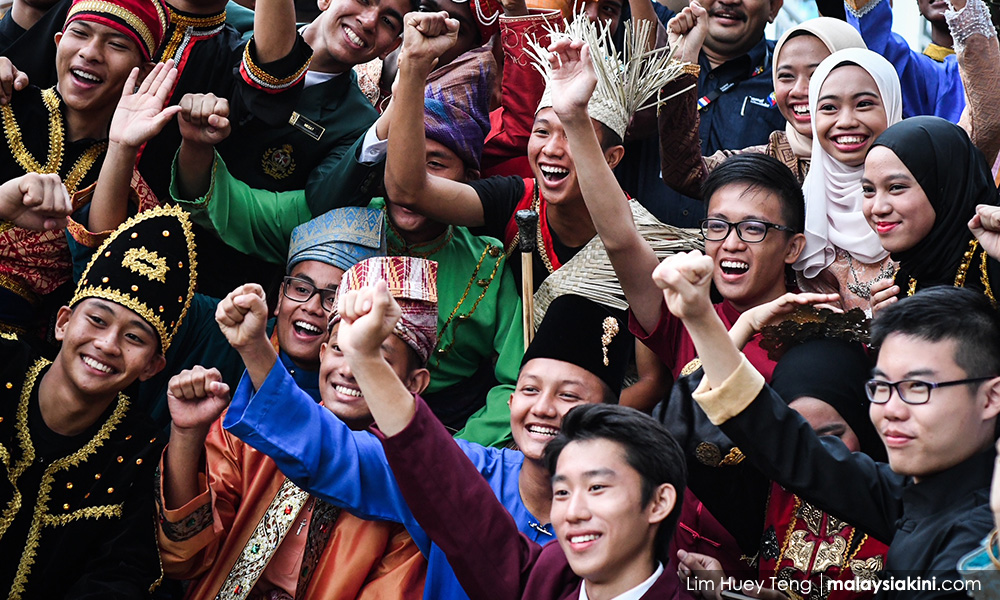
Acting collectively, they can and must function as a responsible pressure group: shaping public discourse, challenging false narratives, demanding accountability, and influencing the electorate to reject mediocrity and moral bankruptcy at the ballot box.
This is not a call for elitism, nor for technocratic rule divorced from democratic accountability. It is a call for ethical and competent leadership – leadership anchored in truth, courage, and the capability to deliver results.
Democracies fail not only when politicians are corrupt, but when right-minded citizens abdicate their responsibility to think critically and to demand better.
Restoring truth through history
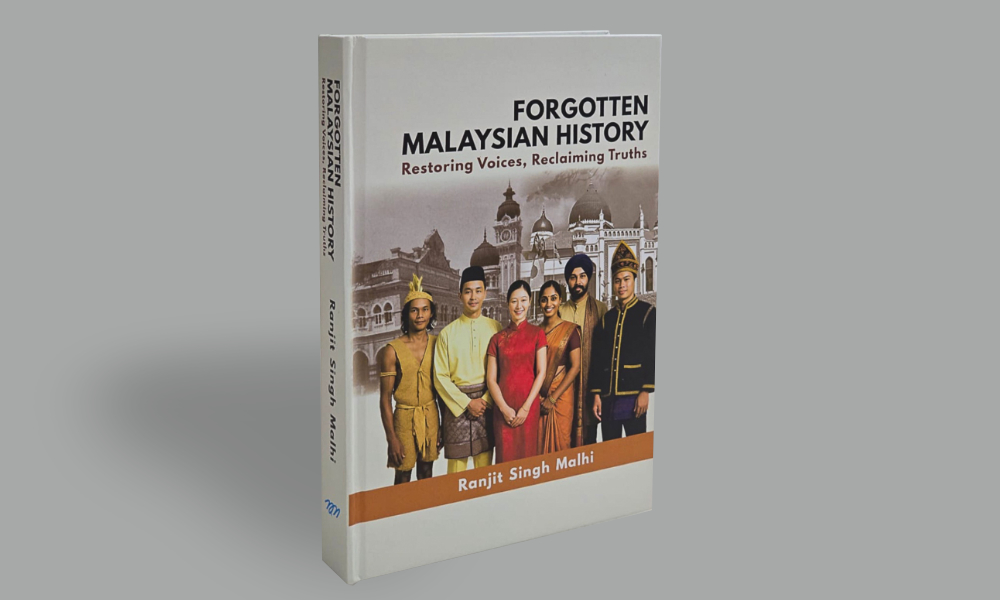
As a historian, educator, and leadership trainer, I have sought in my own modest way to contribute to this national endeavour. My recently published book, Forgotten Malaysian History: Restoring Voices, Reclaiming Truths, is an attempt to confront selective memory and historical distortion that have long fractured our sense of national identity.
A nation taught half-truths about its past will struggle to build trust in the present and confidence in the future. By restoring marginalised narratives and acknowledging the contributions of all communities, the book aims to foster a deeper sense of belonging and pride as Malaysians – without fear, denial, or myth-making. History unites us, but only when it is told truthfully and inclusively.
In the same spirit, in collaboration with Asia Pacific University of Technology & Innovation (APU), we have established the Exemplary Leadership Academy (ELA).
I firmly believe – as demonstrated by the exemplary leaders mentioned earlier – that politics can indeed be a noble calling when anchored in a clear and compelling vision, courage, conscience, and service to the rakyat.
ELA’s vision is to transform organisations and communities worldwide by nurturing visionary, courageous, ethical, and resilient leaders who can navigate today’s complex and disruptive world.
Leadership education must go beyond technical skills and strategic frameworks; it must cultivate character, emotional intelligence, and a deep sense of responsibility to society.
Silence no longer an option
Malaysia’s future cannot be secured through recycled slogans, cosmetic reforms, or the endless recycling of failed leaders. It will be shaped only when truth is valued over propaganda, integrity over expediency, and service over self-interest.
The task before us is formidable, but history reminds us of a vital truth: nations are not saved by politicians alone. They are saved when principled citizens decide that silence is no longer an option.
For a start, we must stop thinking, speaking, and organising ourselves along narrow lines of ethnicity, religion, and origins: Malays versus non-Malays, penduduk asal (original inhabitants) versus pendatang or orang asing (foreigners), and Muslims versus non-Muslims or kafir.
Such categories may serve short-term political expediency, but they corrode national unity. In the long run, they weaken the nation and leave everyone poorer – morally, socially, and politically.
A simple but telling example illustrates this point. It matters not that Hannah Yeoh is labelled “Chinese” or that she is the first “non-Muslim” to serve as Federal Territories Minister. What matters is that she is widely recognised as a competent, principled, and fair-minded Malaysian leader, held in high esteem across communities.
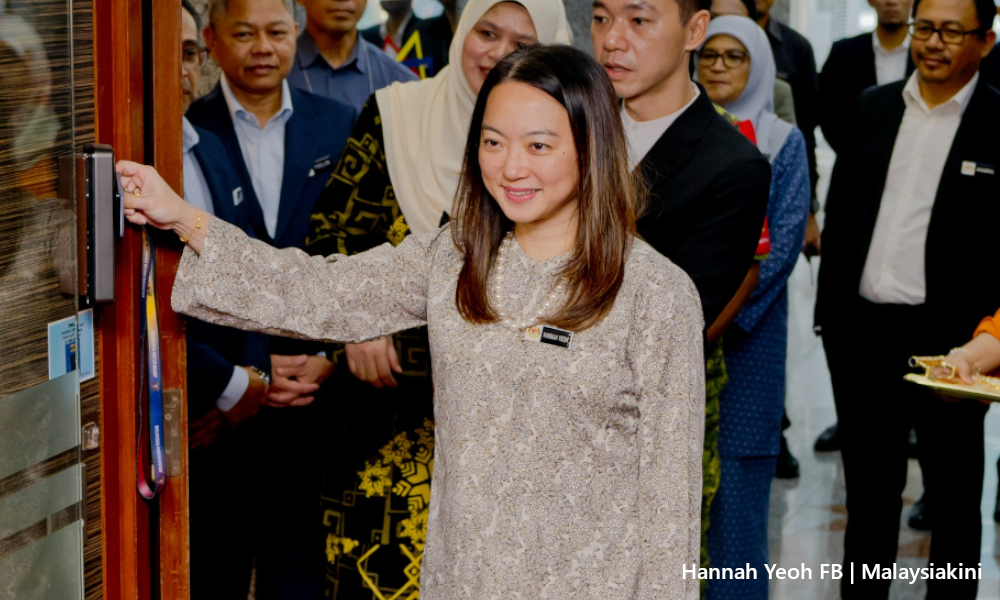
As a resident of her Segambut constituency, I can attest that many of my Malay friends in Taman Tun Dr Ismail, Kuala Lumpur, speak of her with genuine respect and appreciation. That, surely, is what leadership in a multi-ethnic society ought to look like.
Reclaiming a Malaysian identity
My humble plea to all Malaysians is this: let us begin to think and act as Malaysians first – not as fragmented identities inherited from the past, but as a confident people united by shared values and common purpose, for the sake of our children and future generations.
In doing so, we must uphold the Federal Constitution in both letter and spirit, and keep faith with the Merdeka bargain as a living commitment to fairness, inclusion, and justice.
We must also heed the sagacious advice of the late statesperson Ismail, who reminded us in a speech reported by Utusan Malaysia (Aug 4, 1973):
“Kita bukan bermaksud untuk mendirikan sebuah Malay-Malaysia, tetapi Malaysia yang dipunyai serta diwarisi oleh semua warganegara tanpa mengira kaum dan agama”
(We do not intend to establish a Malay-Malaysia, but a Malaysia that is owned and inherited by all citizens regardless of race and religion).
Similarly, we should draw inspiration from the late Nik Abdul Aziz, who reminded Malaysians that all humans are descended from Adam, with Eve as our mother. He observed that accepting this truth not only brings pahala (reward), but also enables people to live in peace and harmony.
A fearless champion of social justice, he once criticised the term “bumiputera” as racist, arguing that government aid should be channelled to all who are poor, regardless of race (The Malaysian Insider, March 1, 2009).
Steps towards a united Bangsa Malaysia
In our renewed effort to build a united Bangsa Malaysia, three practical steps are necessary. First, Malaysians must consciously rebuild civic consciousness beyond communal lines, supporting and participating in cross-ethnic civil society platforms that uphold constitutional values, social justice, and integrity – while rejecting narratives that divide citizens into permanent camps of “us” and “them”.
Second, we must demand higher standards of leadership and accountability through informed voting and sustained civic pressure. Integrity, competence, and service must become non-negotiable criteria in choosing leaders at all levels, rather than ethnicity, party loyalty, or patronage.
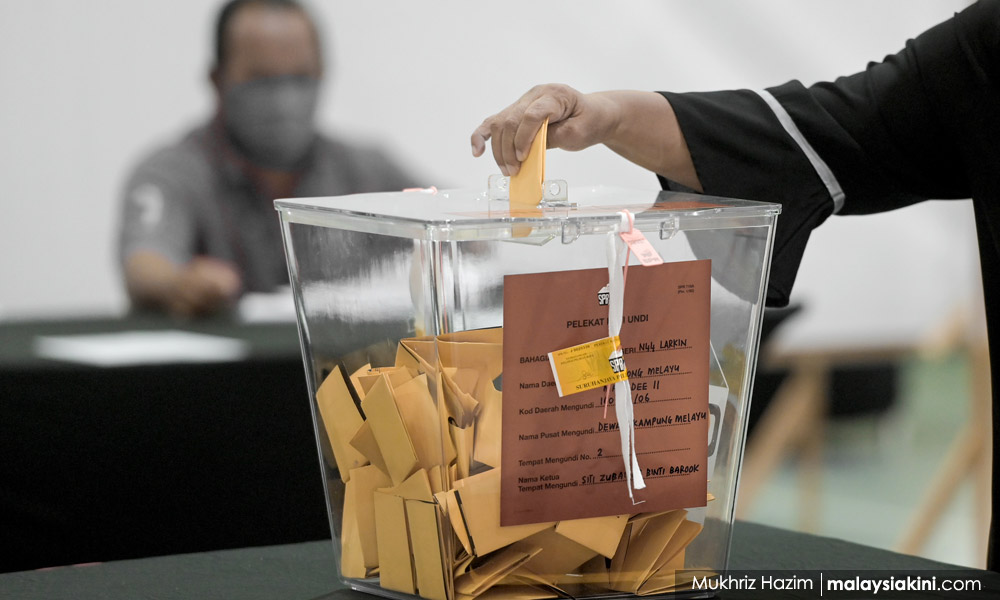
Third, leadership education and historical literacy must be strengthened. Schools, universities, and public institutions should prioritise truthful history, ethical reasoning, and critical thinking, so that future generations are equipped to resist propaganda, question injustice, and lead with conscience.
Malaysia stands at a moral crossroads. The question before us is no longer whether change is necessary, but whether we possess the courage and conscience to pursue it.
A nation founded on unity in diversity can endure only if truth guides its memory, integrity anchors its leadership, and citizens refuse to surrender their moral agency.
As we enter the new year, I call upon my fellow Malaysians to move beyond cynicism and complacency, and to play an active role in transforming Bangsa Malaysia from rhetoric into lived reality.
The ultimate measure of our patriotism will not be the slogans we chant, but the moral inheritance we leave behind. In the words of Dietrich Bonhoeffer, “The ultimate test of a moral society is the kind of world that it leaves to its children.” - Mkini
RANJIT SINGH MALHI is an independent historian who has written 19 books on Malaysian, Asian, and world history. He is highly committed to writing an inclusive and truthful history of Malaysia based upon authoritative sources.
The views expressed here are those of the author/contributor and do not necessarily represent the views of MMKtT.

No comments:
Post a Comment
Note: Only a member of this blog may post a comment.