


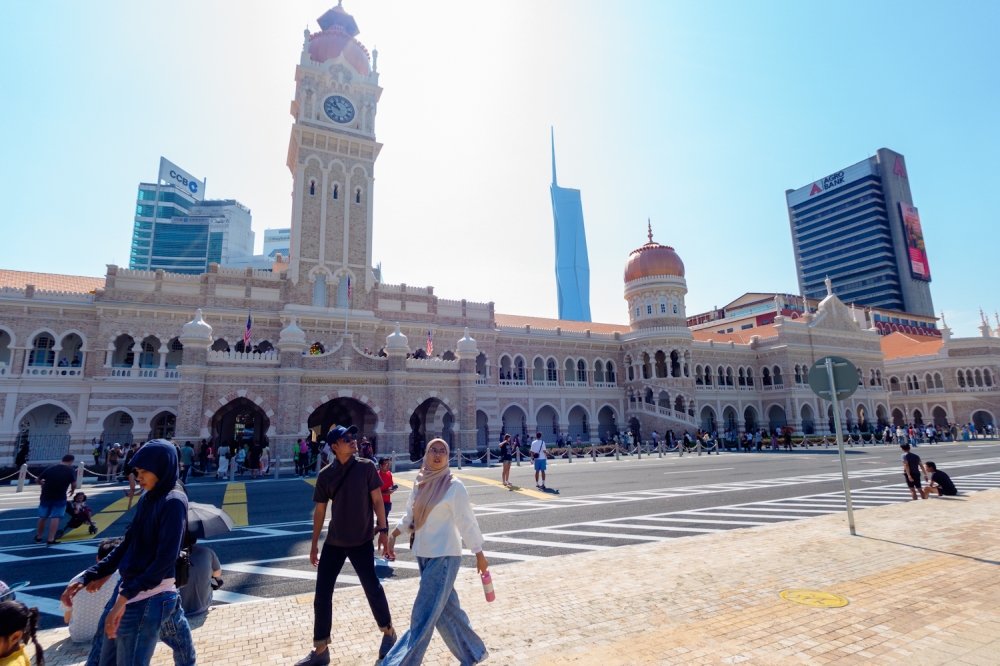
Some came after seeing it on social media. Others stopped by for coffee or simply to walk through a building they had long admired from the outside.
At the main porch, people gathered to take photographs. Nearby, a granite bollard — recreated from archival references — lay partially buried, marking how road levels around the building were later raised.
A year after conservation and restoration works began, Block 1 of the Sultan Abdul Samad Building complex has reopened to the public — and for many Malaysians, the draw lies in its history and the chance to finally experience the space up close.
Inside, the crowd was steady but manageable. Visitors moved unhurriedly between galleries, cafés and corridors, pausing for photographs beneath the arches or queuing patiently for exhibitions.
At Confluence Hall, a short line formed as visitors waited about five minutes for their turn to enter.
Elsewhere, families lingered over displays while young couples held pre-wedding photoshoots, complete with portable studio lights.
Across the road, interior designer Lim Shi Rong, 25, stood beside a bench, brush in hand, capturing the building’s copper domes and clock tower on canvas.
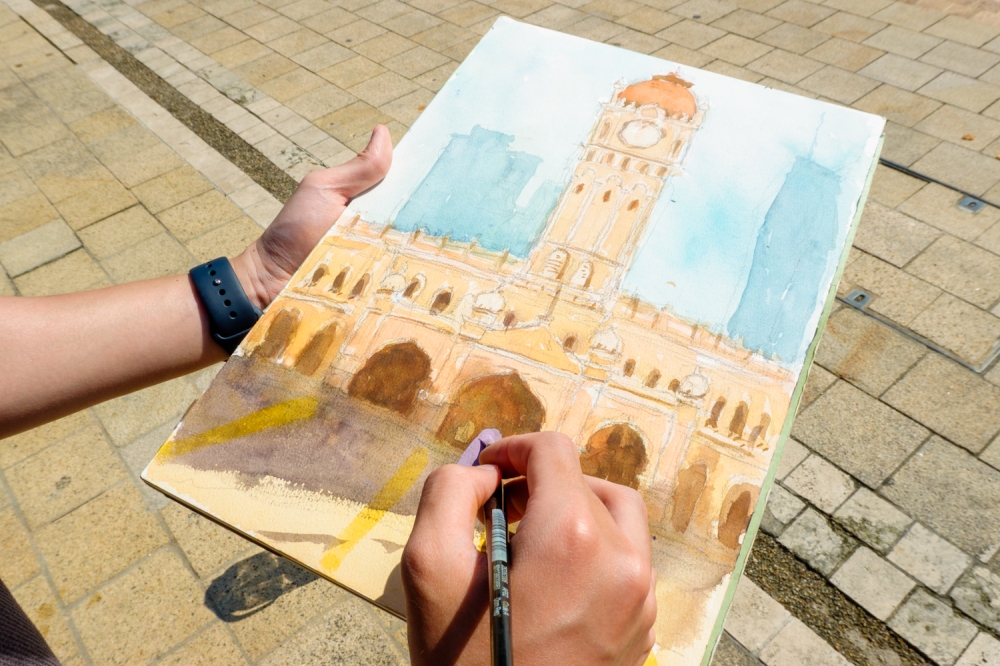
He arrived at about 9.30am with college friends to sketch and paint the landmark. Nearly two hours later, his painting was almost complete.
“In Kuala Lumpur, we have many old buildings, and it’s good when they are restored and used by the public,” said Lim, who is from Cheras.
He said the reopening was timely, especially with Visit Malaysia Year approaching, as it offered tourists a chance to experience the country’s heritage firsthand.
“It’s a good opportunity to show our heritage to visitors. It also helps the economy and brings a good image to our country,” he told Malay Mail.
Tour buses began dropping off visitors as early as 10am, with arrivals continuing steadily into the afternoon.
Inside, the atmosphere reflected appreciation not just for preservation, but for accessibility.
At Bakehouse by KLCG along the ground-floor corridor, three lawyers in their late 20s — Ong Shu Cing, Aida Suhailah and Jessy Lai — rested after completing the KL Bar Run earlier that morning. They waited for their drinks — a hot chocolate, an iced Mont Blanc and an iced Hainan coffee — as visitors streamed past.
Ong said reopening the building gave it renewed purpose.
“Instead of it being unused and just there, it should be open to the public. Now there’s a purpose,” she said.
Aida said visitors could now immerse themselves in the building’s architecture and history rather than simply viewing it from outside.
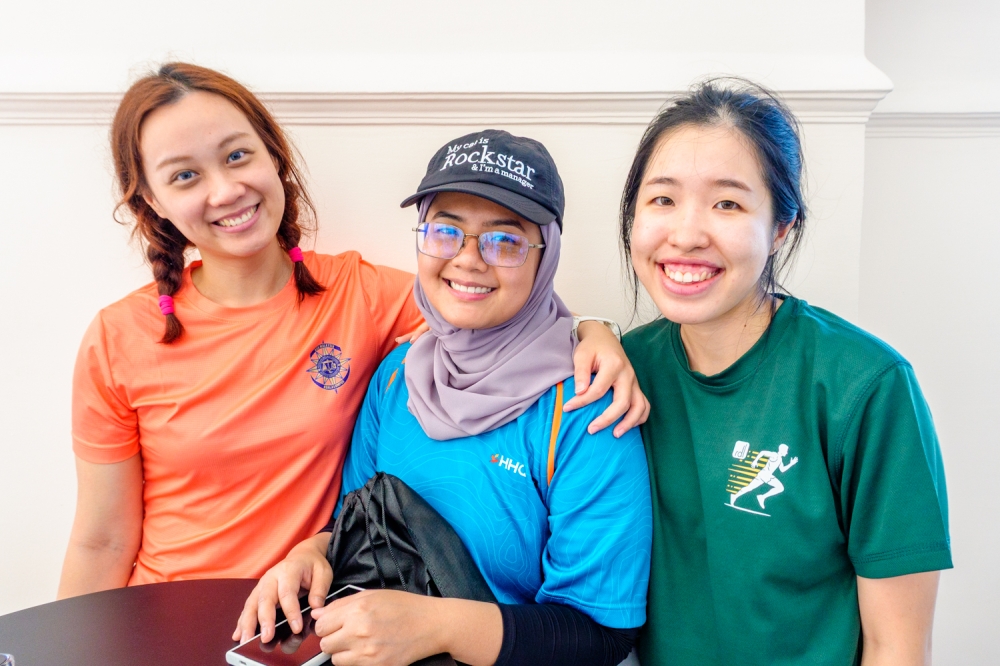
Lai said the space could help promote Malaysian culture and heritage to both local and foreign tourists.
“It makes use of the building,” she said.
While acknowledging that historical restoration projects come at a cost, Ong said such efforts were necessary to ensure proper preservation.
“Any restoration project involves money. I don’t know if the allocated money is a lot in this context, but if it’s necessary to preserve it properly, then it’s necessary,” she said.
For Abdul Hafiz Ab Rahman, 40, the visit was a spontaneous family outing after seeing videos online.
“I haven’t been here in a long time. I only found out earlier through TikTok that the building has opened to the public and entry is free, so I thought I’d come and see what’s new,” said the civil servant from Gombak, who was visiting with his wife and two children.
He said the restored interiors looked beautiful while retaining their historical character.
“Even though it’s modern now, our heritage is still preserved. From the colonial period, the original form is still there — it has just been improved,” he said.
He added that the addition of cafés and public spaces made the building more inviting, including for international visitors.
“People on TikTok say it feels like London. I’ve never been there myself, so I’m not too sure, but we feel impressed,” he said with a laugh.
Much of the building’s renewed life lies in how people move through it.
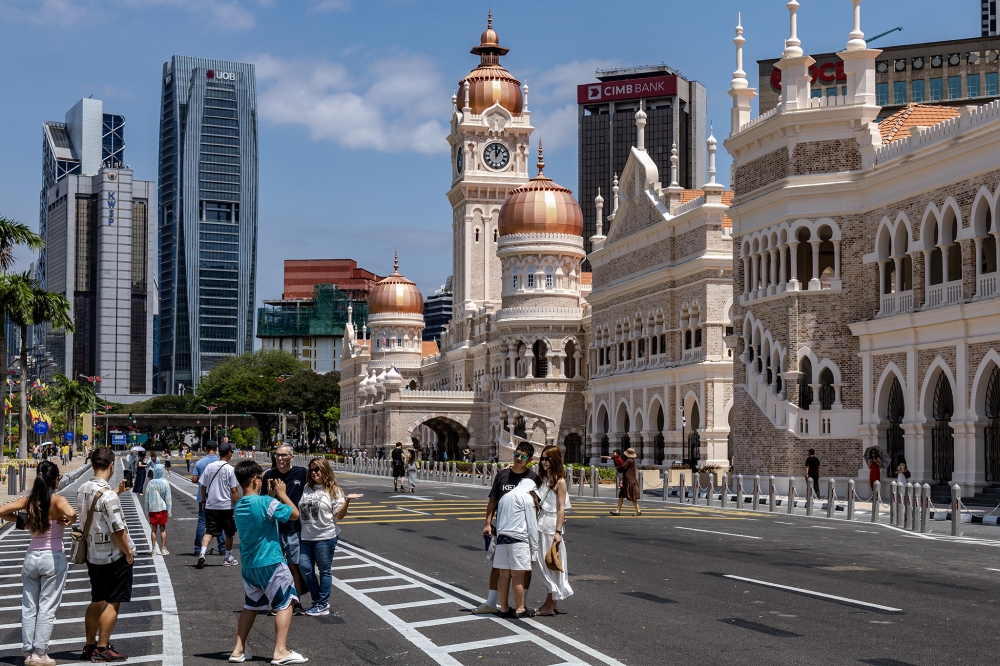
At 11am, the clock tower bell rang eleven times, its chimes echoing across the compound. At noon, it rang again, sounding twelve times.
Visitors gathered for “The Greater KL Show” at Visionary Hall, where a large-scale model of Kuala Lumpur — comprising more than 5,000 miniature buildings — came alive through projection mapping, tracing the city’s growth from Sentul to Bukit Jalil and Cheras to Bangsar.
Nearby, queues formed outside Kaw Kaw Malaya, while others browsed the gift shop selling souvenirs ranging from postcards to framed batik-style maps of Kuala Lumpur.
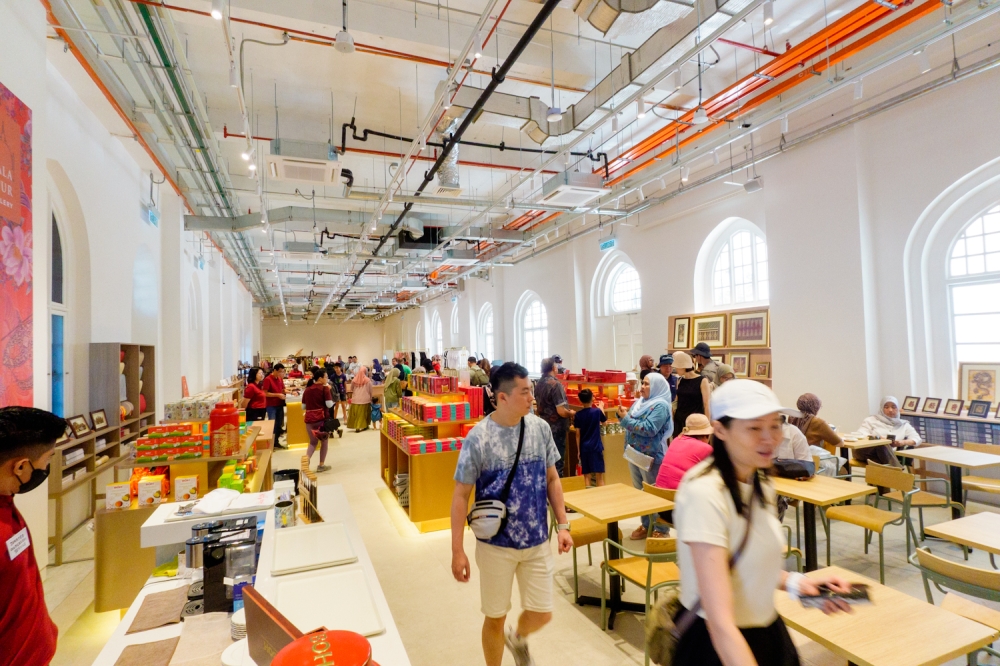
Five food and beverage outlets — Gula Camca by Tutti Frutti, Kaw Kaw Malaya, Courthouse Café, The Café by Royal Selangor and Bakehouse by KLCG — now occupy parts of the building, turning what was once an administrative space into a social one. Conversations over coffee now take place beneath arches that once housed colonial offices and later Malaysia’s highest courts.
Completed in 1897, the Sultan Abdul Samad Building served as the seat of colonial administration and later witnessed defining moments in the nation’s history, including the lowering of the Union Jack on the eve of independence in 1957.
It is gazetted as a Category 1 National Heritage Site.
The recent restoration, undertaken by Khazanah Nasional Berhad through Dana Warisan under the Warisan KL initiative, reimagines the landmark as a creative and cultural hub while preserving its architectural integrity.
Event spaces such as Federal Hall I, Balai Persekutuan II and the Heritage Room are expected to host exhibitions, discussions and private functions, further expanding its public use.
The reopening of Block 1 marks the first completed phase of the wider restoration of the complex, which includes the Pejabat Pos Lama, former Kuala Lumpur High Court, Panggung Bandaraya, former FMS Survey Office and the National Textile Museum.
Admission to the Kuala Lumpur City Gallery is offered free for the first month to mark the occasion. - malaymail

No comments:
Post a Comment
Note: Only a member of this blog may post a comment.