


Malaysia enters the second quarter of 2026 at a political-economic inflection point where macroeconomic stability remains broadly intact, but the national conversation has shifted decisively toward credibility, institutional delivery, and political coordination.
The country is no longer operating in an environment defined by macroeconomic fragility or crisis management. Instead, attention has moved toward governance reform signals, coalition cohesion, industrial policy direction, and the capacity of institutions to translate policy announcements into measurable outcomes.
For policymakers and investors alike, the central question is no longer whether Malaysia possesses economic potential, but whether its institutional machinery can convert policy ambition into credible and timely implementation.
The most consequential development of the week emerged from Parliament on March 2, when a constitutional amendment proposing a 10-year cap on the prime minister’s tenure narrowly failed to pass.
The motion secured 146 votes, two short of the two-thirds majority required for constitutional reform, while 44 lawmakers abstained and 32 were absent.
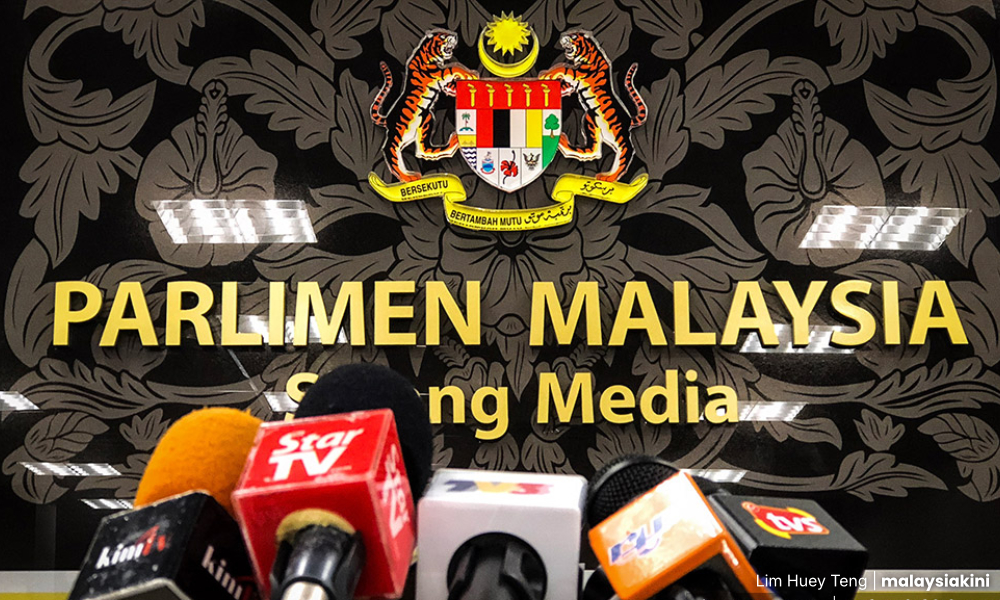
The proposal had been presented as a structural safeguard intended to prevent excessive concentration of executive authority and reinforce institutional maturity.
The narrow margin suggests that support for reform exists, but the legislative outcome also reveals the complexity of translating governance narratives into binding constitutional change.
Political friction
From a market perspective, institutional reform carries significance beyond symbolism. Credible structural constraints on executive tenure can reduce governance risk premia by embedding predictability into leadership succession.
However, when reform initiatives fall short of legislative closure, markets tend to treat the policy narrative with caution until evidence of renewed follow-through appears.
Political friction intensified further following the controversy surrounding the MACC.
Available reporting indicates that the DAP is reassessing elements of its longer-term relationship within the unity government amid dissatisfaction regarding the handling of allegations involving MACC chief Azam Baki and the absence of a royal commission of inquiry.

The party has not indicated any immediate withdrawal from the governing coalition, yet the episode illustrates the delicate balance required to sustain alliances in a multi-party parliamentary environment.
Coalition politics operates as both a stabilising mechanism and a potential source of friction.
The immediate concern is not governmental collapse but reform drag, as internal disagreements may consume political bandwidth that might otherwise be directed toward legislative delivery.
The political environment was further complicated by Prime Minister Anwar Ibrahim’s parliamentary statement on March 3 alleging the existence of an organised effort to destabilise the government and undermine national institutions.
Media reports suggest that authorities are investigating a suspect connected to a campaign involving an international public relations firm allegedly tasked with influencing foreign media outlets, banks, and lawmakers.
Whether the matter develops into a wider legal confrontation remains uncertain, yet the episode reflects a broader shift in the political narrative.
BNM remains a bedrock
Governance credibility is increasingly shaped by perceptions of institutional legitimacy rather than purely partisan competition.
Such perceptions matter because investors respond not only to economic data but also to signals regarding institutional cohesion and resilience.
Despite these political crosscurrents, the week’s most stabilising signal came from Bank Negara Malaysia (BNM).
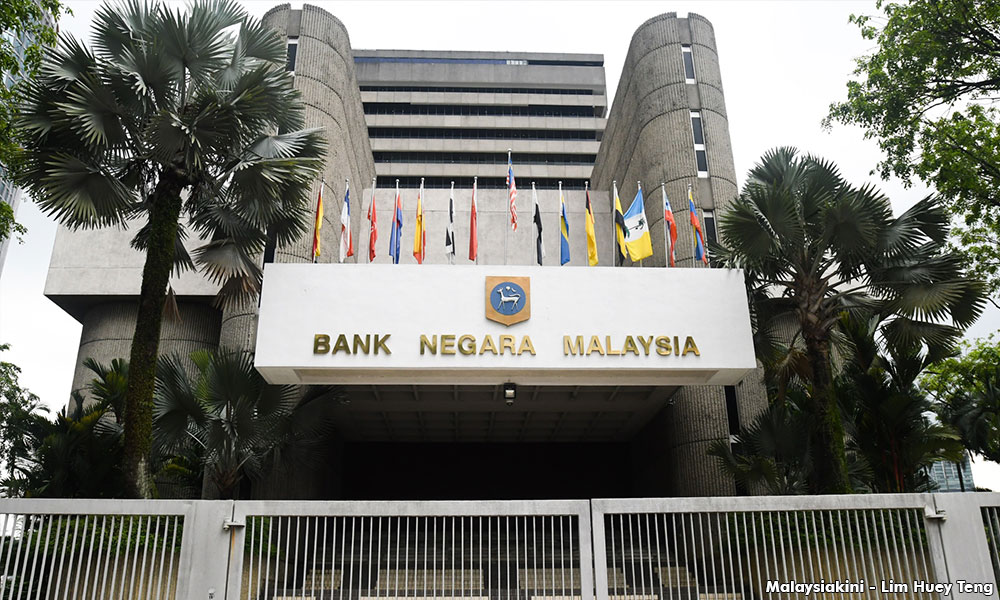
On March 5, the central bank’s Monetary Policy Committee maintained the Overnight Policy Rate at 2.75 percent, marking the fourth consecutive meeting without adjustment. Market expectations had broadly anticipated this decision.
The central bank’s posture reinforces its recent strategy: monetary stability now functions as the macroeconomic anchor while the next phase of growth must emerge from structural execution.
In practical terms, BNM appears to be sustaining a stability floor, signalling that interest rate predictability supports economic confidence but cannot substitute for productivity growth, investment conversion, and real-sector competitiveness.
Investments still pouring in
One of the most encouraging economic signals came from the Malaysian Investment Development Authority, which announced on March 6 that Malaysia recorded RM426.7 billion in approved investments for 2025.
The figure represents an 11 percent increase from the previous year and encompasses 8,390 projects expected to generate approximately 244,902 jobs.
Johor, Selangor, Kuala Lumpur, Penang, and Kedah emerged as the leading investment destinations.
Strategically, this milestone strengthens Malaysia’s investment narrative and underscores the attractiveness of the country’s industrial ecosystem.
Yet investment approvals represent only the opening stage of the investment cycle. Markets will closely evaluate realisation rates, including land preparation, utility infrastructure readiness, regulatory approvals, talent supply, and supply-chain integration.
The speed with which projects move from approval to operational capacity will ultimately determine whether headline figures translate into durable economic expansion.
Additional stabilising signals continue to emerge from the government-linked investment ecosystem.
Khazanah Nasional reported an operating profit of RM5.6 billion for 2025 compared with RM5.1 billion the previous year, while net asset value increased to RM105 billion. Its dividend contribution to the government doubled to RM2 billion.

These results strengthen fiscal optics and demonstrate the resilience of state capital when managed with a disciplined portfolio strategy.
At the same time, the prominence of government-linked investment capital inevitably raises expectations regarding transparency, project accountability, and measurable economic outcomes.
Global investors generally welcome state-backed investment vehicles when they attract private capital and accelerate industrial upgrading, yet they become cautious if governance appears opaque or politically influenced.
Strong economy
Malaysia’s macroeconomic backdrop remains supportive. Gross domestic product expanded by 5.2 percent in 2025, with fourth-quarter growth accelerating to 6.3 percent year on year.
Inflation rose modestly to 1.6 percent in January this year, while unemployment remained low at 2.9 percent in December 2025.
Trade performance also continues to demonstrate resilience. January data indicated total trade reaching RM272.4 billion, exports rising to RM146.9 billion, imports increasing to RM125.5 billion, and the trade surplus widening to RM21.4 billion.
Industrial production, manufacturing output, and wholesale-retail activity also maintain positive momentum.
Collectively, these indicators confirm that Malaysia begins 2026 with a solid macroeconomic foundation rather than signs of economic stress.

Currency performance further reflects this stability. Finance Minister II Amir Hamzah Azizan noted that the ringgit strengthened by 4.31 percent to RM3.89 against the US dollar as of March 1.
BNM’s Kuala Lumpur US$/RM reference rate stood at 3.9489 on March 6, while daily foreign exchange turnover reached approximately US$20.22 billion.
Available market analysis indicates rising foreign interest in Malaysian assets, supported by steady monetary policy, resilient trade performance, and continued investment inflows.
A stronger ringgit helps contain imported inflation and reduces foreign-currency debt servicing pressures.
However, it also requires exporters to compete increasingly through productivity improvements, automation, and technological upgrading rather than relying on a currency advantage.
Industrial stability
A significant industrial policy development also emerged with the renewal of Lynas Rare Earths’ operating licence for another 10 years on March 2.
The extension permits continued import and processing activities while imposing conditions concerning waste management and commitments to support domestic rare-earth industry development through research expenditure.
Strategically, the decision reinforces Malaysia’s ambition to participate more actively in global critical-minerals supply chains while balancing environmental and regulatory scrutiny.

Rare earth elements remain essential inputs for advanced electronics, electric vehicles, and renewable energy technologies.
Malaysia’s ability to position itself within this strategic sector will depend not only on regulatory consistency but also on sustained investment in research capability and industrial infrastructure.
Opposition dynamics remain relevant within the broader political landscape.
On March 5, tensions within Perikatan Nasional intensified after newly appointed chairperson Ahmad Samsuri Mokhtar publicly criticised former chairperson Muhyiddin Yassin.
The immediate implication is not systemic instability but renewed uncertainty regarding opposition cohesion and parliamentary tempo.
For investors, political contestation is manageable within democratic systems; unpredictability remains the greater concern.
If internal realignments become prolonged or highly publicised, they may introduce episodic noise into legislative expectations.
Potential exists, but can Malaysia exploit it?
Taken together, developments during the week illustrate a defining theme for Malaysia in 2026. Macroeconomic stability remains intact, yet markets are becoming increasingly selective in evaluating governance credibility and institutional execution.
Monetary policy is predictable, investment approvals have reached historic levels, and economic indicators remain constructive.
Nevertheless, political controversies, coalition tensions, and governance debates demonstrate that credibility has become a central economic variable.
Malaysia is therefore no longer perceived primarily through a vulnerability narrative. Instead, it is increasingly assessed through credibility differentials.
Growth potential remains evident, macroeconomic foundations are stable, and investor interest continues to be visible.
The decisive question for the months ahead is whether institutions can convert stability into consistent, transparent, and timely delivery.
If that condition is met, Malaysia’s reform narrative may evolve from promise into a durable strategic advantage. - Mkini
AZAM MOHD is an independent political and economic analyst.
The views expressed here are those of the author/contributor and do not necessarily represent the views of MMKtT.

No comments:
Post a Comment
Note: Only a member of this blog may post a comment.