


An uncomfortable and increasingly urgent question now hangs over Malaysia’s financial system: Is our money safe?
It is not just the money invested in shares or the funds managed by corporations; it is the entire ecosystem of trust that underpins how money moves, grows, and is protected.
Even if you don’t own a single share, you have a stake, because the economy, jobs, pensions, and public trust all depend on accountability.
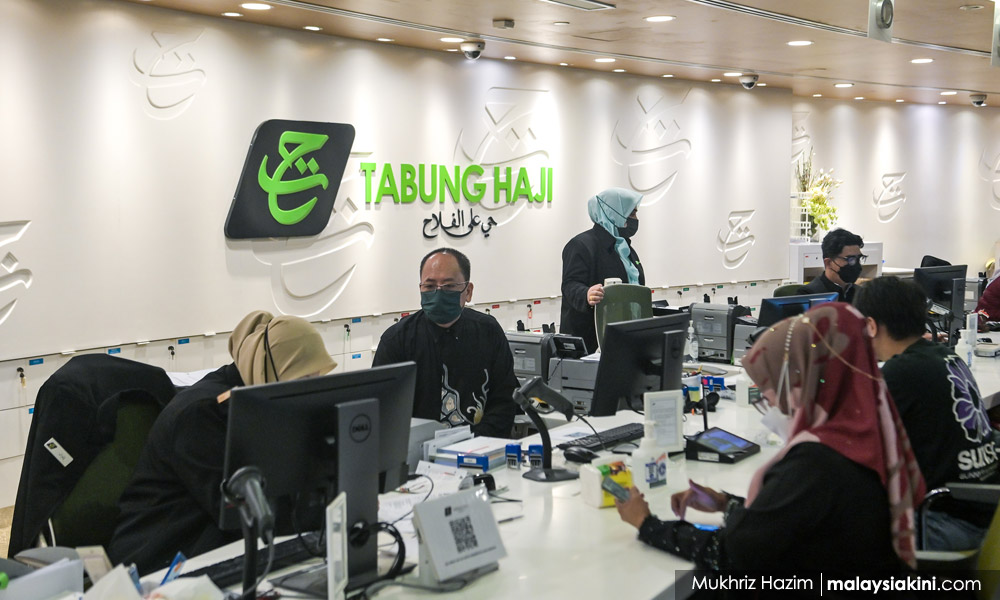
Consider Lembaga Tabung Haji (TH), entrusted with the savings of millions of Malaysian Muslims. In February 2016, just three days of public concern reportedly triggered RM118.7 million in net withdrawals, causing 3,105 depositors to lose their turn for the haj pilgrimage.
More recently, between 2020 and 2023, TH recorded net withdrawals of around RM2 billion, while facing RM19.9 billion in sukuk obligations and rising haj costs, forcing the institution to restructure and rely on costly public interventions.
The experience of the Federal Land Development Authority (Felda) offers another stark reminder: when governance weakens, even long-standing institutions can falter, requiring extensive public measures to restore confidence.
An auditor‑general’s report flagged that Felda must return to its basics to overcome financial issues, underscoring the need for sound stewardship and accountability.
These episodes are not just historical footnotes. They illustrate a basic principle: financial systems are sustained not by numbers alone, but by trust.
Confidence, once shaken, has real consequences for ordinary Malaysians, whether it is in savings, pensions, or the broader economy.
Shares in public-listed companies are not abstract instruments for the wealthy; they finance businesses, sustain jobs, support pensions, and underpin national growth.
Even those who own no shares are tied to this system through their livelihoods and the health of the economy itself.
Silence invites deeper doubt
It is against this backdrop that recent developments involving MACC chief commissioner Azam Baki and the Securities Commission (SC) take on greater significance, not because of what has been proven, but because of how institutions are responding.
Just over two weeks ago, when asked whether the SC was investigating allegations of a so-called “corporate mafia”, its executive chairperson, Faiz Azmi, declined to confirm or deny, citing legal restrictions under Section 148 of the SC Act.

The implication was that even acknowledging the existence of an investigation could carry legal consequences.
This interpretation has been publicly challenged by legal voices, including former MACC chief Latheefa Koya, who emphasised that the law restricts disclosure of investigative details, not the fact that an investigation exists.
This distinction matters: when regulators choose opacity over clarity, the issue is no longer simply legal compliance. It becomes an institutional posture, and a posture that appears cautious can also be perceived as evasive.
Then, just days later, Azam proposed new laws aimed at strengthening anti-corruption frameworks, including measures on political funding and oversight of public donations. On the surface, these reforms address real and longstanding gaps, but context cannot be ignored.
These proposals come at a time when questions surrounding governance, enforcement, and institutional conduct remain highly visible. Even well-intentioned reforms face a credibility challenge, not because of their content, but because of their timing.
This is not a legal conclusion. It is a question of public confidence. And confidence is not abstract. It moves money. When confidence weakens, investors hesitate, capital becomes cautious, and economic momentum slows.
Doubt carries real economic cost
Markets operate not only on rules, but on belief:
that rules are applied consistently,
that regulators act independently,
that enforcement is even-handed,
and that authority is exercised transparently.
When these assumptions weaken, the effects are gradual but real:
Investors grow cautious,
capital turns selective,
risk premiums rise,
and economic momentum begins to slow.
This is why even unproven but widely discussed allegations carry weight. Their impact lies not only in substance, but in how institutions respond. Clear, confident, and transparent responses tend to stabilise public perception. Silence or ambiguity can have the opposite effect.
The government may have procedural reasons to wait, but to the public, it looks like stalling. In matters of trust, perception is everything.
People judge not just what is done, but how quickly, transparently, and honestly it is done. When it looks like a delay, confidence slips, and with money, even a hint of doubt carries real consequences.
Malaysia does not lack laws to address corruption or financial misconduct. Existing frameworks already provide substantial powers for investigation and enforcement. What is being tested now is something more fundamental: Are those laws applied consistently, visibly, and without hesitation?
Until that question is answered clearly, uncertainty will persist, because in the end, this is not only about regulators, specific individuals, or isolated controversies.
It is about whether Malaysians can trust that the system safeguarding their money, whether in savings, pensions, businesses, or the broader economy, is functioning with integrity.
If there is one lesson from experience, including TH and Felda, it is this: once trust begins to erode, restoring it is far more difficult than maintaining it in the first place.
That is why this moment matters. Not just for markets. But for everyone. - Mkini
MARIAM MOKHTAR is a defender of the truth, the admiral-general of the Green Bean Army, and the president of the Perak Liberation Organisation (PLO). Blog, X.
The views expressed here are those of the author/contributor and do not necessarily represent the views of MMKtT.

No comments:
Post a Comment
Note: Only a member of this blog may post a comment.