


Over a century ago, Finland established its Parliament 11 years before gaining independence from the former Russian Empire on Dec 6, 1917.
Perched on a hill along Helsinki’s main boulevard, Mannerheimintie, Parliament House cuts a restrained yet imposing figure in the heart of the Finnish capital.
Completed in 1931 and designed by architect Johan Sigfrid Sirén, the granite-clad building is framed by 14 towering Corinthian columns and broad stone steps leading to its main entrance.
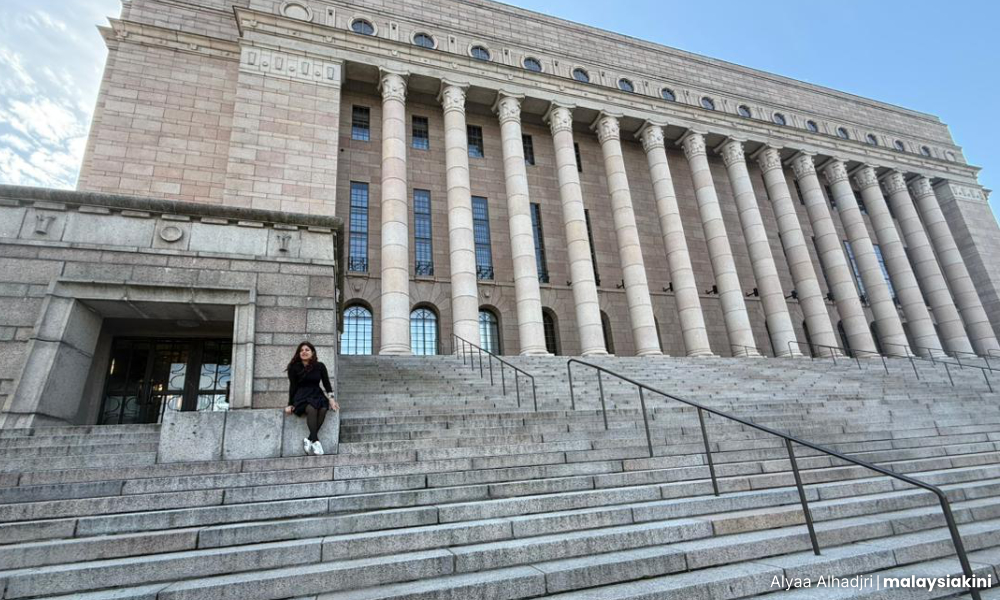
Among its more distinctive features are landscaped gardens and a dedicated area where deer roam.
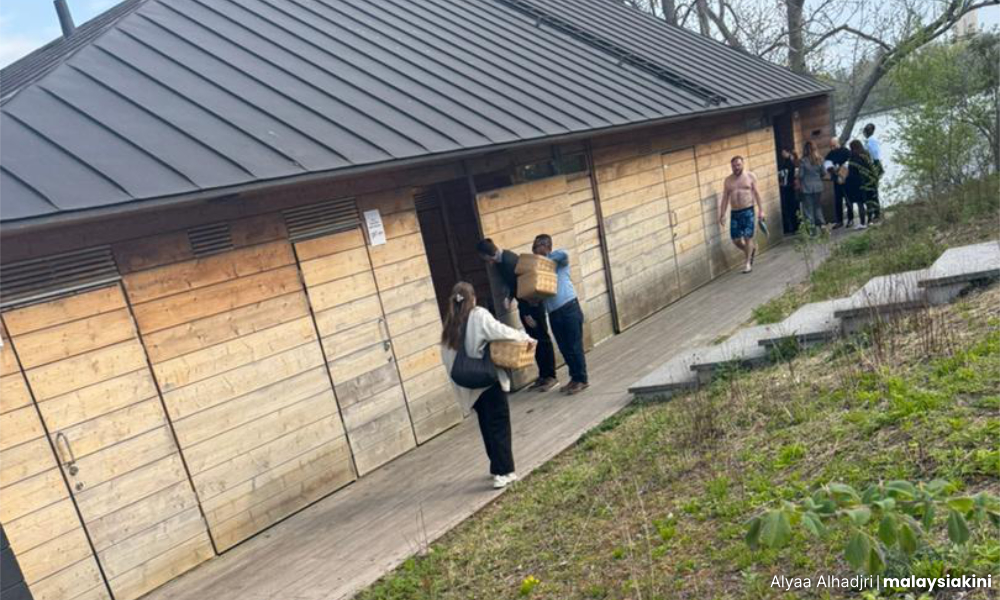
Reflecting Finnish culture, Parliament House also contains its own sauna - a space which its director of information and communication, Rainer Hindsberg, said is accessible to all staff and visitors, including some 200 accredited journalists and photographers.
“Our thinking is that our job is to enable the media to work.
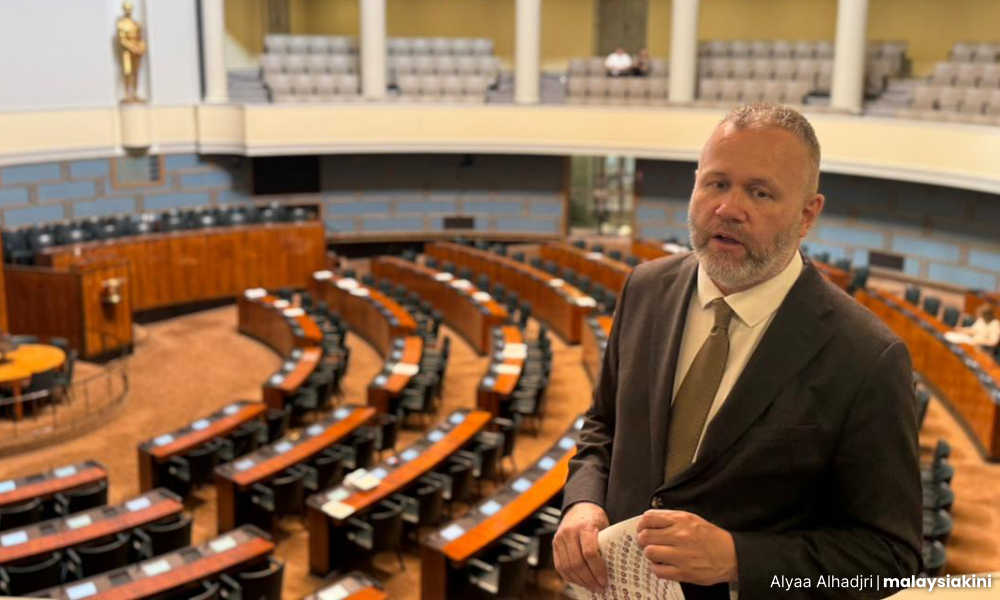
“In my office, our job is to facilitate members of Parliament and the media meeting each other,” Hindsberg said during a media tour hosted by the Finnish Foreign Affairs Ministry for 11 visiting journalists.
“Journalists who work in Parliament can walk freely. They can go to the restaurant, they can go to the cafe, they can even go to the sauna if they like to,” he said.
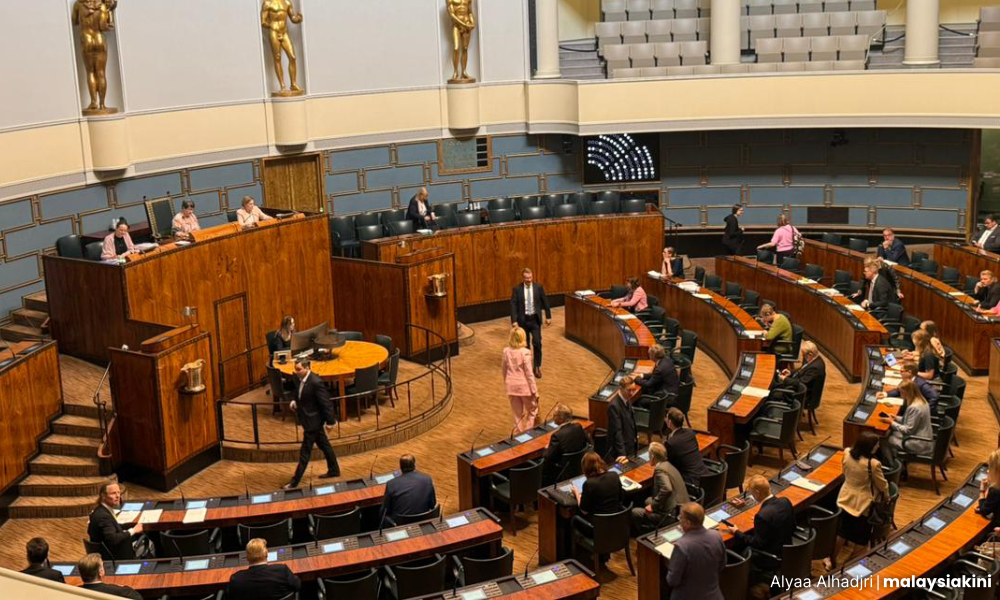
Finnish journalists and photographers are also allocated space in the gallery overlooking the semi-circular Parliament chamber, or they can choose to work from a dedicated office space within the building.
Elaborating, Hindsberg said, “So the only places they’re not allowed to go are the floor where MPs sit during the session - no one else can go there either - and people’s private offices unless they are invited.
“Otherwise, they can pretty much walk freely here,” he added.
By contrast, Malaysian journalists covering Dewan Rakyat proceedings are generally confined to the media room - a cavernous space with a rostrum used by MPs for press conferences.
Attempts to interview MPs outside the media room often risk reprimand, if not sterner action from security personnel.
Unlike Finland’s compact Parliament House, Malaysia’s parliamentary complex has, since 1963, evolved into a sprawling government campus, with newer buildings and expansions designed to accommodate a larger bureaucracy, bicameral operations, and growing security requirements.
However, what has remained unchanged is the Malaysian Parliament’s tight security, with access strictly controlled. All journalists are required to present official government-issued accreditation, while visitors are admitted only by invitation.
Reform and representation
Meanwhile, known in Finland’s two official languages as Eduskunta (Finnish) and Riksdag (Swedish), the Finnish Parliament was founded in 1906 following major reforms - universal and equal suffrage, which granted all adult citizens the right to vote, and gave women the right to stand for election in all 200 seats.
The latter reform saw 19 women MPs elected, marking Finland as the first Parliament in the world to elect female legislators.
For comparison, the first Dewan Rakyat convened after the 1959 general election saw the election of two women MPs out of 104 - Aishah Ghani and Khatijah Sidek from Umno.
The current Eduskunta, led by Prime Minister Petteri Orpo’s National Coalition Party, has increased the representation of women MPs to 91 or 45.5 percent, compared to Malaysia’s current 30 women MPs out of 222 (13.5 percent), far below the 30 percent target, which has never been met.
The Finnish speaker presides over a “unicameral” or single-chamber system, unlike Malaysia’s Dewan Rakyat and Dewan Negara structures.
The Eduskunta has kept the same number of seats for all 120 years of its existence, and its members are elected based on the proportional representation system.
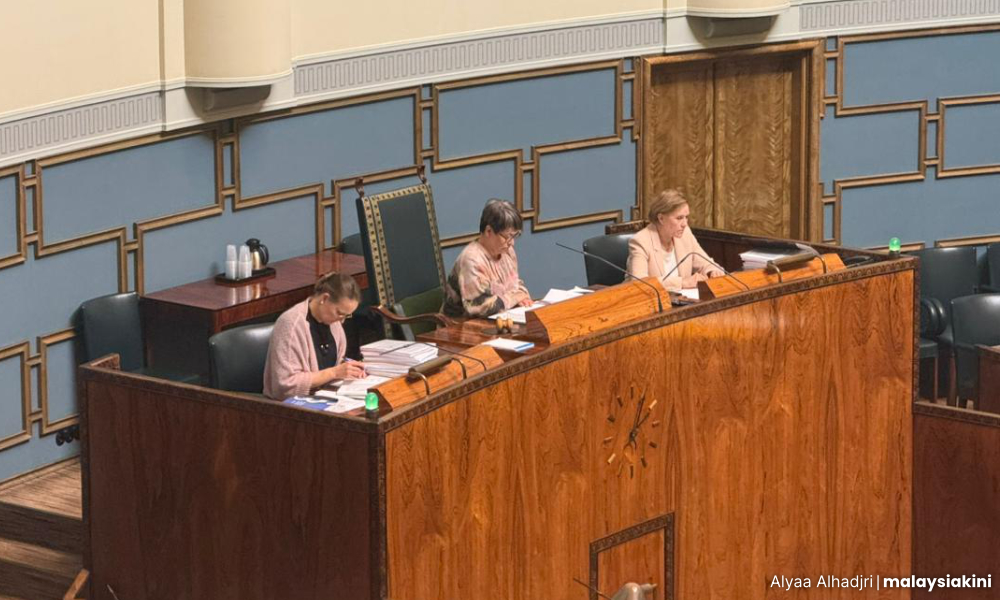
The current government is formed by four parties across the ideological spectrum: the National Coalition Party (centre-right), the Finns Party (right-wing populist), the Swedish People’s Party of Finland (liberal-centrist), and the Christian Democrats (socially conservative).
The opposition, meanwhile, is made up of multiple independent parties rather than one united coalition.
A culture of calm consensus
Compared to the often combative atmosphere of Malaysia’s Dewan Rakyat, Hindsberg noted Finland’s parliamentary debates “are often fairly calm”.
“Sometimes I see parliamentary debates in other countries where lawmakers are fighting; they will be verbally attacking each other.
“I would say things are fairly peaceful here and not very dramatic,” he said, adding there were also no incidents of MPs being suspended or ordered to leave the house.
Finland’s lawmaking process is driven by 16 parliamentary committees, where bills undergo scrutiny before returning to the main chamber for voting.
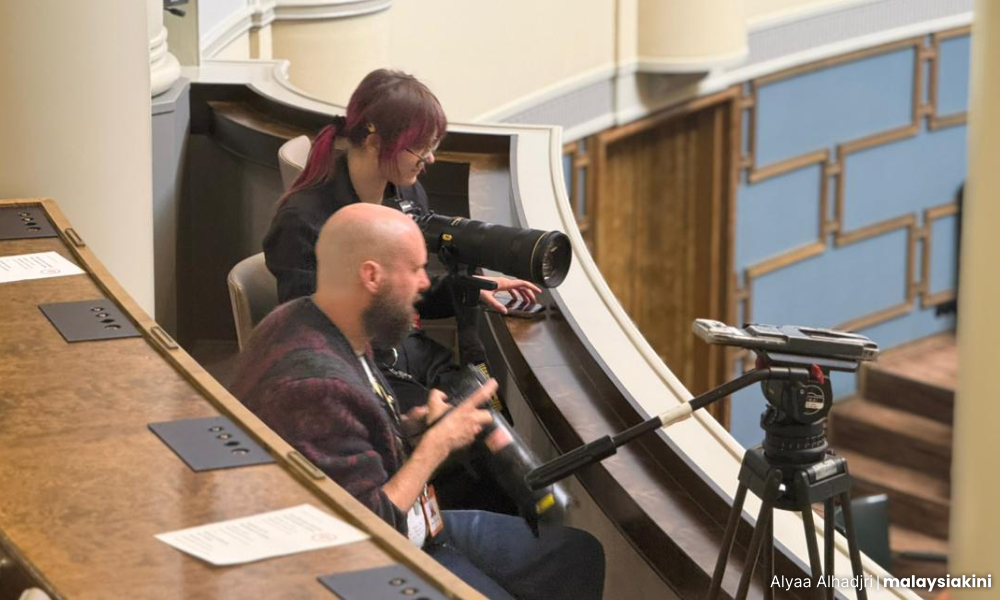
After a bill is introduced in Parliament, it is typically referred to a specialised committee that consults experts, ministries, civil society groups, and stakeholders before producing recommendations and amendments.
Much of the negotiation and consensus-building occurs at the committee level rather than through lengthy and confrontational floor debates.
For Malaysian observers, Finland’s Parliament offers a glimpse into a system where transparency, accessibility, and committee oversight are deeply institutionalised, even if shaped by a political culture far removed from Malaysia’s own realities.
And perhaps nowhere is that cultural difference more apparent than in the Finnish Parliament’s in-house sauna - a distinctly Nordic reminder of a healthier way to let off steam. - Mkini

No comments:
Post a Comment
Note: Only a member of this blog may post a comment.