

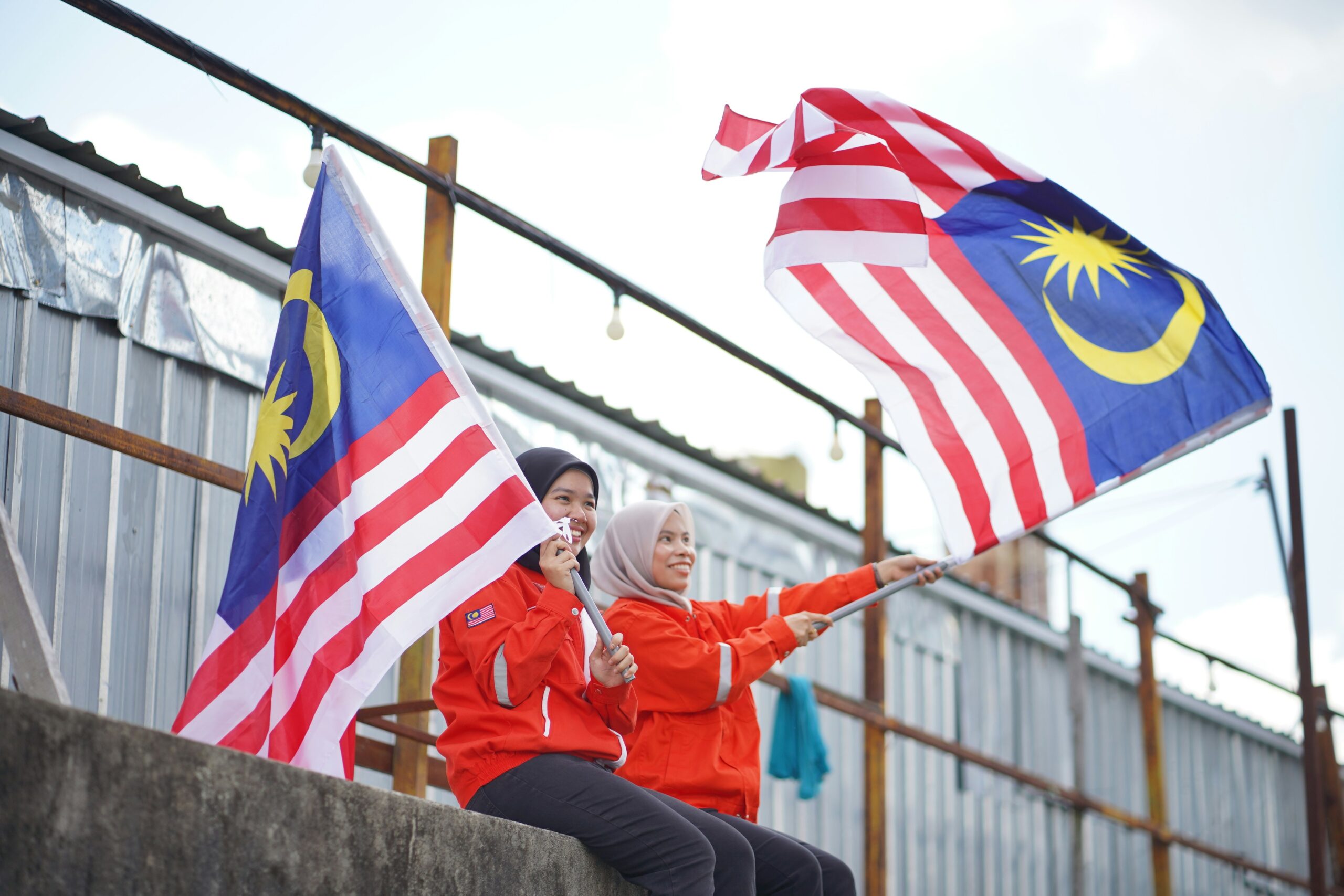
WHEN the Sultan of Selangor recently spoke about Malay unity while also reminding Malaysians to respect other communities, it reflected a broader tension the country has wrestled with for decades: how to balance ethnic identity with national belonging.
The question is uncomfortable but necessary. Are we building one nation, or simply managing different communities living alongside each other under a single flag?
For more than half a century, Malaysians have been encouraged to speak the language of unity. Yet in practice, many aspects of public life remain organised along racial lines.
Politics, education, economic policy and even everyday discourse often reflect these divisions, creating a gap between rhetoric and reality.
The result is a country that appears united on the surface but remains fragmented underneath.
The result is a country that appears united on the surface but remains fragmented underneath.
There is also a persistent irony. Each community is repeatedly told, in different ways, to stay cohesive for its own protection or advancement. Malays are urged to unite for political strength, Chinese communities for economic security, and Indian communities for cultural preservation.
But if every group turns inward, the question remains: who is building Malaysia as a shared project?
This does not mean ethnic concerns are imaginary. Historical experience matters. The Malay community, in particular, carries real memories of colonialism, economic inequality and political vulnerability. These anxieties shape contemporary expectations and cannot be dismissed lightly.
But there is also a broader truth that cannot be ignored. A nation that operates primarily through ethnic insecurity risks long-term stagnation—socially, economically and institutionally.
In reality, ordinary Malaysians often demonstrate far more unity than political discourse suggests. In workplaces, hospitals, schools and disaster relief situations, cooperation across communities is common and instinctive. The divisions become more visible in politics, where identity remains an effective tool for mobilisation.
This creates a cycle: racial narratives fuel political support, which reinforces suspicion, which in turn justifies further reliance on identity-based politics.
Younger Malaysians increasingly appear fatigued by this dynamic. Many are less convinced that race-based politics offers protection or progress.
Instead, they see persistent challenges—corruption, institutional weakness, economic pressure and talent outflow—through a lens that identity politics does not adequately address.
Malaysia’s challenge today is not simply inter-ethnic competition. It is the risk of internal fragmentation at a time when global pressures—from economic shifts to technological disruption—demand greater cohesion and institutional trust.
No country is likely to succeed in the coming decades if it remains locked in permanent identity contestation.
This does not require the erasure of ethnic identity. Malaysia’s diversity is real, lived, and valuable. But identity must evolve from a protective instinct into a shared national framework.
Malay unity should strengthen national unity, not exist apart from it. Chinese and Indian aspirations should be seen as part of the national story, not separate from it.
The responsibility is shared. Malay leaders must be open to criticism without interpreting it as an attack on identity. Non-Malay communities
Religious and political leaders alike must avoid exploiting identity for short-term gain. Citizens, too, must resist the pull of communal suspicion.
The Rukun Negara cannot remain a ceremonial slogan while trust erodes in daily life. If Malaysians continue to see each other primarily through ethnic categories, unity will remain aspirational rather than real.
As the Sultan of Selangor has previously reflected in reference to historical empires, stability has often depended not merely on coexistence, but on a unifying idea that binds diverse communities together. Malaysia’s task is to articulate and sustain that shared idea in a contemporary form.
Economic growth alone will not create national cohesion. Nor will slogans or enforced silence. What is required is a consistent commitment to fairness, mutual respect and a shared future.
The question for Malaysia is not whether each community can unite within itself. It is whether all communities can move beyond parallel identities and genuinely build a nation together—before fragmentation becomes the default condition rather than the exception.
KT Maran is a Focus Malaysia viewer.
The views expressed are solely of the author and do not necessarily reflect those of MMKtT.
- Focus Malaysia.

No comments:
Post a Comment
Note: Only a member of this blog may post a comment.