

AS tensions between the United States and Iran escalate, the immediate consequences are clear: rising oil prices, regional instability, and renewed fears over global supply chains.
But beyond the geopolitical shockwaves, the crisis is also exposing a deeper vulnerability at the heart of the global economy — its dependence on fossil fuels.
In this sense, the conflict is acting as an unplanned stress test of the energy system. As shipments face heightened risk in key maritime routes such as the Strait of Hormuz, the world is reminded that a significant share of global energy supply flows through politically fragile corridors.
The issue is no longer abstract debate about emissions, but a tangible question of economic and national security.
This shift in perspective is driving a harder conversation about energy independence. Fossil fuel systems are increasingly being seen not only through an environmental lens, but as geopolitical liabilities.
Disruptions in supply translate almost immediately into price shocks, inflationary pressure, and economic uncertainty.
By contrast, renewable energy sources such as solar and wind are gaining renewed attention for their relative insulation from geopolitical risk.
While they remain dependent on complex supply chains and critical minerals, their energy inputs are locally generated and not subject to cross-border disruption in the same way as oil and gas.
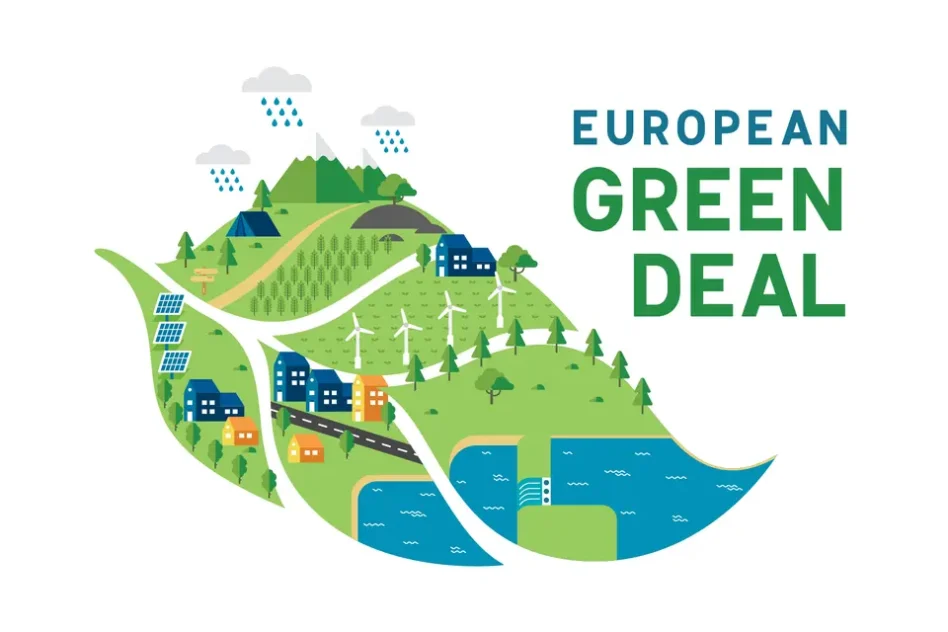
This distinction is becoming more central in policy thinking. The European Union, already pursuing its Green Deal agenda, has further strengthened its commitment to renewable energy deployment and electrification in response to energy insecurity concerns.
For countries like Germany and Japan, which lack significant domestic fossil fuel reserves, energy transition is increasingly framed not only as climate policy but as strategic autonomy.
In this context, the installation of a solar panel or investment in wind capacity is increasingly viewed through a dual lens: environmental responsibility and energy security.
However, it is important not to oversimplify the transition. Renewable energy systems are not immune to geopolitical risk.
Supply chains for batteries, solar panels, and rare earth materials remain globally concentrated, and energy storage continues to be a key constraint in fully replacing fossil fuels.
In moments of crisis, governments may also revert to short-term solutions such as increased fossil fuel production to stabilise prices.
The result is a complex and uneven transition, shaped as much by geopolitical shocks as by climate policy.
So while it would be misleading to frame conflict as beneficial, it does have the unintended effect of sharpening policy urgency.
The US-Iran tensions are not a climate solution, but they are reinforcing a reality that has been building for some time: energy systems that rely heavily on politically unstable regions carry structural risks.
The long-term question is whether policymakers will use this moment to accelerate diversification, or whether the system will revert once immediate pressures ease.
In that sense, the true test is not the conflict itself, but how the world responds to it once the headlines fade.
The author is affiliated with the Tan Sri Omar Centre for STI Policy Studies at UCSI University and is an Adjunct Professor at the Ungku Aziz Centre for Development Studies, Universiti Malaya.
The views expressed are solely of the author and do not necessarily reflect those of MMKtT.
- Focus Malaysia.

No comments:
Post a Comment
Note: Only a member of this blog may post a comment.