


Bukit Aman Criminal Investigation Department director M Kumar confirmed that police are investigating former DAP lawmaker Tony Pua over his remarks on the royal institution and the Rukun Negara.
The probe, initiated after 28 police reports were lodged nationwide, is being conducted under Section 505(b) of the Penal Code and Section 233 of the Communications and Multimedia Act 1998.
I once defended a client prosecuted after hundreds of police reports (not only 28) were lodged against him. At trial, the complainant who lodged the report could not even identify the statement my client supposedly made, leading to an acquittal that was later affirmed by both the High Court and the Court of Appeal.
Drawing from my courtroom experience, individuals who vocally condemn a suspect in public, high-profile, and sensationalised cases seldom transition into effective prosecution witnesses.
Instead, their lack of concrete knowledge often renders them poor witnesses, which ultimately damages the prosecution’s case during trial.
Pua is under scrutiny for allegedly asserting that Malaysian monarchs lack the constitutional authority to issue absolute, binding decrees in all matters.
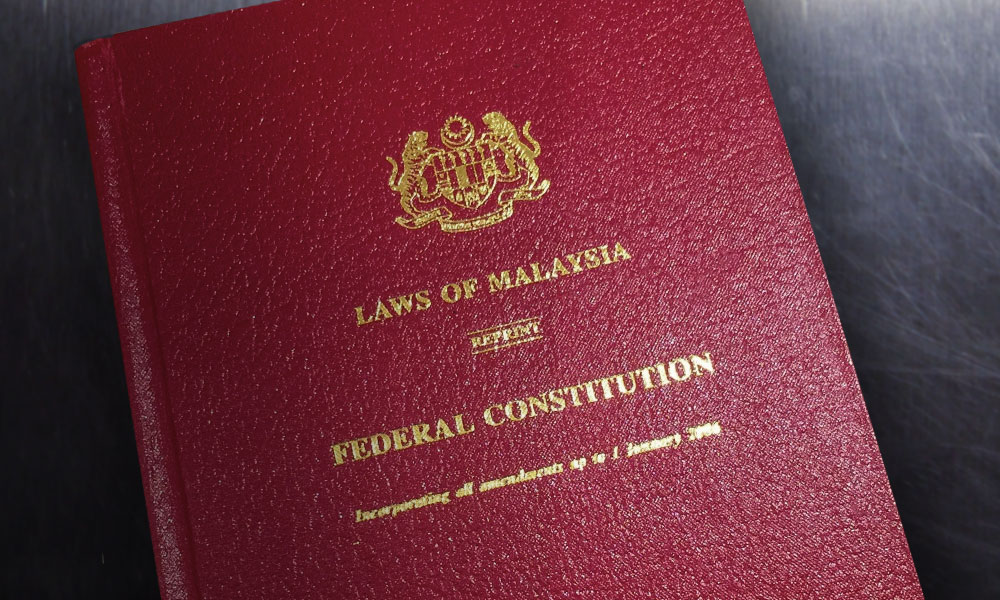
Constitutionally speaking, as of now, Malaysia has been faithfully adhering to the doctrine of constitutional monarchy. The way I see it, that was the central plank of Pua’s arguments.
Constitutional experts argue that one of the indigenous elements duly enshrined in our supreme law of the land - the Federal Constitution - is the principle of constitutional monarchy.
In essence, such a doctrine respectfully recognises the solemn dignity and sovereignty of our rulers, but their powers and decrees are equally circumscribed by the Constitution itself. It goes without saying that our Constitution has never advocated for a doctrine of absolute monarchy.
Policing opinion in the digital age
Be that as it may, Pua’s constitutionally sound statement would have been completely harmless had critics not twisted it to argue that he is actively trying to limit the rulers’ power to issue absolute decrees.
The social media era has democratised public commentary, allowing individuals without relevant expertise to opine on complex matters. Consequently, public discourse is frequently flooded with confidently asserted views from those who lack even a basic grasp of the issues at hand.
Unfortunately, we are living in a social media era where every Tom, Dick, and Harry has become a Jack of all trades, master of none. To our utter chagrin, social media often elevates unqualified opinions over informed analysis.
Critics of Pua must focus on constitutional arguments rather than demanding criminal action. Healthy democratic debate should be protected from police intervention, even when viewpoints clash.

Our law enforcement agencies should not be unnecessarily burdened with investigating matters of political and constitutional discourse.
Investigating political and constitutional debates unnecessarily drains valuable police time and public resources. Evaluating nuanced constitutional theory is a matter for legal scholars and the courts, not law enforcement.
Therefore, police focus should remain on core security matters rather than policing public discourse. - Mkini
HANIPA MAIDIN is a former deputy minister of law.
The views expressed here are those of the author/contributor and do not necessarily represent the views of MMKtT.

No comments:
Post a Comment
Note: Only a member of this blog may post a comment.