

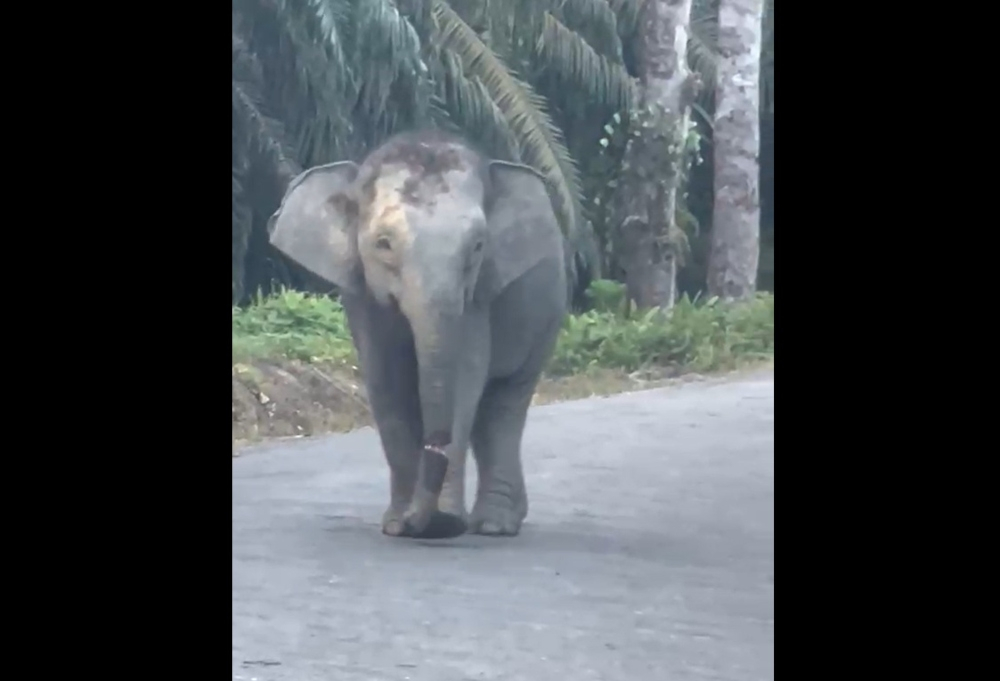
KOTA KINABALU, May 20 — The relevant authorities have yet to locate a Bornean elephant with a semi-severed trunk, believed to be in the Felda Kalabakan Selatan area.
A video of the injured animal has been circulating on social media just after reports of the death of a Bornean elephant in Tongod.
Tourism, Culture and Environment Minister Datuk Jafry Ariffin said a complaint regarding the injured elephant was lodged last week, prompting search and monitoring operations by the relevant authorities on May 13-14.
“Search and field monitoring operations were subsequently carried out in an effort to locate the animal. However, the elephant could not be found during the operation,” he said in a statement.
Jafry said further action would depend on any new information, sightings, or reports from the field.
He shared that preliminary feedback from the veterinary team pointed out that injuries involving an elephant’s trunk are highly complex and difficult to treat.
“Should reconstruction or reconnection procedures be considered, the likelihood of successful recovery and restoration of normal trunk function would be significantly reduced,” he said.
He explained that any veterinary intervention would involve more than immediate wound treatment, including possible surgery to remove damaged tissue or reconstruct torn trunk muscles, followed by intensive post-surgical care and continuous monitoring for up to two weeks.
Jafry said initial observations indicated that the wound had shown some signs of healing, although the closure of the wound was “not ideal”.
He said field rangers from the Sabah Wildlife Department are continuing close monitoring and, at this stage, there is no indication of severe infection that could immediately threaten the elephant’s survival.
“Veterinary intervention is therefore not required at this point. However, treatment measures will be activated should the condition worsen or further complications arise,” he said.
On the possible cause of the injury, Jafry said investigations are still ongoing and no conclusion had been reached.
“While snaring remains one of the possibilities being assessed, it has not been confirmed as the cause. Authorities are also considering other possibilities, including injuries caused by sharp objects,” he said.
Among the scenarios being examined, he said, was accidental contact with harvesting tools used in oil palm plantations, particularly equipment left behind or lodged within plantation areas.
He urged the public to avoid speculation while investigations and field assessments continue.
“The Bornean elephant is one of Sabah’s most iconic wildlife species and an important part of our environmental heritage. We remain committed to ensuring that every case involving wildlife is handled responsibly, professionally, and based on scientific assessment,” he said.
He added that the ministry would continue working closely with the Sabah Wildlife Department and relevant stakeholders to monitor the case and take appropriate action. — The Borneo Post

No comments:
Post a Comment
Note: Only a member of this blog may post a comment.