


Just when we thought a controversial matter had been put to rest, it is resurrected in the name of justification. It hardly matters if explanations fail to resonate with the people, as long as the man holding the microphone gets his say.
In the process, some salvage whatever pride is left, but most end up with egg on their faces.
Home Minister Saifuddin Nasution Ismail’s attempt over the weekend to “present the correct picture” in the granting of citizenship to seven foreign footballers last year only deepened the cracks.
Speaking in Alor Setar, he claimed the government’s role ended once their citizenships were “lawfully granted”, and that eligibility to play was a matter for the Football Association of Malaysia (FAM) and the International Federation of Association Football (Fifa), thus reviving an issue that brought so much agony and pain to Malaysians last year.
Saifuddin drew a thick line: citizenship on one side, football eligibility on the other. But even such lines blur when the foundation itself is shaky.

Birth certificates were falsified. Residency requirements were ignored. The Bahasa Malaysia test was not passed. Yet the minister insists everything was above board.
But one has to ask: why do some politicians assume they are speaking to fools who cannot see how the system works? How long can they continue to mislead the people with their convenient versions of the truth?
Why is it so difficult for ministers to say, “We made a mistake”, apologise, come clean, take corrective steps, and move on?
Questions over ‘instant citizenship’
In Malaysia, rules are sometimes bent to appease those in higher echelons or of higher status, or instructions are followed blindly. But denial dressed up as legality is not accountability.
Saifuddin quoted Article 19 of the Constitution for the granting of citizenship, which is clear: 10 years’ residence, good character, and adequate knowledge of Malay. He claimed these players had all of the above.
But his reliance on Article 20(1)(e) to waive the residency period collapses under scrutiny.
“That is the legal language used in this book, in this text. I applied Section 20(1)(e) to fulfil the residency requirement,” he said during Minister's Question Time in Parliament.
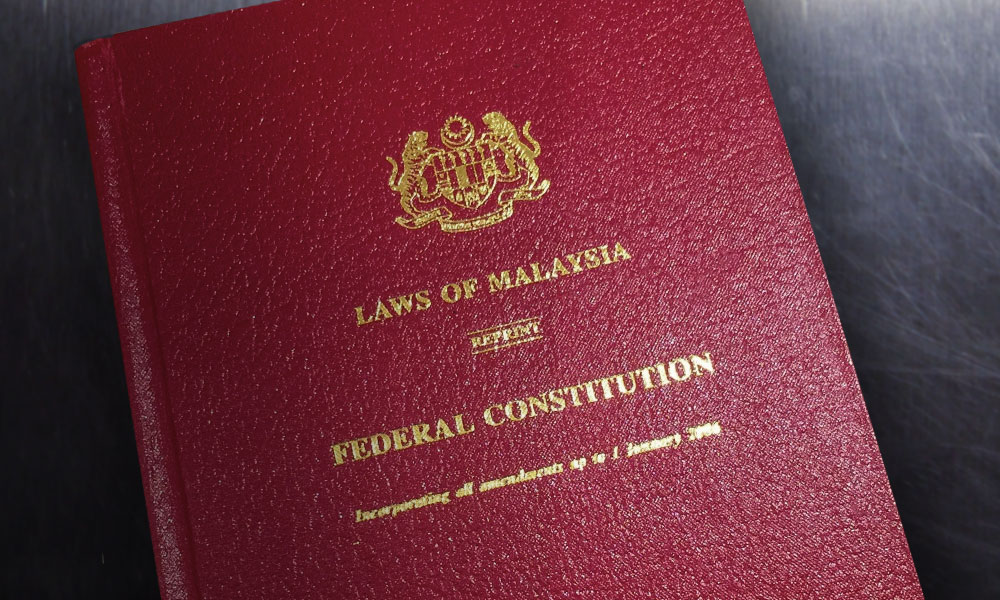
As human rights lawyer Eric Paulsen pointed out, the discretionary clause applies only to those who have already lived in Malaysia - not to men who had never set foot here until their contracts beckoned.
Even Fifa’s Appeals Committee noted the absurdity: the players admitted they did not read their citizenship documents because they were in “Malaysian language”. They signed boilerplate statements claiming a decade of residence they never had.
So how can Saifuddin continue to harp that the law was followed? Was this “instant citizenship” conjured from thin air? Can someone arrive on our shores in the morning and collect an identity card, citizenship, and passport within six weeks?
Malaysia’s credibility falters
Enough of half-truths, enough of lies. The Constitution is not a playbook to be rewritten for convenience, nor is citizenship a trophy to be handed out to mercenaries in football jerseys. When ministers twist legal language to justify shortcuts, they erode not only the rule of law but the very meaning of belonging.
Citizenship is supposed to be the highest affirmation of loyalty and identity, not a fast-track perk for those who can dribble past defenders.
Every Malaysian who has struggled through bureaucracy, waited years for approvals, or fought to prove their rightful place in this country knows the bitter taste of double standards. To them, the spectacle of “instant citizens” is not just insulting - it is a betrayal.
This betrayal cuts deeper than football. It tells ordinary Malaysians that the Constitution is elastic for the powerful but rigid for the powerless.
It tells stateless children, long-suffering applicants, and families torn apart by paperwork that their patience and sacrifice mean nothing compared to the expedience of importing talent.
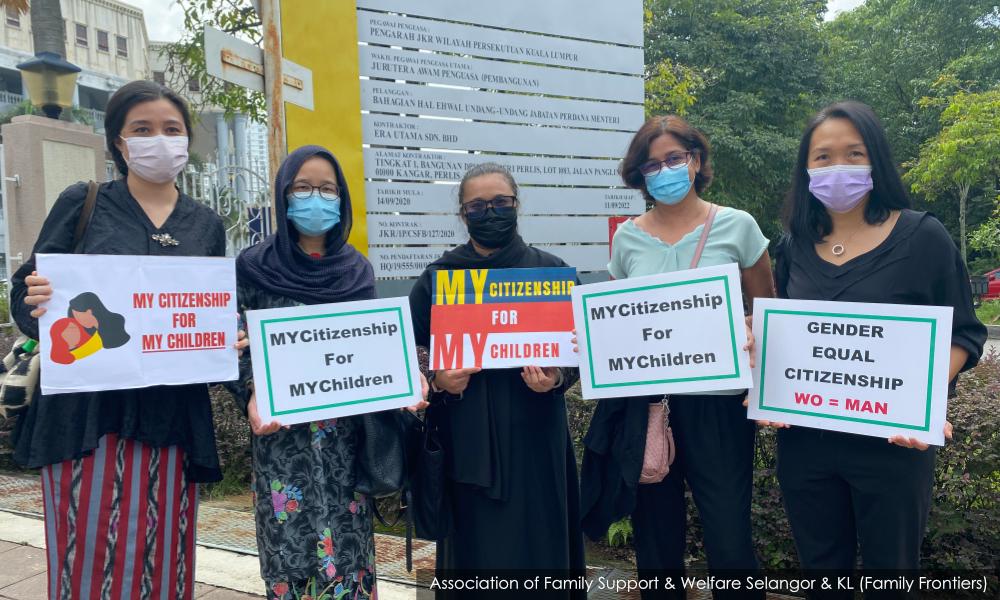
It tells the nation that identity can be manufactured, signatures forged, and language tests ignored - all in the name of chasing goals on the pitch.
Malaysia’s credibility does not falter on the football field alone - it falters when the government itself manufactures identity.
A passport is not a jersey, and a MyKad is not a grandstand ticket. Until the same law applies equally to a retired border scout in Sarawak and a striker from Argentina, justice remains a slogan, not a standard.
And so, the irony writes itself: in Malaysia, the Constitution bends more easily than a free kick. Malaysia Boleh - if you can bend it like Beckham.
Fox in charge of the henhouse
Prime Minister Anwar Ibrahim said any move to revoke the citizenship of the seven players must go through the proper process, beginning with the FAM, before being referred to the Home Ministry for consideration.
“Let the football association discuss it first, then present it to the home minister, following the normal process,” he told reporters after officiating the national-level 2026 National Youth Day celebration in Seremban.
But wasn’t the citizenship itself granted under dubious circumstances? Wasn’t FAM complicit in the entire affair - and sanctioned by Fifa for it? To now suggest that the same body should initiate the process of revocation is to place the fox back in charge of the henhouse.
This is the paradox of Malaysia’s football fiasco: the very institution censured for complicity is being asked to lead the clean-up. It is governance by circular logic, where accountability is outsourced to the one who was sanctioned.
If citizenship was manufactured in haste, then revocation cannot be left to those who profited from the haste.
Until responsibility is reclaimed by the government, the “proper process” will remain a convenient excuse rather than a corrective measure. And so, the irony endures: in Malaysia, even justice waits for the kick-off.
There is nothing to reconsider, and the solution is straightforward: Since they submitted false particulars in their applications, shouldn’t they be treated like everyone else - prosecuted and have their citizenship revoked? - Mkini
R NADESWARAN began his career as a sports reporter, cutting his teeth on the drama of games and the grit of athletes. Though his journalistic journey has since taken him into governance, accountability, and public affairs, he continues to make occasional forays back into the sports arena - drawn not just by scandals, scores, and statistics, but by the human stories that inspire. Comments: citizen.nades22@gmail.com
The views expressed here are those of the author/contributor and do not necessarily represent the views of MMKtT.

No comments:
Post a Comment
Note: Only a member of this blog may post a comment.