


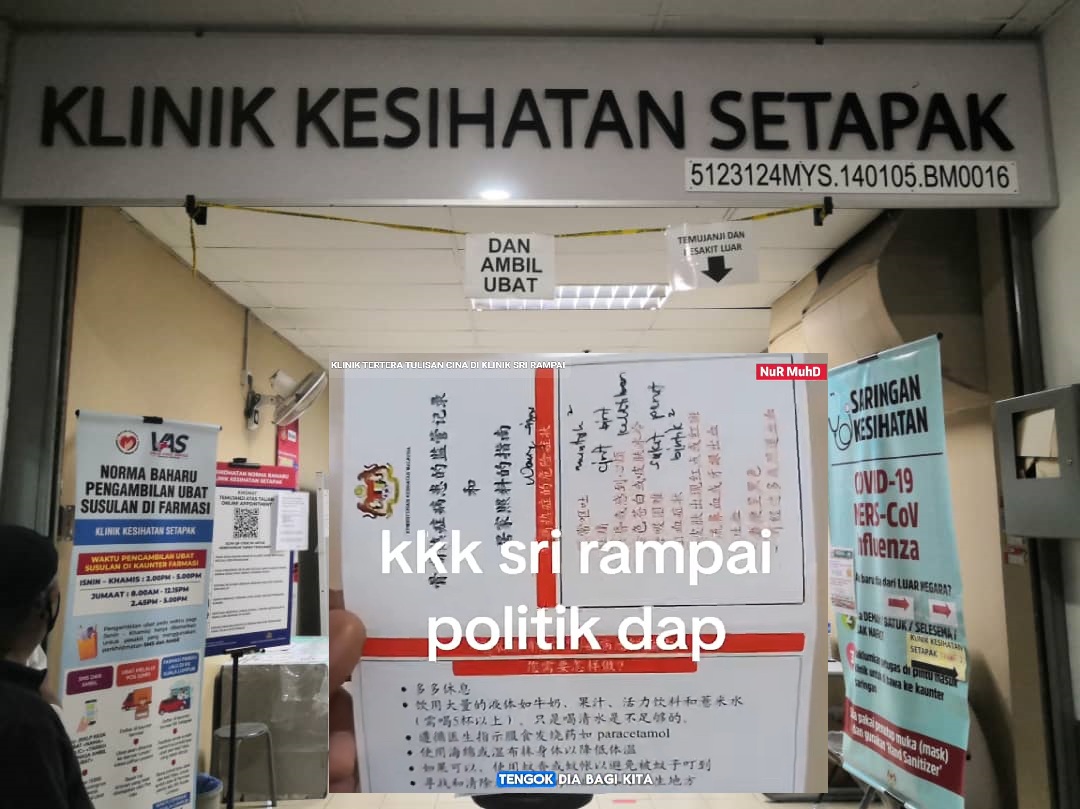
THE fallout from a medical appointment card produced in Mandarin continues unabated.
For those not up to speed, a public health facility in Setapak, Kuala Lumpur – Klinik Kesihatan Sri Rampai – has found itself at the centre of unwanted attention.
The hubris centres around the fact that it had issued a medical appointment card that was NOT in Bahasa Melayu nor featured any meaningful translation. This has ignited heated debate around national language protocols in official government documents.
However, there has been pleas for calm and to not politicise this issue. According to Kepong PKR deputy head Jeremy Ang, top priority should be accorded to patient welfare.

As one of the contributors directly involved in the formulation of the national health literacy policy alongside the Health Ministry (MOH) and the World Health Organization (WHO), public health issues should never be politicised.
“The primary responsibility of the health sector is to save lives and deliver accurate, clear and effective medical information to the people regardless of background,” Ang stressed in a statement.
“The MOH appointment book functions as an important instrument in ensuring continuity of patient treatment. In the context of community clinics such as the Sri Rampai Health Clinic, this approach is very important to support at-risk target groups.”
Commenting further, Ang contended that Malaysia is not alone in implementing this approach.
According to him, developed countries have long practiced multi-lingual policies in the health sector to ensure patient safety and the efficiency of the healthcare system, citing Singapore, Australia and the US as examples of this Tower of Babel approach.
This plea for common sense to prevail instead of stoking the fire of communal unrest was shared on Malay language Sinar Harian’s Facebook page. The post has generated 6K likes, 4.5K comments and 496 shares at time of writing, denoting that this remains a hot topic among many Malaysians.
There were many who saw this plea for rationale heads to prevail as nothing more than a smokescreen.
This was just another example that there was no respect for the national language, claimed one commenter, while another rued that this plea to not politicise the issue came after they (the government) had done something unpopular.

A few queried why the Health Minister (and others in positions of authority) who is Malay, let this slide. The Chinese cannot be blamed as they have consistently been championing the use of Mandarin, it was opined.

Though it may be surmised that this medical appointment card printed in Mandarin has been around since previous administrations, it did NOT stop various politically-biased observers from using this as a stick to beat the current Madani government with some even linked it to the Unified Examination Certificate (UEC) hot potato.
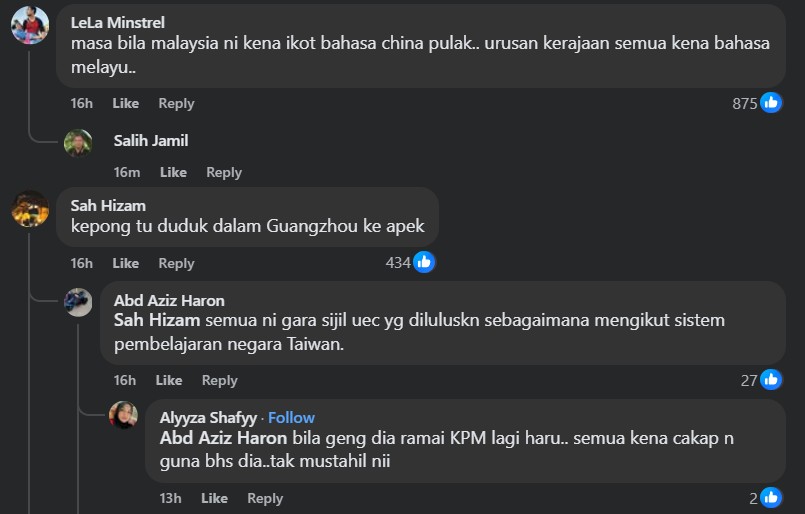
The sentiment was echoed by others who are livid at this perceived disrespect towards the national language by the Chinese community. This is in addition to perceived slights against royal institutions.
However, it was also noted that the offending card in question was a dengue monitoring card written in Mandarin for the benefit of elderly patients who are not fluent in the national language.
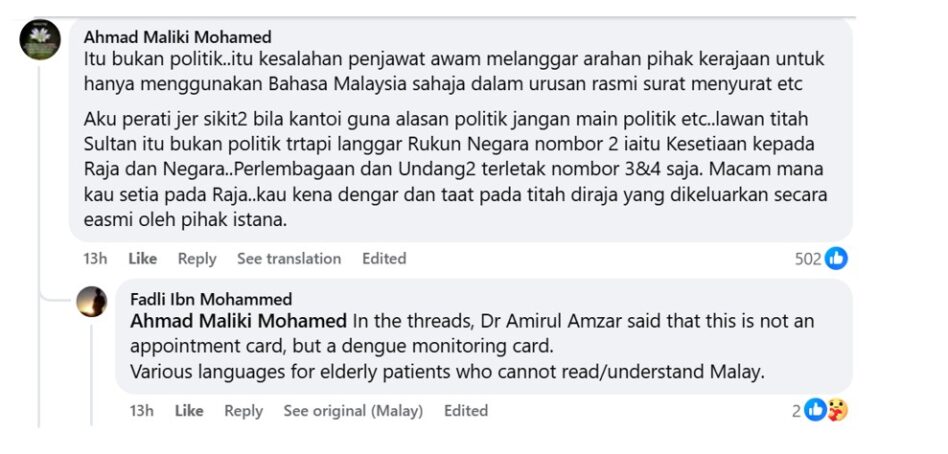
One irate linguist sarcastically asked that a Jawi version of the medical card be printed as well.

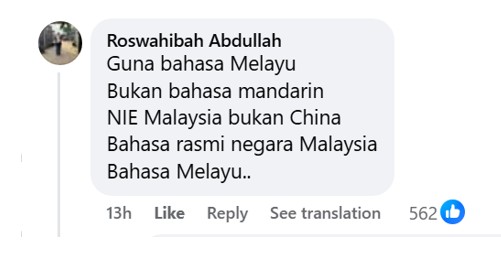
Another observer summed up the mood among the majority of commenters here when it was argued that this was “Malaysia, not China. The official language is Malay”.
Patient welfare be damned when there is a political hot potato to be tossed about, right? On the one hand, the nationalists will scream that this was more proof that the Chinese community was an insular bunch that did not respect the national language and were pushing their own Sino-centric agenda.
On the other, the whole point of the exercise was to ensure that dengue patients do the necessary to help contain the spread of the disease.
Does anyone think the Aedes mosquito and the dengue virus care to even take note of the victim’s ethnicity or their ability to converse in Malay? – Focus Malaysia

No comments:
Post a Comment
Note: Only a member of this blog may post a comment.